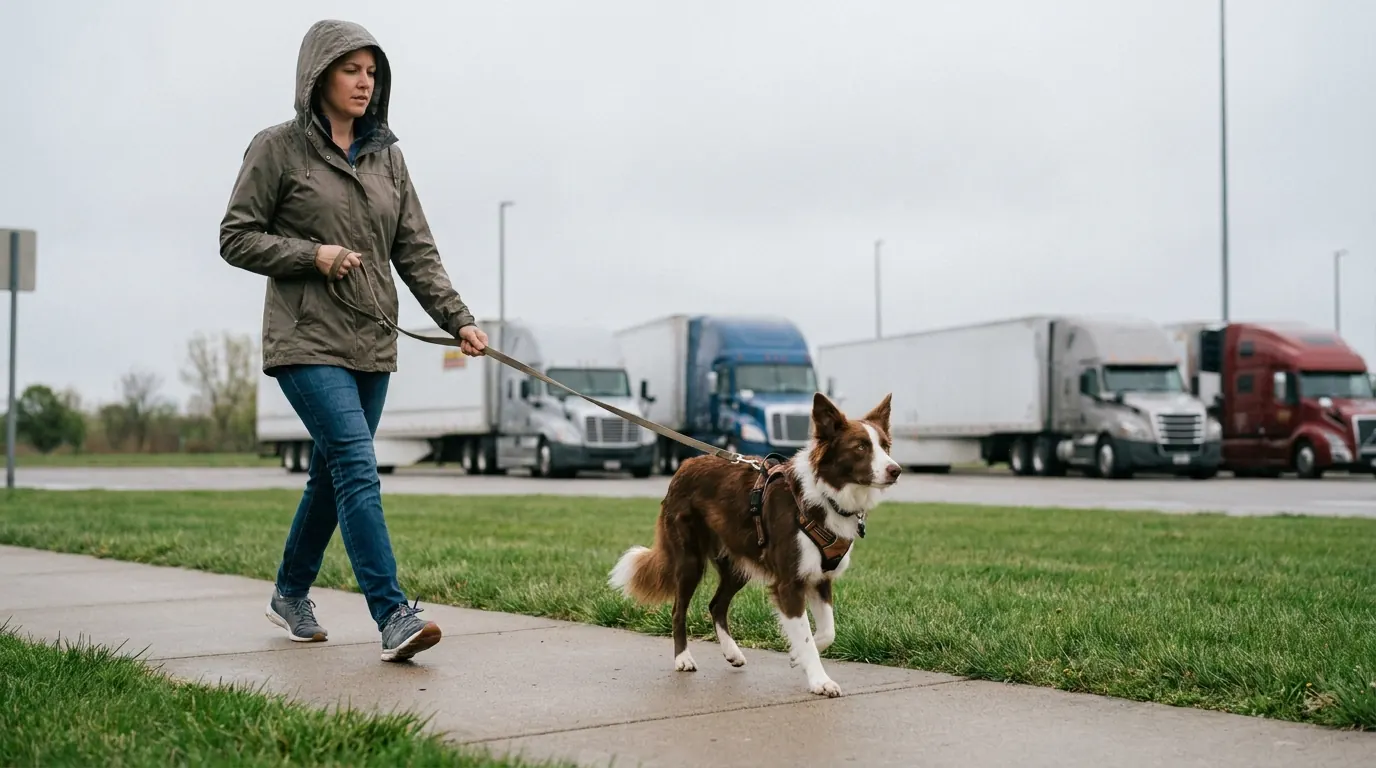
Walking a reactive dog at a rest stop without the right tools, including a real front-clip no-pull harness like the BARKBAY, is a recipe for the worst kind of close call. Rest stops are the worst possible environment for a reactive dog. You have semis pulling in with air brakes hissing, strangers walking straight toward your dog because they want to pet her, off-leash dogs sprinting out of minivans ahead of their owners, and the smell of about a thousand other dogs layered into every square inch of that little grass strip. My dog Roux, a 42-pound border collie mix, has been reactive since I adopted her at age two. I have been traveling with her for three years. Rest stops used to make me physically anxious for the last 30 miles before we stopped.
I am not a trainer. I want to be clear about that upfront. If your dog's reactivity is severe, including lunging hard enough to knock you down, redirecting onto you, or biting, please work with a certified professional force-free trainer before taking long road trips. What I am is a dog mom who has made a lot of mistakes at truck stops and figured out, through trial and error, what actually keeps things manageable. This protocol works for Roux. It might not work for every reactive dog, but the principles behind it are sound. Most of what follows below comes back to having the right tools, and for me that has meant a real front-clip harness like the BARKBAY paired with patience and a treat pouch.
The harness that changed how I handle Roux at rest stops
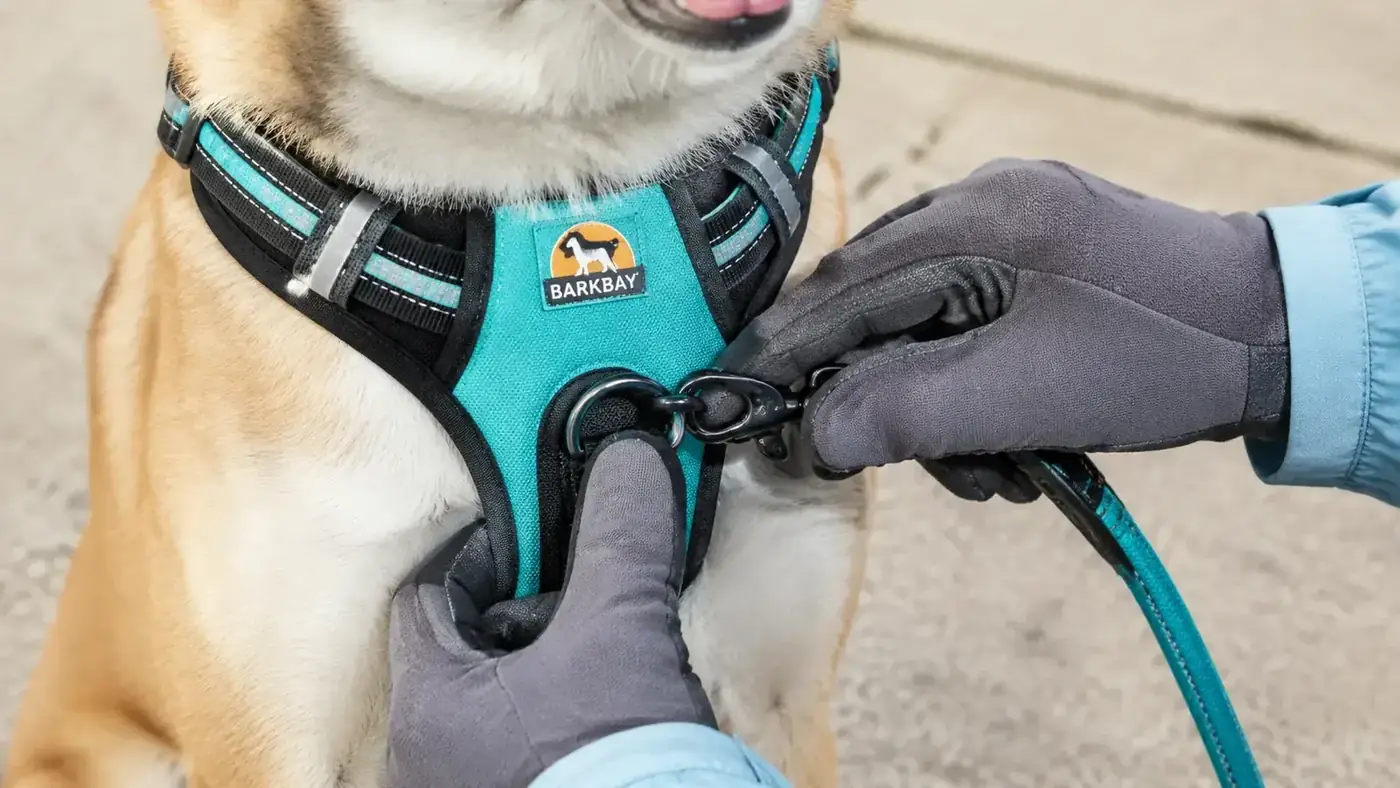
The BARKBAY No-Pull Harness has a front chest clip that redirects a lunge sideways instead of forward, plus a reinforced handle right on top so you can steady your dog instantly. It's what I use every single time we stop. Over 13,000 reviews on Amazon and the current price is reasonable for what it does.
Amazon Check Today's Price on Amazon →Step 1: Scout the Rest Stop Before You Unload
Before Roux's paws ever touch the pavement, I do a 60-second reconnaissance. I pull into the lot, park, and sit in the truck for a moment to read the situation. How crowded is it? Are there loose dogs in the grass area? Is anyone sitting on the curb with a large dog on a retractable leash? Is there an RV with the door open and a dog visible inside? I am specifically looking for triggers I cannot control.
If the stop is genuinely packed, I drive out and find a quiet side exit or a less-traveled parking area. A lot of rest stops have a truckers' lot on one end that is separate from the car lot. Semis are not a trigger for Roux, but another dog on a retractable leash is. I choose my terrain accordingly. Two minutes of scouting prevents ten minutes of recovery from a bad encounter.
Step 2: Time Your Stops to Avoid Peak Crowding
Peak rest-stop hours on weekends are roughly 10 AM to 2 PM when families are in full swing. If I can stop at 8 AM, 4 PM, or after 7 PM, the grass strip is usually empty enough that I have control over the whole encounter. I plan our departure times around this on long drives, which sounds overly cautious until you have had a border collie come completely unglued at a picnic table dog, then spend the next four hours too overstimulated to settle in the back seat.
I also keep stops short on purpose. Roux does not need a 15-minute sniff session. She needs to potty and reload. Five minutes of calm walking is worth far more than fifteen minutes of mounting arousal. In, out, back in the truck. She gets her real off-leash time when we reach our destination.
Step 3: Use the Right Harness, Set Up Correctly
This is the most practical thing I can offer: a front-clip no-pull harness changed the math on every rest stop walk. Before I switched, Roux was on a back-clip harness and a standard six-foot leash. When she spotted a dog across the parking lot, she had about 12 pounds of leverage advantage on me before I even registered the trigger. She could get to full lunge speed with nothing slowing her down.
With the BARKBAY No-Pull Harness clipped at the front chest ring, when Roux lunges forward the harness physics redirect her sideways and slightly toward me. She goes from a straight-line sprint to a curve, which breaks the momentum and gives me half a second to use my feet and the handle. The top handle on this harness is the part I did not know I needed. It sits directly over the shoulder blades, and when another dog appears around a corner I can grab it with one hand and she is immediately up against my leg. No yanking, no drama, just physical proximity. The reflective strips also matter at dawn and dusk when semis are pulling out.
Fit matters a lot with any no-pull harness. The chest strap should sit about two finger-widths below her throat, and the belly strap should be snug enough that you cannot pull the harness over her head. Take five minutes to fit it at home before your first road trip, not in a rest stop parking lot with a dog who has been in a moving vehicle for four hours.
BARKBAY No-Pull Harness: front clip, top handle, reflective trim
This is the harness I put on Roux every single time we leave the truck. The front clip redirects a lunge sideways rather than forward, and the padded handle on top gives you instant physical control without pulling on the leash. Fits medium and large dogs. Check current pricing below.
Amazon Check Today's Price on Amazon →Step 4: The U-Turn Protocol When Another Dog Appears
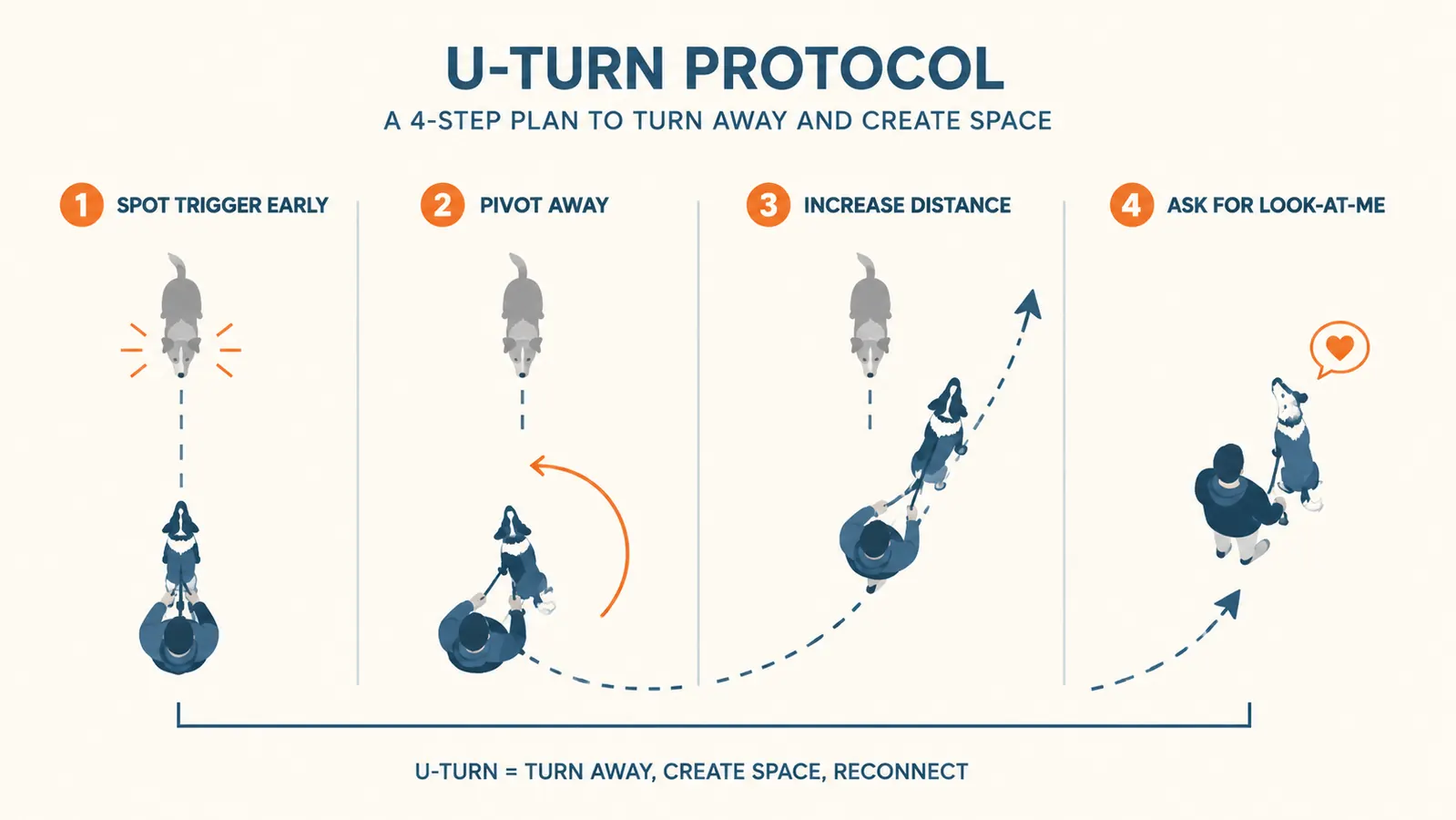
This is the single behavioral technique I use more than any other at rest stops, and it is simple enough that anyone can do it without formal training. The moment I spot another dog heading toward us, before Roux has even locked onto it, I pivot 180 degrees and walk the other direction. No hesitation, no warning, just turn. I say 'let's go' in a neutral tone and I walk. Roux, because I have practiced this enough, follows.
The key is timing. You have to spot the trigger before your dog does. If Roux has already locked her gaze onto the other dog, the U-turn still works but it costs more effort. She will pull against it initially. I keep walking. I increase my pace if I need to. The goal is distance, not a behavior correction. Once I have added 20 or 30 feet, her arousal drops noticeably and I can ask for a 'look at me' and reward it. I do not try to get her to 'be calm' near the trigger. I remove her from the trigger. These are very different things.
Step 5: Load Your Treat Pouch Before You Leave the Car
This sounds obvious but I failed at it for a long time. I would reach the grass strip, Roux would see a trigger, and I would dig around in my jacket pocket for a dried biscuit that she would have absolutely zero interest in while her nervous system was at a six out of ten. The treat needs to be loaded and accessible before she gets out of the truck, and it needs to be something she actually cares about when she is mildly stressed.
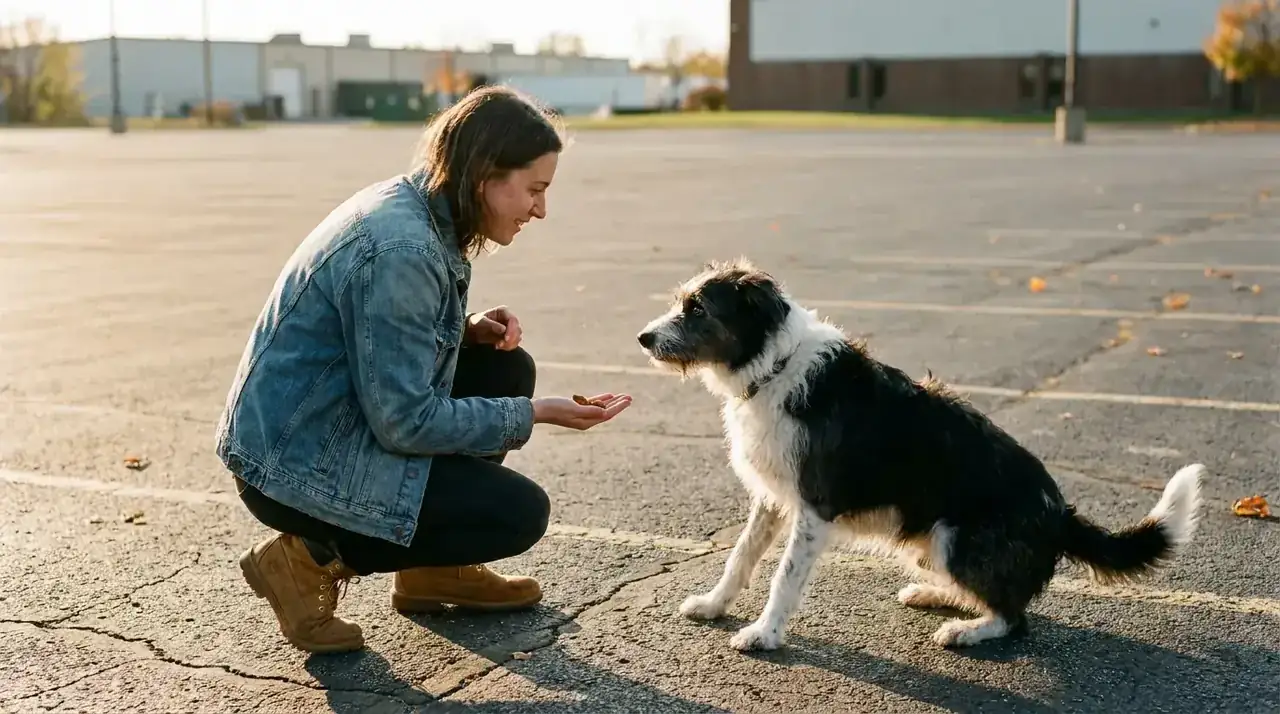
For Roux that means real meat. Small pieces of string cheese, diced chicken breast from a Ziploc, or small pieces of hot dog. I keep a silicone treat pouch clipped to my belt loop before we ever exit the vehicle. The moment I ask for a look at me and she delivers it, the treat is in her mouth in under two seconds. That timing is what builds the behavior. A treat that takes four seconds to find while she is already spinning up does almost nothing.
The treat needs to be loaded and accessible before she ever leaves the truck. A treat you have to dig for while she is already spinning up does almost nothing.
Step 6: Practice the 'Look at Me' Cue at Home First
Do not wait for a highway rest stop to teach 'look at me.' This is a cue Roux knows so well that she offers it voluntarily when she is unsure about something, because I have reinforced it thousands of times in low-stakes environments. The cue is simple: I hold a treat near my eye, say 'look at me', and the moment her eyes meet mine I mark it with a 'yes' and give her the treat. Over weeks of practice, she started offering eye contact spontaneously whenever she felt uncertain.
In a rest stop, the cue gives both of us something to do besides stare at the trigger. She gets to earn a treat, which activates her thinking brain instead of her reactive brain. I get confirmation that she is actually with me cognitively, not just walking next to me while mentally locked onto a dog three parking spaces away. Ten minutes of 'look at me' practice a few times a week at home pays off every single road trip.
Step 7: Walk Parallel, Not Toward
When another dog is in the area and I cannot fully avoid them, I walk a line that is parallel to that dog, not toward them. Head-on approaches between unfamiliar dogs are stressful for most dogs and genuinely dangerous for reactive ones. If the other dog and its owner are walking along the grass strip from east to west, and I need to use that same grass strip, I will wait until they are far enough away that I can walk west to east on the opposite edge without closing the gap between us.
I also never walk Roux straight toward a dog that is standing still. A stationary dog staring at an approaching dog is a pressure-building situation. If there is a dog standing near its owner and Roux and I need to pass, I cut a wide arc around them, keeping the other dog in Roux's peripheral vision rather than directly in front of her face. It sounds fussy until you have been in the middle of a leash-reactive greeting gone wrong in a rest stop parking lot with semis pulling past.
Step 8: Never Use the Dog Park Area if Your Dog Is Reactive
Some rest stops now have a small fenced dog run. I understand why they exist and I appreciate the effort, but Roux will never set a paw inside one. A fenced enclosure concentrates multiple unknown dogs with no ability to create distance. For a reactive dog, the fence removes the only reliable management tool you have. You cannot U-turn out of there. You cannot increase distance. You are stuck inside a box with dogs whose history and behavior you do not know.
The dog run is genuinely great for a confident, dog-friendly dog who needs to stretch and sniff with another dog. It is a setup for a bad incident for a reactive dog. I stick to the grass strip along the perimeter of the parking lot, where I control the approach angle, the distance, and the exit route. Roux potties, gets some sniffs on the grass, and we load back up. That is a successful rest stop.
What Else Helps
A few things I have added over time that did not fit neatly into the numbered steps. A short drag leash clipped to the front ring and tucked through my belt loop keeps me anchored if Roux gets a lunge off before I can grab the handle. A buffer zone of at least one car length of empty space on all sides when I exit the truck gives me reaction time. Sunglasses help because I am less likely to make direct eye contact with incoming dogs, which sometimes accelerates their approach. And arriving at a rest stop when I am not already tired and distracted makes every single step on this list more reliable.
If Roux has a bad encounter at a stop, I do not extend the walk trying to 'end on a positive note.' I load her back in the truck, give her a few minutes to come down, and offer a high-value treat inside the car where she feels safe. The recovery from a reactive episode matters as much as preventing it.
Front clip + top handle: the two features that matter most at rest stops
The BARKBAY No-Pull Harness is the tool I reach for every time we stop. Front clip redirects lunges sideways, the top handle gives you instant grip when something appears around a corner, and the reflective trim is genuinely useful at early-morning and late-evening stops. Check current pricing on Amazon.
Amazon Check Today's Price on Amazon →