I drove with Bear, my 55-pound golden mix, clipped into a $9 seat belt adapter for two years before I finally looked up what those things are actually tested for. The answer, for most of them: nothing. They are tested for whether they hold the dog in the seat under normal driving conditions. Not for a crash. Not for a sudden stop at highway speed. When I switched to the Kurgo Tru-Fit, a harness with an actual crash-test certification, I understood pretty fast why the price difference exists.
If you have been on the fence about whether a crash-tested harness is worth it compared to a basic clip-in, these ten reasons are what finally convinced me. They are not abstract safety statistics. They are the things I noticed trip after trip with two dogs in my truck.
Your dog rides in the back seat. Is the thing holding them there actually built for a crash?
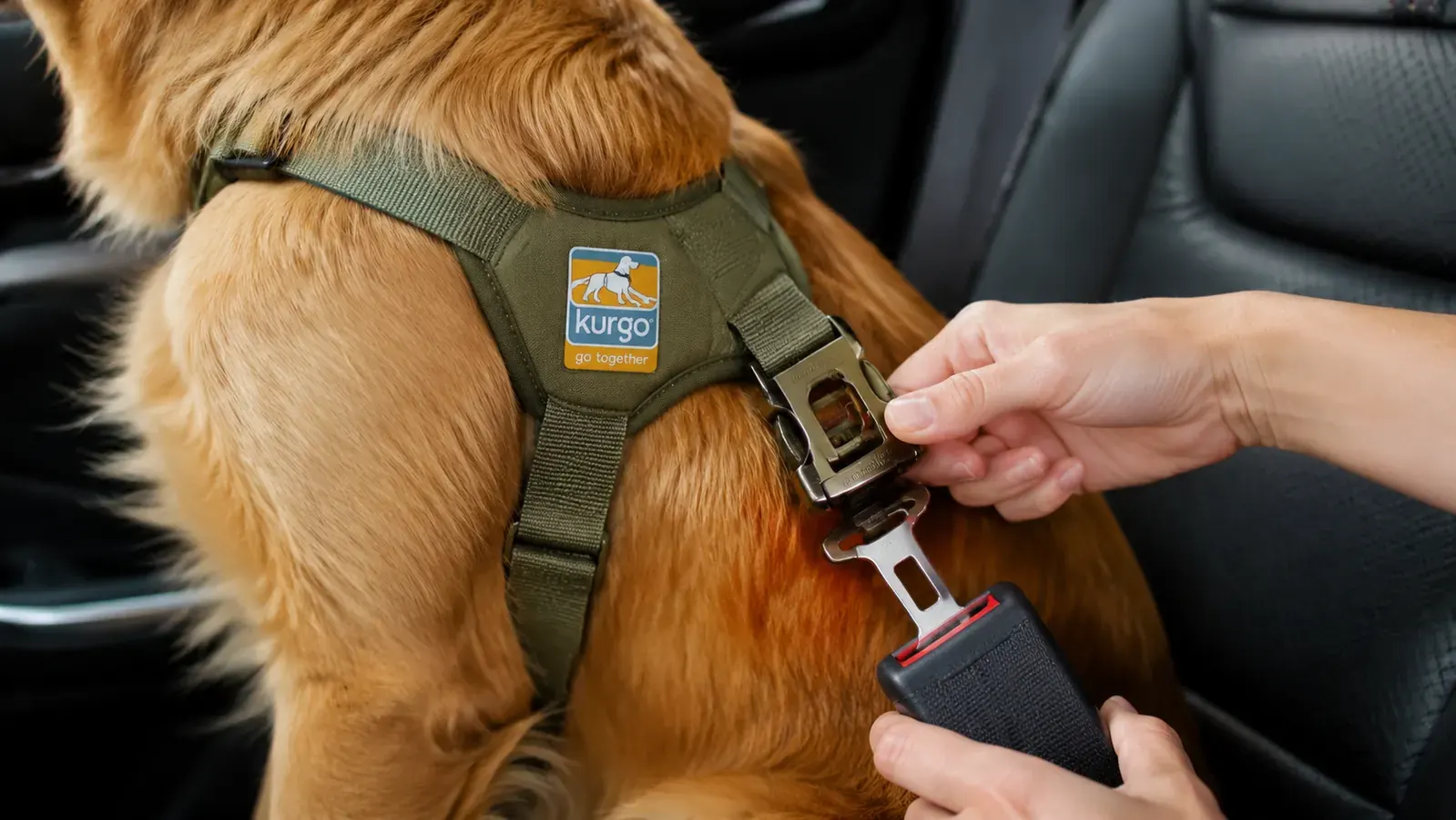
The Kurgo Tru-Fit is one of the few dog harnesses independently crash-tested to protect a 75-lb dog in a collision. Over 7,700 reviews and it is still one of the most affordable certified options out there.
Amazon Check Today's Price on Amazon →It Is Actually Tested for a Crash, Not Just for Staying On
Most dog seat belt adapters are tested to confirm they keep a dog from jumping between seats. They are not tested to see whether the hardware holds in a collision. Crash-tested harnesses like the Kurgo Tru-Fit go through independent testing modeled on the Center for Pet Safety's protocols, which simulate a 30-mph impact. That distinction is not marketing language. It is the difference between a product that passed a real test and one that was never tested at all.
Amazon See the Kurgo Tru-Fit on Amazon →The Hardware Does Not Snap Under Stress
Cheap clip-in adapters use the same plastic hardware you find on a grocery store dog leash. The Kurgo Tru-Fit uses steel-reinforced connections at the attachment points. I did a simple tug test on both when I first got the Kurgo and the difference in feel alone was enough to make me retire the old adapter immediately. Plastic flexes. Steel does not.
Amazon Check availability and current price →It Distributes Impact Across the Chest, Not the Neck
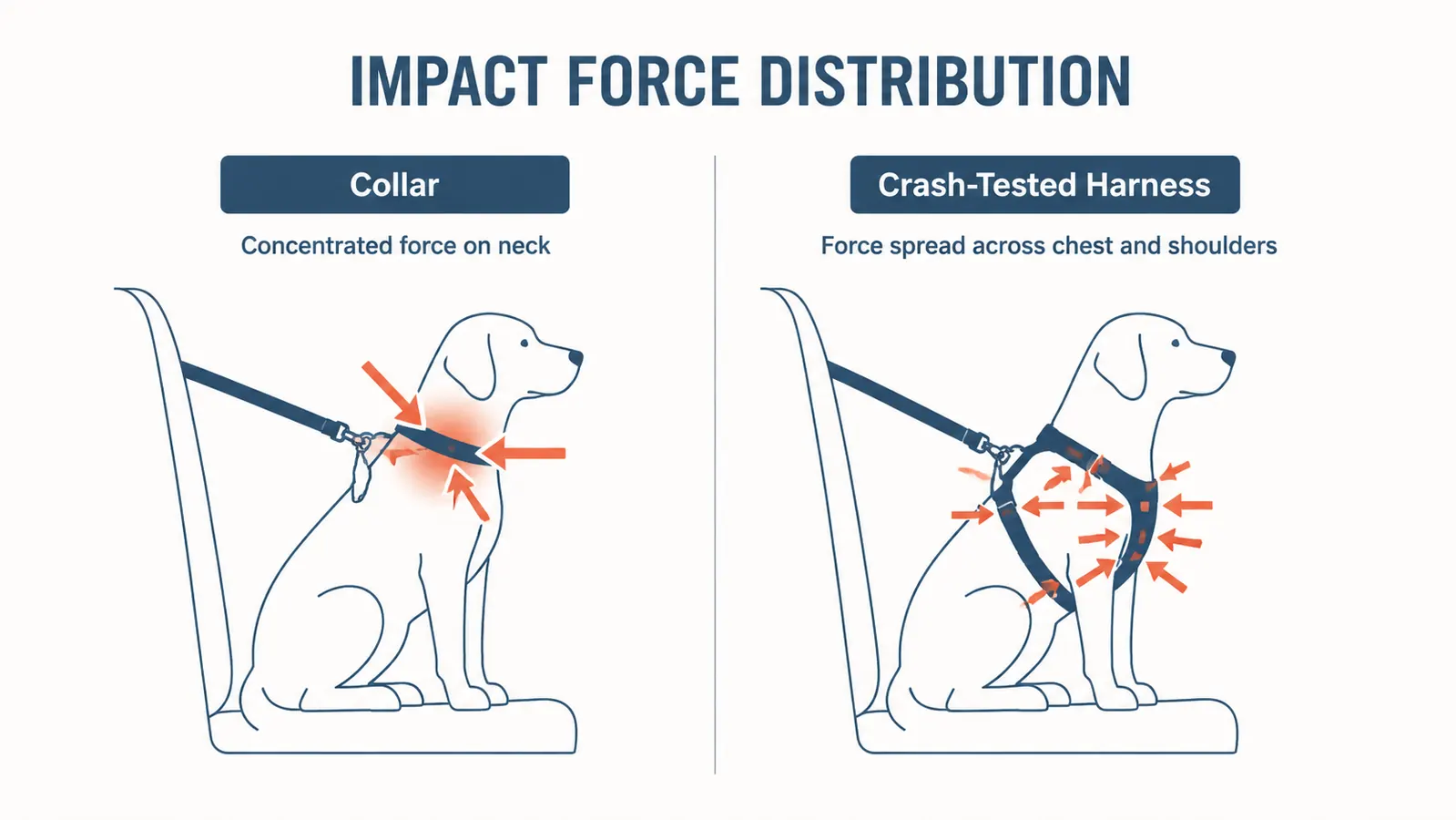
A collar or a clip-in that attaches to a collar puts all the force of a sudden stop on your dog's neck. A properly fitted chest harness spreads that load across the sternum and shoulders, which are built to absorb force. This matters every time you brake hard, not just in a worst-case accident. Bear used to flinch at fast stops. He stopped doing that after we switched.
Amazon See the Kurgo Tru-Fit →It Doubles as a Walking Harness at Rest Stops
One thing I did not expect: the Tru-Fit has a leash attachment on the back so I can walk Bear at rest stops without swapping gear. I clip the seat belt tether to the belly loop for the car, then switch the leash to the back clip when we get out. It is genuinely handy at busy highway stops where you want control fast and do not want to fiddle with two separate pieces of gear.
Amazon Check today's price on Amazon →It Keeps Your Dog From Becoming a Projectile
At 55 pounds, Bear traveling at 60 mph has the same momentum as a large toddler. In a sudden stop, an unrestrained dog does not just get hurt. They become a hazard for every person in the vehicle. A crash-tested harness that anchors to the seat belt keeps the dog from traveling forward. That is the core physics of why this matters, and it is why I stopped treating car restraint as optional after my first serious hard-stop on the highway.
Amazon See the Kurgo Tru-Fit on Amazon →It Fits More Consistently Across Sizes
I have two dogs: Bear at 55 pounds and Rosie at 38 pounds. Finding one harness that fits both without one of them slipping out took me four tries. The Tru-Fit has five adjustment points and a pretty forgiving range per size. Rosie needed the medium and Bear needed the large, but both fit without the shoulder bunching or belly strap gapping that plagued the cheaper harnesses I tried. Fit matters for safety. A loose harness fails the same way no harness does.
Amazon Check sizing and current price →A loose harness fails the same way no harness does. Crash-test ratings only hold if the fit is right.
It Does Not Require a Special Seat Belt Port
Some premium crash-tested harnesses only work with specific vehicle seat belt systems or require a proprietary tether. The Kurgo Tru-Fit uses a standard loop that works with any seat belt buckle. I have used it in my truck, in a rental SUV we took to Colorado, and in a friend's minivan. No adapters. No rigging. Clip in and go.
Amazon See it on Amazon →It Reduces Driver Distraction
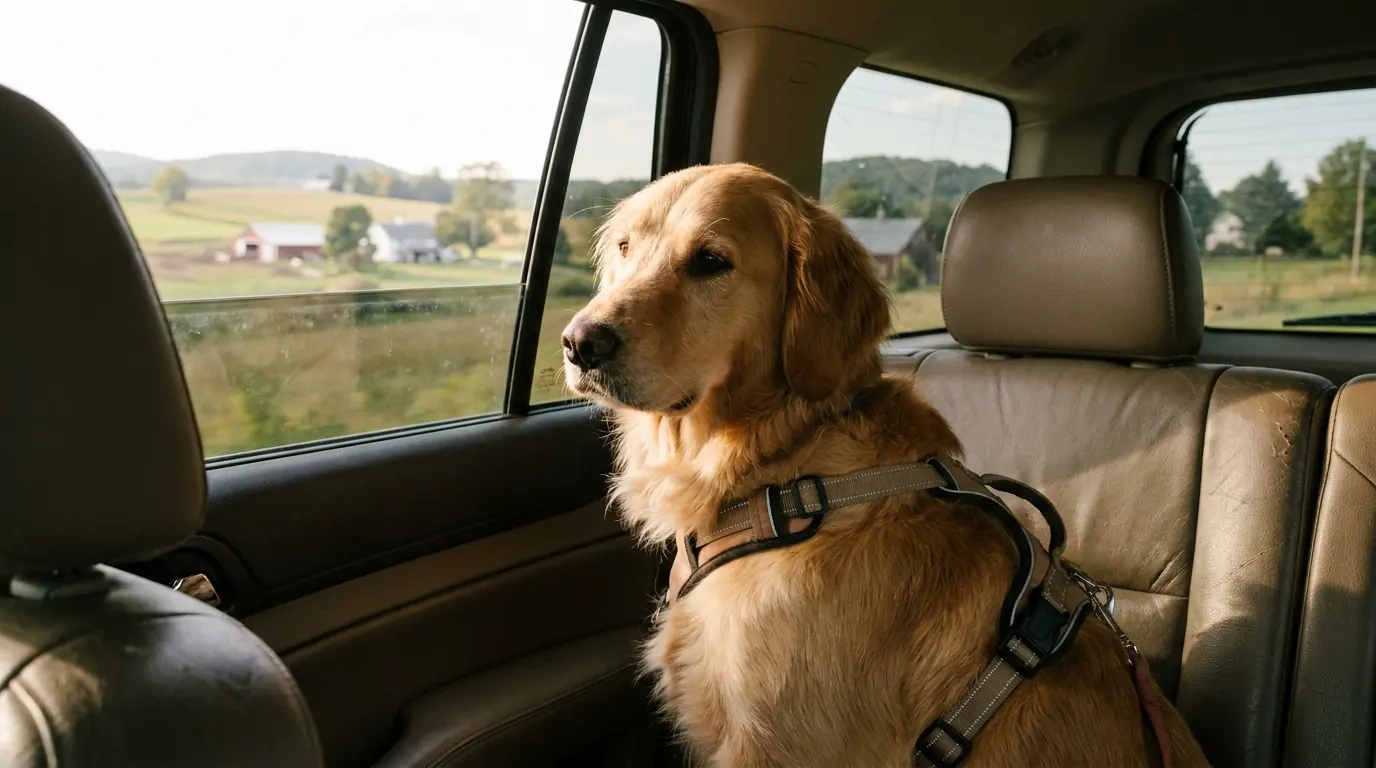
Bear used to pace and whine in the back seat when he was loose or improperly tethered. Once he was snug in the Tru-Fit with enough length to sit, stand, or lie down but not enough to push forward into the front seat, he settled. I stopped glancing in the mirror every three minutes. Reducing that distraction is its own safety argument, separate from crash performance entirely.
Amazon Check today's price on Amazon →It Holds Up to Real Road-Trip Conditions
Over six months of highway miles, national park parking lots, muddy trailheads, and at least a dozen car washes with the harness still buckled in the back seat, the Kurgo has not shown meaningful wear. The stitching is intact. The plastic buckles that are not load-bearing still click cleanly. For gear that takes this kind of day-in, day-out abuse from dogs who do not know the meaning of the word careful, that kind of durability matters. If you want the full breakdown of what held up and what surprised me over that period, I wrote it up in my long-term Kurgo Tru-Fit review.
Amazon See the Kurgo Tru-Fit on Amazon →It Costs Less Than Most People Think a Crash-Tested Harness Does
When I first heard the words "crash-tested dog harness," I assumed I was looking at an $80 or $90 product. Some of them are, and if that is in your budget, I compared the Kurgo against the Sleepypod Clickit in this head-to-head piece. But the Kurgo Tru-Fit sits at a price point that most people can justify without a lot of convincing. For what it does, the value-to-safety ratio is hard to argue with.
Amazon Check today's price on Amazon →What I'd Skip
Clip-in seat belt adapters that attach to a collar. They are marketed as dog car restraints and they do technically clip into a seat belt buckle, but they concentrate all stop-force on the neck and none of them have passed an independent crash test. I used one for two years before I understood the difference. It is not a meaningful safety product for highway driving.
Also worth skipping: harnesses that claim to be crash-tested but do not name the testing body or protocol. Center for Pet Safety testing is the benchmark to look for. Vague language like "safety tested" or "meets standards" without specifics is not the same thing.
Clip-in adapters look like the same product at half the price. They are not the same product.
If your dog rides with you and you are still using a collar clip or a cheap adapter, the Kurgo Tru-Fit is the upgrade that makes that problem go away.
Crash-tested, fits most dogs from 12 to 75 lbs across multiple sizes, works with any standard seat belt. More than 7,700 reviews from people who take their dogs on the road.
Amazon Check Today's Price on Amazon →