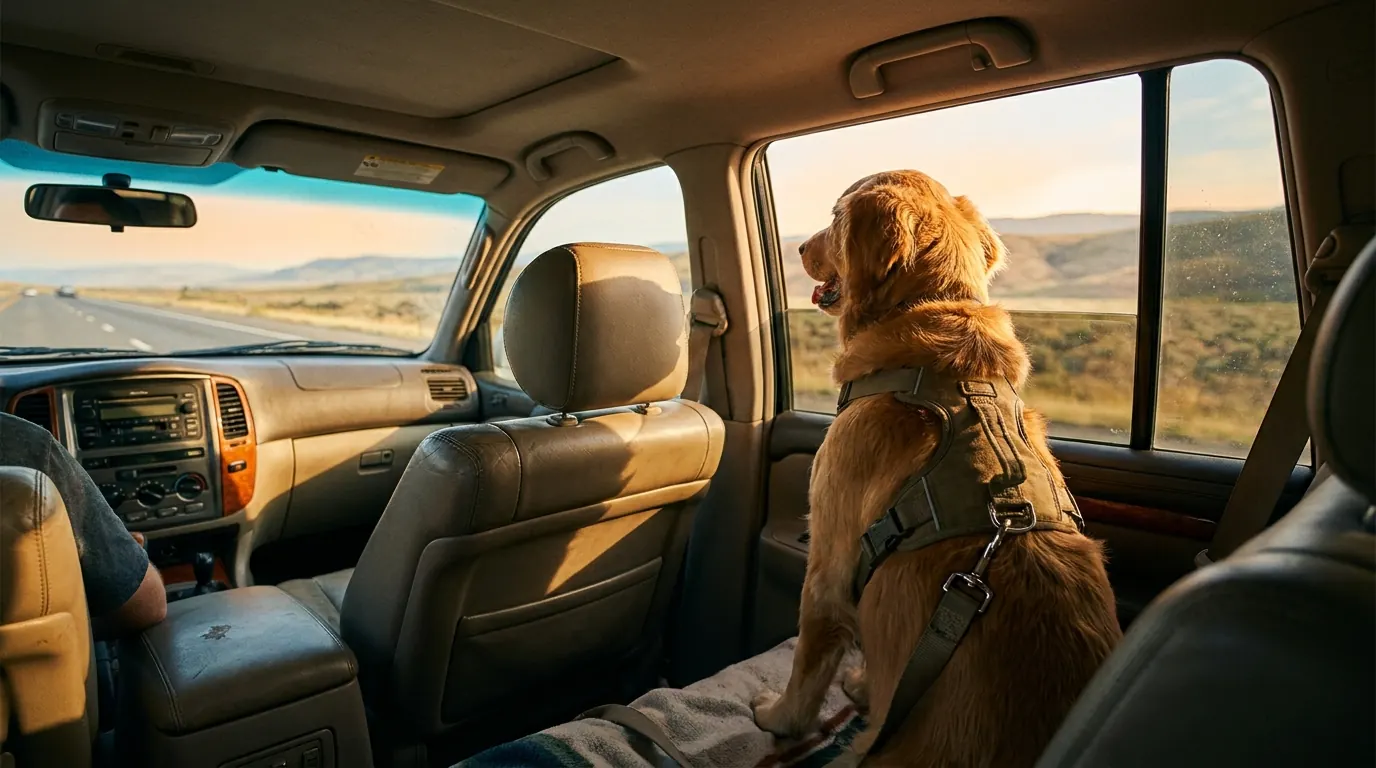
The first time I really understood why a crash-tested harness matters, I was doing 72 mph on I-40 just outside Flagstaff. My retriever Bear shifted hard to look at something out the window and slid right into the back of my seat. He was fine. But I had one of those half-second moments of real clarity where I thought: if we had stopped suddenly, he would have been a 70-pound projectile. I had been using a clip-in leash adapter. It was decorative, basically. After that drive, I spent three weeks researching what actually works and landed on the Kurgo Tru-Fit. That was six months ago. I have since put it through enough miles and situations to give you a real answer about whether it holds up.
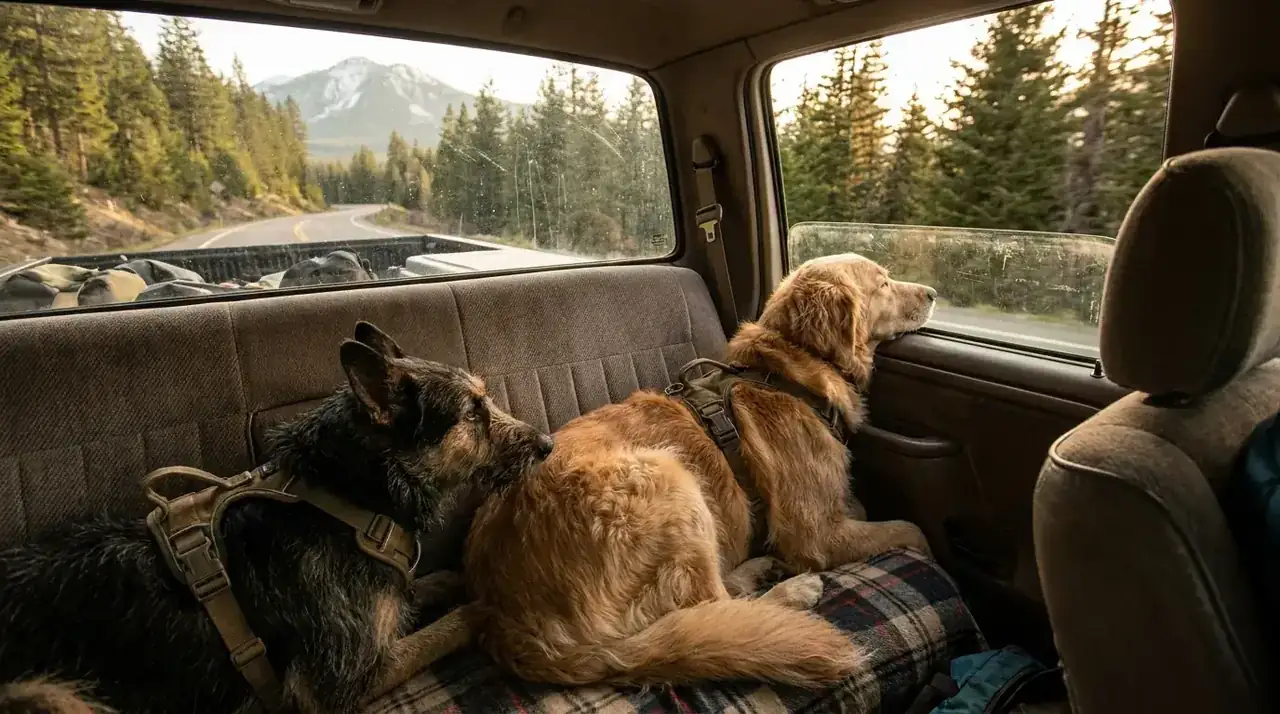
Quick note on how I tested this: I have two dogs, Bear (a 68-pound golden retriever mix, 4 years old) and Maple (a 42-pound beagle-lab mix, 7 years old). They ride together in the back seat of my 4Runner on every trip. Bear is calm in the car. Maple is not. Both have been in the Kurgo Tru-Fit since November.
Quick Verdict
A genuinely crash-tested harness at a price that does not feel like a gamble, with a five-point fit system that actually works for most dog builds. The chest plate design is the one thing that takes getting used to.
Amazon Check Today's Price →If your dog rides without a crash-tested harness, this is the one I'd start with.
The Kurgo Tru-Fit is crash-tested, fits most medium to large dogs, and runs under $30. Seven thousand-plus reviews back it up. See the current price on Amazon before you drive anywhere again.
Amazon Check Today's Price on Amazon →How I've Used It
Six months, two dogs, and somewhere around 4,800 miles across Arizona, Colorado, and New Mexico. That covers long interstate hauls (the longest was nine hours straight through), short in-town errands, a week-long stay at a dog-friendly campsite where we parked and deharness-d the dogs twice a day, and maybe forty gas-station quick-stops where I open the back door while cars are still moving around me. The harness has been on and off probably 200 times. That number matters when we talk about hardware later.
I also want to be upfront about what I did not test: I have not been in an actual accident with this harness on. No one wants to test that. What I can tell you is that the Kurgo Tru-Fit is Center for Pet Safety certified, which is the closest thing to a verified crash standard in the dog-harness world. That certification means the design has been tested in a simulated crash environment, not just marketed as safe. There is a meaningful difference between those two things, and it matters when you are looking at five harnesses that all say they are travel-safe on the packaging.
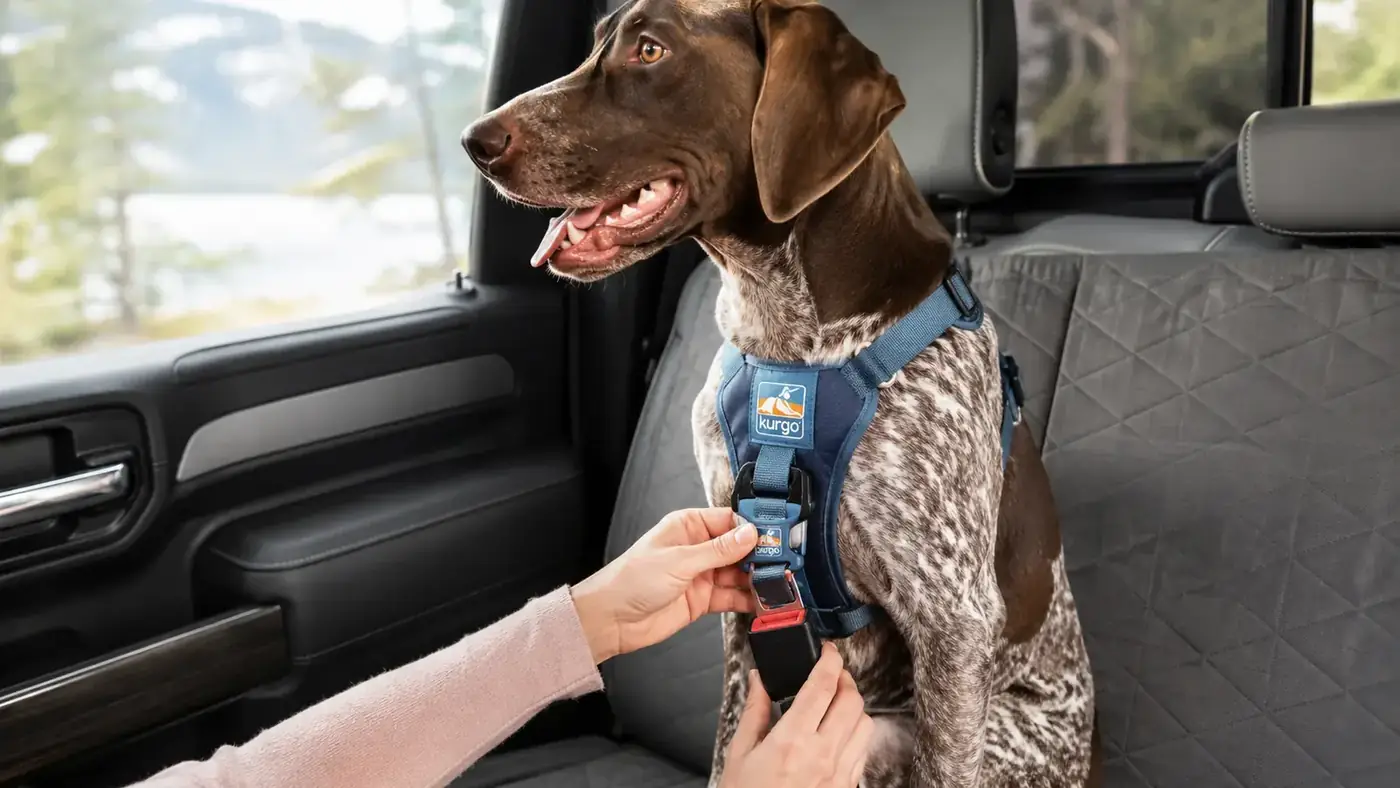
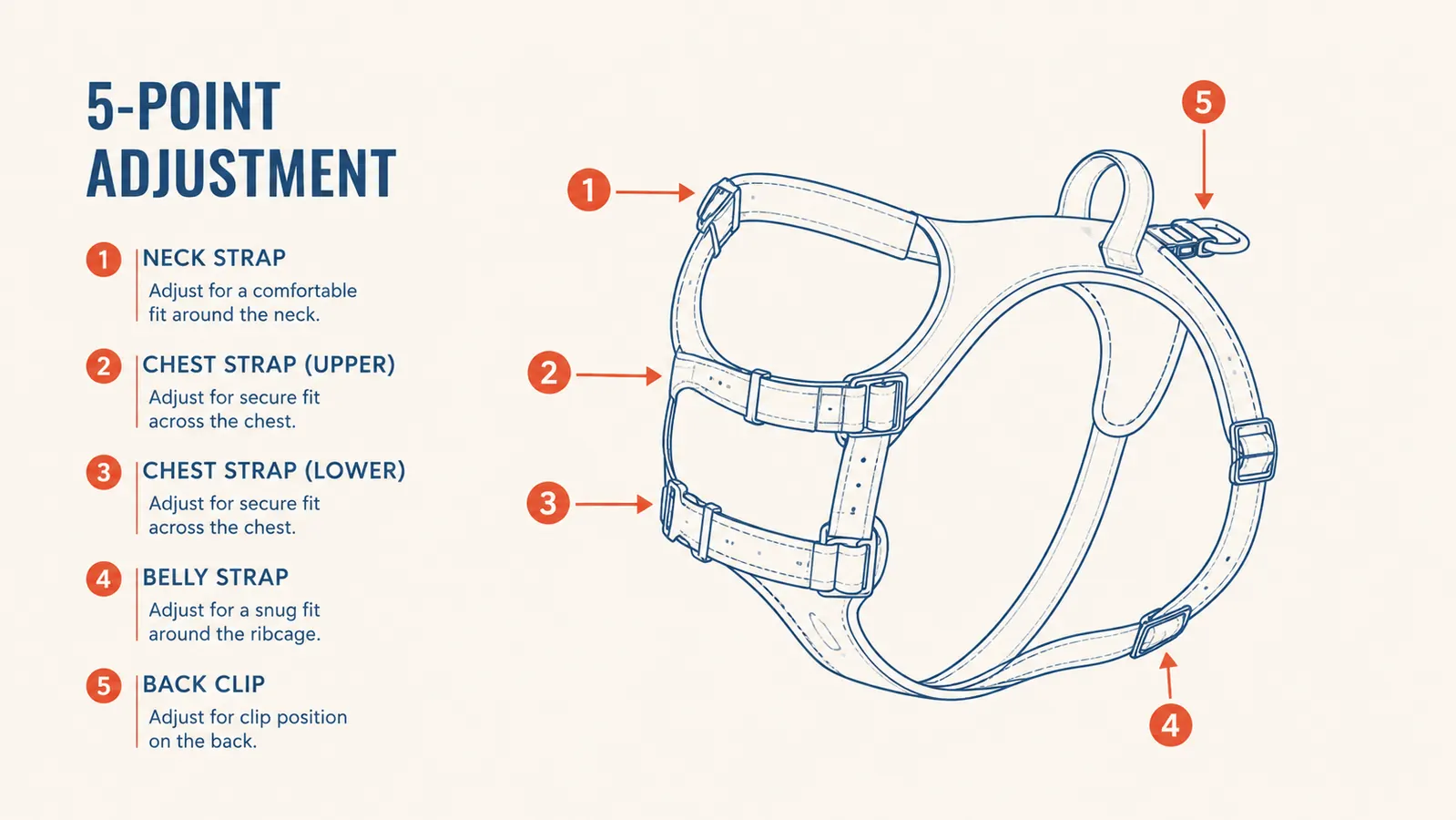
Fitting took me about 15 minutes the first time. Kurgo's five-point adjustment system has straps at the neck, two points on the chest plate, the belly, and the back. Once you dial it in for your dog, you can get them in and out in about 20 seconds. I timed it. That matters at rest stops when you want to let the dogs out but you do not want to unbuckle the whole rigging every time.
What the Crash-Test Certification Actually Means for Everyday Driving
Here is something that confused me when I started researching harnesses: not all products that say "crash tested" are the same. Some brands run their own internal tests with no third-party verification. The Kurgo Tru-Fit specifically has been tested by the Center for Pet Safety (CPS), which uses a repeatable, standardized protocol based on Federal Motor Vehicle Safety Standards. The CPS is an independent nonprofit. That distinction took me a while to find buried in product copy, but it is the reason I chose this harness over three others that had similar price points and similar-looking designs.
In practical terms, that certification means the harness is designed to distribute crash forces across the dog's chest and body rather than concentrating them at the neck or spine. The chest plate on the Tru-Fit is stiffer than it looks. When I first pulled it out of the box I thought it was going to be uncomfortable for Bear, but he has never shown any reluctance to put it on. He walks to the truck and sits. Maple took a week to stop doing the dead-weight protest move when I was trying to clip her in, but that is a Maple personality issue, not a harness issue.
The difference between 'crash tested by us' and 'crash tested by an independent nonprofit using federal standards' is the only thing I cared about when I was standing in the aisle trying to decide.
Fit Across Two Very Different Dog Builds
The Tru-Fit comes in five sizes: extra-small through extra-large. Bear wears large (chest 24-34 inches). Maple wears medium (chest 20-27 inches). Both sizes are available in the same design with the same five-point system, which is not true of every brand. A lot of harnesses simplify the adjustment system on smaller sizes, which makes them harder to fit correctly on oddly proportioned dogs.
Bear was easy. His build is close to the golden retriever baseline the harness seems designed around. Maple was harder. She has a deep chest relative to her overall size and her shoulder width is narrower than average. I had to run the chest plate higher than the diagram showed to get it to sit flat. Once I found that position, it held. She has not slipped out or even shifted in the harness, not even on Maple's favorite highway activity, which is pressing her entire body weight against the side window and then spinning around to press it against the other side.
One fit note I want to be honest about: if your dog has a very short neck, the neck strap can ride up toward the base of the skull rather than sitting further down the neck where it belongs. I have seen this with barrel-chested dogs in other people's photos. Bear does not have this issue. Maple doesn't either. But it is something to check on the first fitting before you trust the harness on the highway.
Hardware, Wear, and What Six Months Actually Does to the Material
The harness is nylon webbing with steel hardware on the leash attachment points. The buckles are plastic, which is standard in this price range. After 200 on/off cycles across six months, the buckles still click in firmly and release cleanly. The nylon has darkened slightly around the chest plate edges from contact with Bear's coat, but there is no fraying or structural softening that I can find.
The seat belt loop on the back is reinforced with a separate piece of webbing rather than just being a loop in the main strap. That is a design detail I only noticed because I was comparing it to a different harness I used before this one, which had a single-layer loop that started to stretch after about three months. The Tru-Fit's loop has held its shape and has no visible wear at the seam.
The one hardware note I would flag: the metal D-ring for leash walking is fine for walking, but if your dog is a serious puller, the ring develops a bit of surface rust in humid environments after extended outdoor use. We are in the desert Southwest so I have not had this problem, but I have heard it from a friend in the Pacific Northwest who uses hers in wetter conditions year-round. It is cosmetic and does not affect function, but it is worth knowing.
Using It as a Walking Harness at Rest Stops
The Tru-Fit is marketed as a car harness, but I also use it as the walking harness at rest stops. The back clip works fine for calm walking. For Bear, who is a polite walker, this is totally adequate. For Maple, who decides at random intervals that something in the ditch smells more important than my arm socket, I usually clip to the front ring. There is a front attachment point on the chest plate that redirects her forward momentum back toward me. It works, though the leash can get tangled under her legs more easily than on a harness designed specifically for front-clip use. If walking control is your primary concern and car safety is secondary, you might want to look at a dedicated no-pull harness for the walking portions of your trip. The Tru-Fit does a solid job in the car. It is a decent walking harness as a bonus.
One thing I genuinely appreciate at rest stops is that I can snap the seat-belt tether to the car door rail while the dogs are standing just outside the vehicle, which keeps them from bolting toward the parking lot when a semi rolls in. That is not an advertised feature. It is just a useful accident of the design. I have done this maybe 30 times and the tether has held every time.
Pros
- Center for Pet Safety certified crash test, not a self-reported claim
- Five-point fit system works across a wide range of builds including deep-chested dogs
- Steel hardware at load-bearing points, not all plastic
- Dual attachment points (back for seat belt, front for leash redirect) on the same harness
- Under $30 at most times on Amazon, with solid availability in all five sizes
- Holds up to daily on/off cycling without buckle wear or webbing breakdown
Cons
- The rigid chest plate takes one to two days to feel natural to dogs who have never worn a harness before
- Very short-necked or extremely wide-shouldered dogs may need extra time to dial in the neck strap position
- The metal D-ring can develop surface rust in consistently humid/wet climates after several months of outdoor use
- Front-clip attachment is functional but leash management is slightly awkward compared to harnesses designed specifically for pulling dogs
Who This Is For
This harness is for the dog parent who drives with their dog regularly and wants a real, verified safety standard without spending $80 to $100 on a premium crash-rated harness. It is for medium to large dogs in the 20-to-80-pound range who do not have extreme body proportions. It works on calm dogs and on reactive dogs alike, as long as you take the time to fit it properly on the first use. If you are doing long road trips and rest stops are part of your routine, the dual-attachment design makes it genuinely useful outside the car as well as inside it. And if you found this because you have been using a standard clip-in leash adapter and know in the back of your mind that it would not do much in an actual stop, this is where I would start.
Who Should Skip It
Skip it if your dog is a serious escape artist. The Tru-Fit is snug when fitted correctly but it is not a step-in design with a full belly wrap. Very slender-bodied dogs like greyhounds or whippets with narrow chests and broad heads can back out of harnesses with a chest-plate design. It is also not the right call if your primary need is walk control for a reactive 90-plus-pound dog; a dedicated front-clip no-pull harness will give you more leverage in that situation. And if you want a premium harness with more padding, more visibility, or a more polished aesthetic, there are better options at the $70 to $100 price point. The Tru-Fit does not pretend to be that.
For reference, I also compared the Tru-Fit directly against the Sleepypod Clickit for a longer head-to-head breakdown, which you can find in my Kurgo vs Sleepypod Clickit comparison. And if you want to understand more about why the crash-test certification matters beyond the marketing language, I wrote about that in detail in 10 reasons a crash-tested harness is worth the extra few dollars.
Your dog is not a carry-on bag. A certified crash harness costs less than a vet visit.
The Kurgo Tru-Fit is one of the only dog car harnesses under $30 with an independent crash-test certification. Check today's price on Amazon and make sure your next drive is actually safer than your last one.
Amazon Check Today's Price on Amazon →