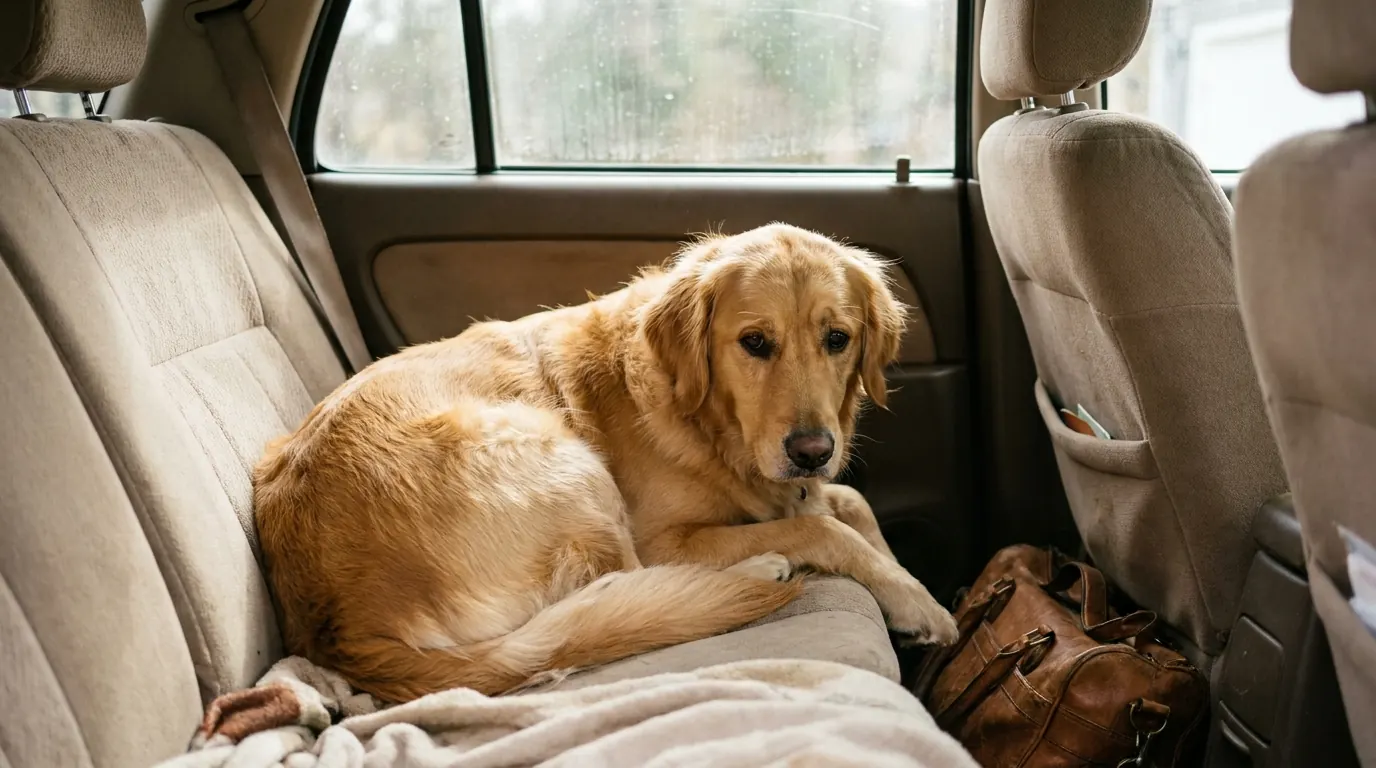
Travel anxiety in dogs is more common than most of us realize, which is why so many parents end up trying things like Zesty Paws Calming Chews. I drove two hours to the coast with my retriever Bear before I realized he had been stressed the entire time. Not car-sick-stressed, not whining-stressed. Just quietly falling apart in the back seat while I sang along to podcasts in the front. The signs were all there. I just did not know what I was looking at. After years of road trips with Bear and Roux, I can now read both of them pretty well. But it took some embarrassing misses first. These are the ten signals I wish someone had listed out for me early on, plus the honest things that have helped at each step.
One note before we get into it: I am not a vet or a trainer. This is dog-mom experience, not medical advice. If your dog has severe anxiety in the car, your vet is the right first call. For the everyday mid-range travel stress most dogs carry? This list is a good place to start.
If your dog checks more than two boxes on this list, there is something worth trying before your next drive.
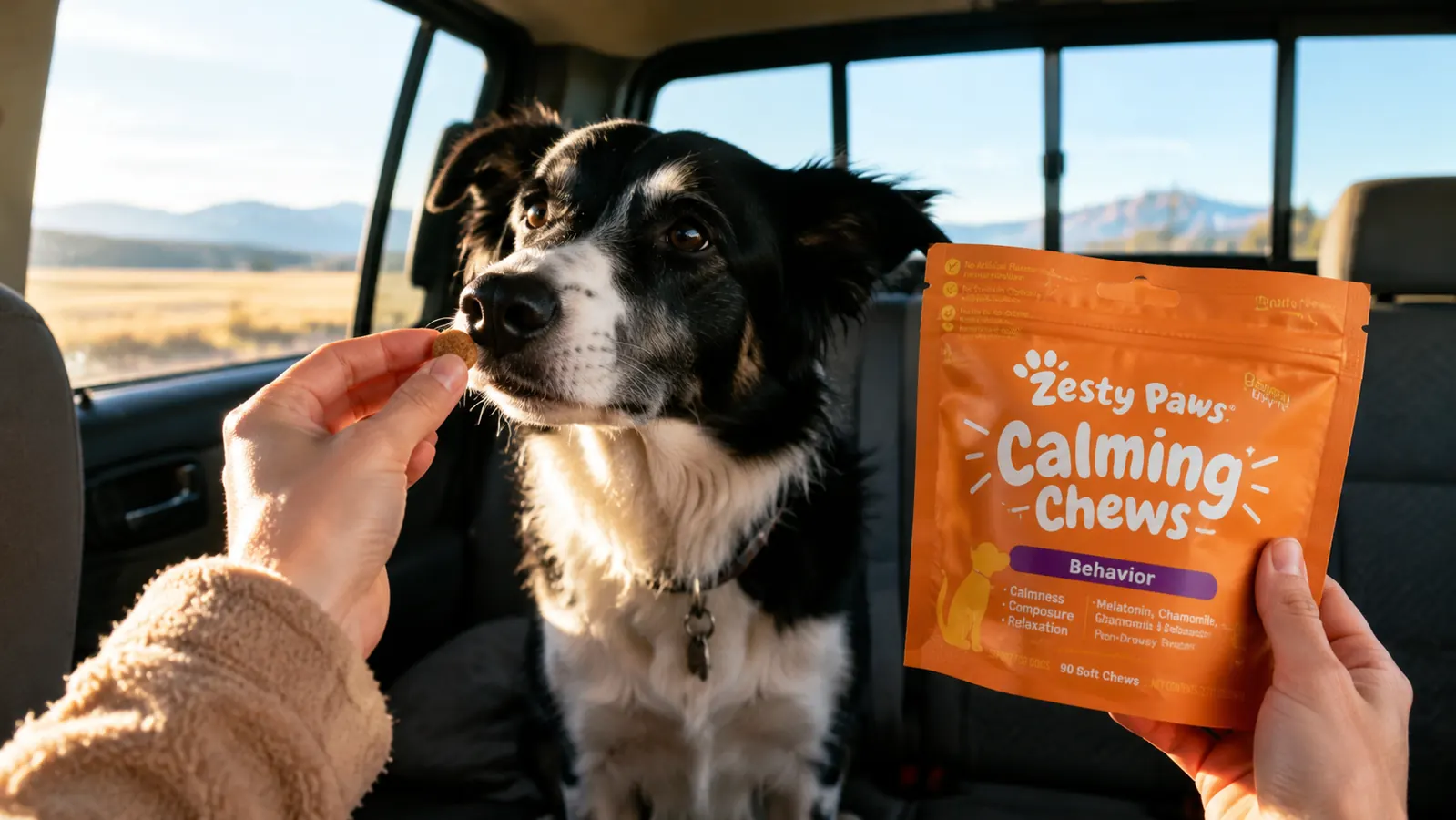
Zesty Paws Calming Chews are what I reach for when Bear needs a little help on longer drives. Not a sedative, not a prescription, just a supplement with L-theanine, thiamine, and melatonin that takes the edge off without making him dopey. Over 9,900 reviews. Worth checking out before your next trip.
Amazon Check Today's Price on Amazon →Whale Eye (The White-Sclera Look)
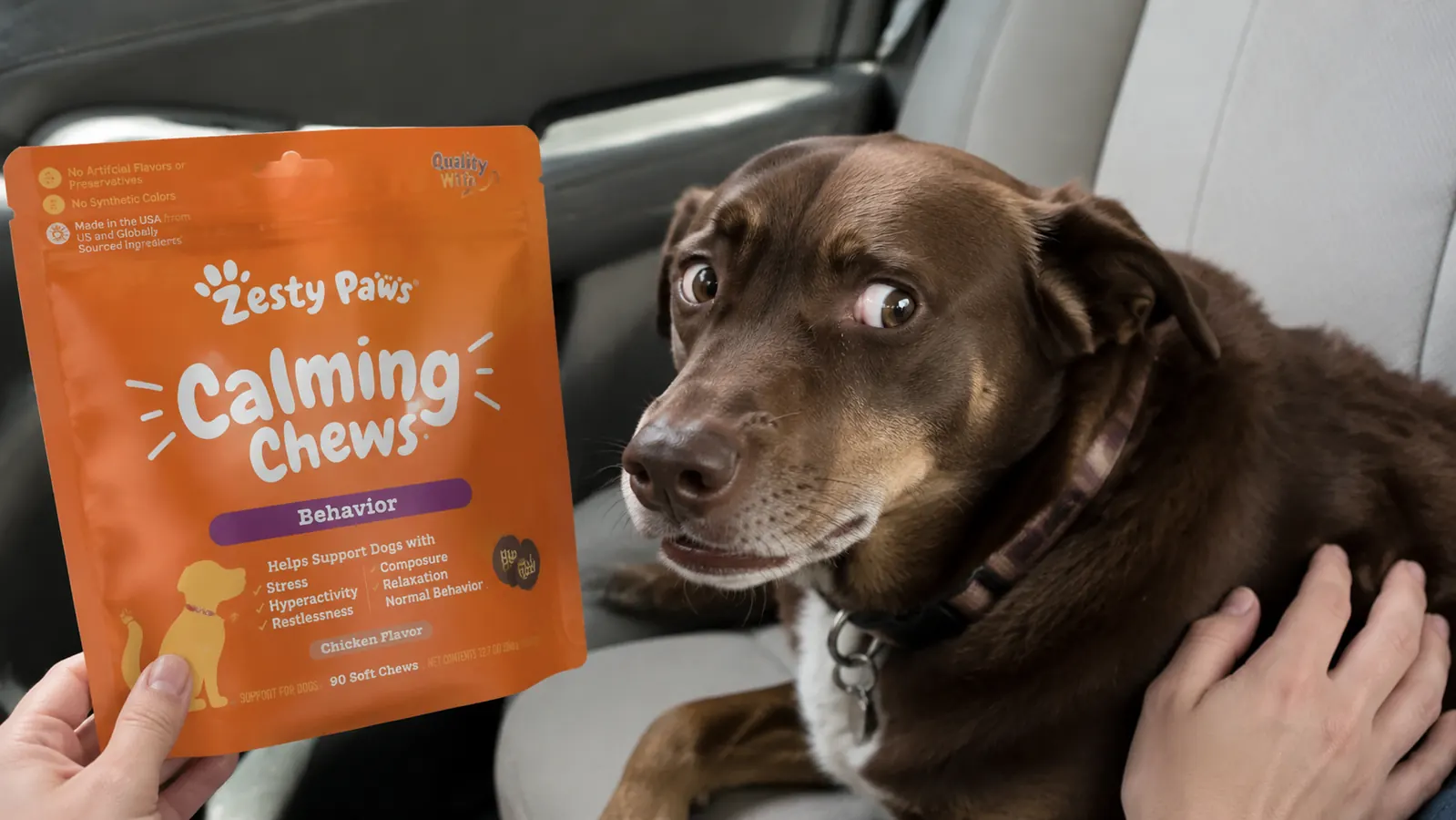
Whale eye is when you can see the white of your dog's eye because they are turning their head away while still watching something they find threatening. In the car it often shows up when a dog is facing forward but tracking trucks, cyclists, or other dogs out the side window. It is a classic low-level stress signal that gets missed because the dog looks almost normal. If you see it consistently on highway stretches or in traffic, your dog is working hard to manage something that feels threatening. On long drives I give Bear a Zesty Paws chew about 30 minutes before departure and it noticeably reduces this kind of hyper-vigilance.
Amazon See Zesty Paws Calming Chews on Amazon →Panting Without Heat
This one trips up a lot of dog parents, including me. If the AC is on, the dog just drank water, and it is 65 degrees outside, panting is not about temperature. It is almost always stress or pain. In a car it usually means your dog is in a low-grade anxiety loop, their body running the same way it would during a thunderstorm. The calming chews help here, but so does where you park them in the car. Roux pants way less when she is in a covered crate versus loose in the back seat. Reducing visual overwhelm matters as much as any supplement.
Amazon Check Zesty Paws Chews →Lip Licking (Not After Food)
A slow, deliberate lip lick with no food nearby is a calming signal. Dogs use it toward each other to say "I am not a threat" and they use it when they themselves are anxious. In the car you will sometimes see it happen right after a loud noise, a hard brake, or when another vehicle gets close. It is brief and easy to miss, but if you notice it repeating on a drive, take it seriously. Keeping travel calm, consistent, and supplemented on harder days goes a long way.
Amazon See Zesty Paws on Amazon →Repeated Yawning
Same family as the lip lick. A single yawn when a dog wakes up from a nap in the back seat is totally normal. A cluster of yawns during traffic, during loading up, or right after a rest stop is your dog trying to self-regulate. I started noticing Bear doing this every time we pulled into a busy parking lot. It was his way of saying "this is a lot." Giving him a chew 30-45 minutes before we arrive at a high-stimulation stop has noticeably reduced it.
Amazon Check Today's Price on Amazon →Paw Lifting (One Front Paw Off the Ground)
This is a subtle one. A raised front paw that is held mid-air is a freeze posture, a moment of "I do not know what to do here." In the car you usually see it when a dog is trying to stand on a seat that is moving, when they are uncertain about getting back in after a rest stop, or when something startled them and they have not recovered. For the loading hesitation specifically, building a positive loading routine over several trips matters more than any supplement. But if the hesitation is paired with panting or lip licking, the anxiety is real and worth addressing holistically.
Amazon See Zesty Paws Calming Chews →The mistake most dog parents make is waiting for a meltdown before they acknowledge the stress. By then the dog has been white-knuckling it for two hours.
Refusing to Eat in Motion
My dogs will eat anything, anywhere, under any circumstances. So the first time Roux turned down a treat mid-highway I paid attention. A dog who refuses food they normally love is almost certainly in a heightened stress state. The "eat" system shuts down when the threat-response system kicks in, it is just biology. If your dog normally takes treats fine at home but ignores them once the car is moving, that is a clear signal the drive itself is the stressor. Pairing a calming supplement given before departure with familiar, high-value treats during the drive can help rebuild the positive association over time.
Amazon Check Zesty Paws on Amazon →Pacing in the Crate
Some restlessness when a dog first loads into a crate is normal. What is not normal is sustained back-and-forth movement that continues for 20, 30, 40 minutes into a drive. Pacing in a crate is a displacement behavior, your dog is trying to do something with the anxiety and pacing is what their body defaults to. A few things that help: covering three sides of a wire crate with a blanket to reduce visual input, making sure the crate is sized right so they can turn around but is not so big it feels unstable, and yes, a calming supplement timed about 30-45 minutes before loading.
Amazon See Zesty Paws Calming Chews →Hiding Behind or Under the Seat
This one is the clearest "I am done" signal on the whole list. A dog who normally lounges on the back seat suddenly wedging themselves into the footwell or behind the driver seat is not being cute. They are seeking a smaller, more contained space because the environment feels out of control. I have seen this most on long drives through heavy traffic or during thunderstorms. The fix is not dragging them back out, it is making the footwell feel safe, throwing a familiar blanket down there, and addressing the root anxiety on future trips before it escalates to hiding.
Amazon Check Today's Price on Amazon →Drooling Without Motion Sickness
Motion sickness produces drooling, but so does anxiety, and the two are easy to confuse in a moving car. The tell is whether it happens before the car moves. If your dog starts drooling in the driveway while the engine is warming up, it is not motion sickness. That is anticipatory stress, the dog has learned what the car means and their body is already reacting. For anticipatory responders like this, timing matters. The chews need to go in before loading, not once you are already on the highway. I give Roux hers with breakfast on drive mornings and it makes a real difference in that pre-departure window.
Amazon See Zesty Paws on Amazon →Withdrawn Body Posture (Tucked Tail, Low Head, Tight Muscles)
A relaxed traveling dog is loose. Tail at a neutral height, body soft, happy to shift positions and look out the window. A stressed dog is tight. Tail tucked under or held low, head down, muscles braced, not interested in window views or engagement. This kind of shutdown posture is sometimes mistaken for a dog being "well-behaved" in the car. They are not calm. They are coping. If your dog rides this way consistently, the whole travel experience needs attention: the routine, the pre-trip prep, the environment inside the car, and what you give them to take the physical edge off. Getting all of those working together is what makes road trips genuinely enjoyable for both of you.
Amazon Check Zesty Paws Calming Chews on Amazon →What I Would Skip
I have tried a few things over the years that did not pan out. Benadryl made Bear groggy but did not actually calm the anxiety, he was just sedated-stressed instead of alert-stressed. Thunder shirts helped Roux mildly for the first few trips and then she adapted to them and they stopped doing much. I have also tried calming sprays that honestly smelled worse than whatever was stressing the dogs. What has consistently worked better than any of those is the combination of a good pre-trip routine, a well-fitted travel setup, and a supplement that addresses the physiological side of the anxiety without knocking them flat. The Zesty Paws chews are the version we have stuck with the longest. They are not perfect for every dog on every trip, but they are the right starting point for most.
Your dog does not have to dread the car. Start with the supplement that works before the drive starts.
Zesty Paws Calming Chews use L-theanine, thiamine B1, and melatonin to reduce the physical stress response in dogs. Give them 30-45 minutes before loading up. They work best as part of a consistent routine, not just on hard travel days. Rated 4.1 stars across nearly 10,000 reviews.
Amazon Check Today's Price on Amazon →