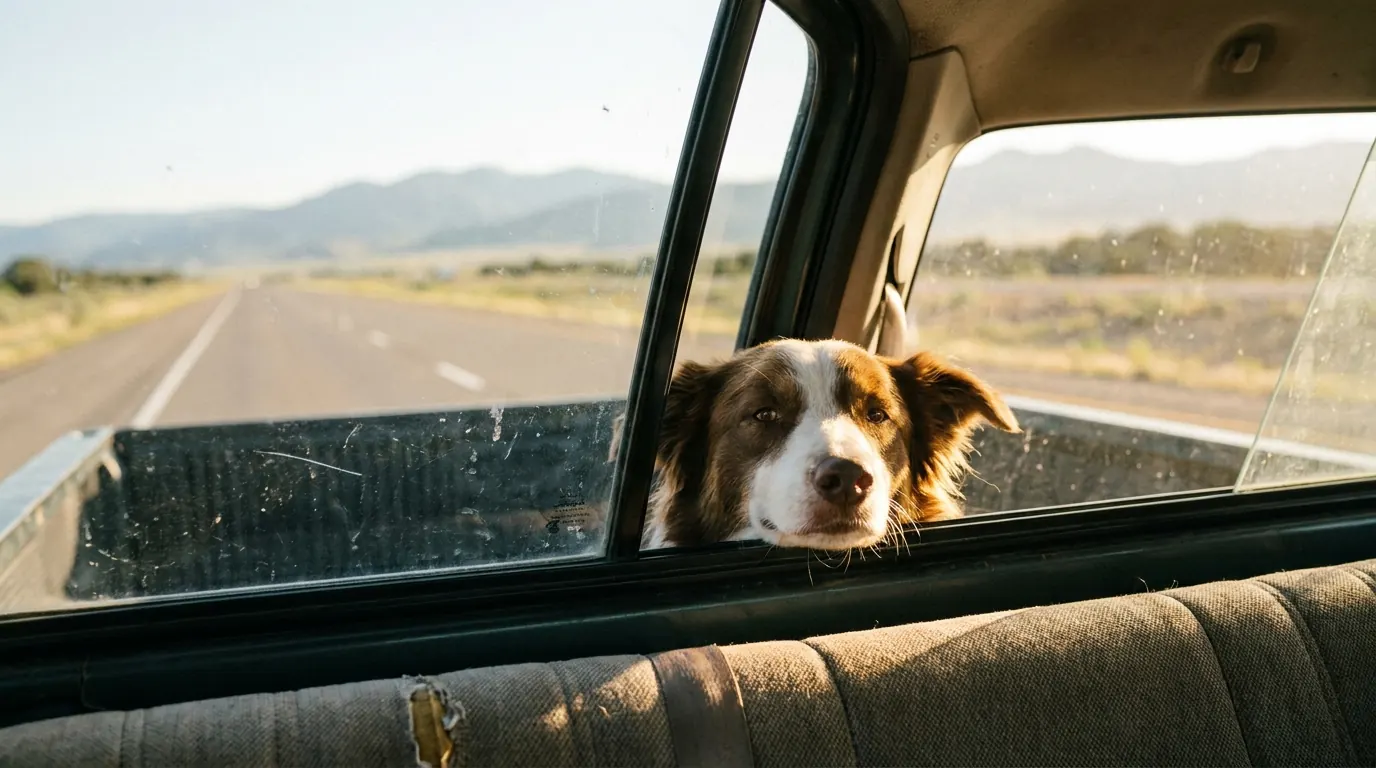
Zesty Paws Calming Chews are one of the tools we lean on for road trips, but they are only one piece of a bigger picture. Roux is a 42-pound border collie mix who knows the sound of truck keys. The moment she hears them jingle, she starts panting. By the time I open the back door, she is pacing. Get her on the highway and she escalates to full-body shaking, drooling, and throwing herself at the window trying to get into the front seat. I have driven six hours to Colorado with one hand on the wheel and one eye on the rearview mirror watching her fall apart. It is exhausting for her and honestly terrifying for me.
I am not a vet or a trainer. I am just someone who has tried a lot of things on a dog with real travel anxiety and kept notes on what helped and what was a waste of time. This guide is the system I built, one step at a time, that finally got Roux to the point where she can handle a full day of driving without losing it. The whole thing costs less than you think and none of it involves a sedative prescription.
If your dog dreads every car ride, one supplement changed the baseline for Roux
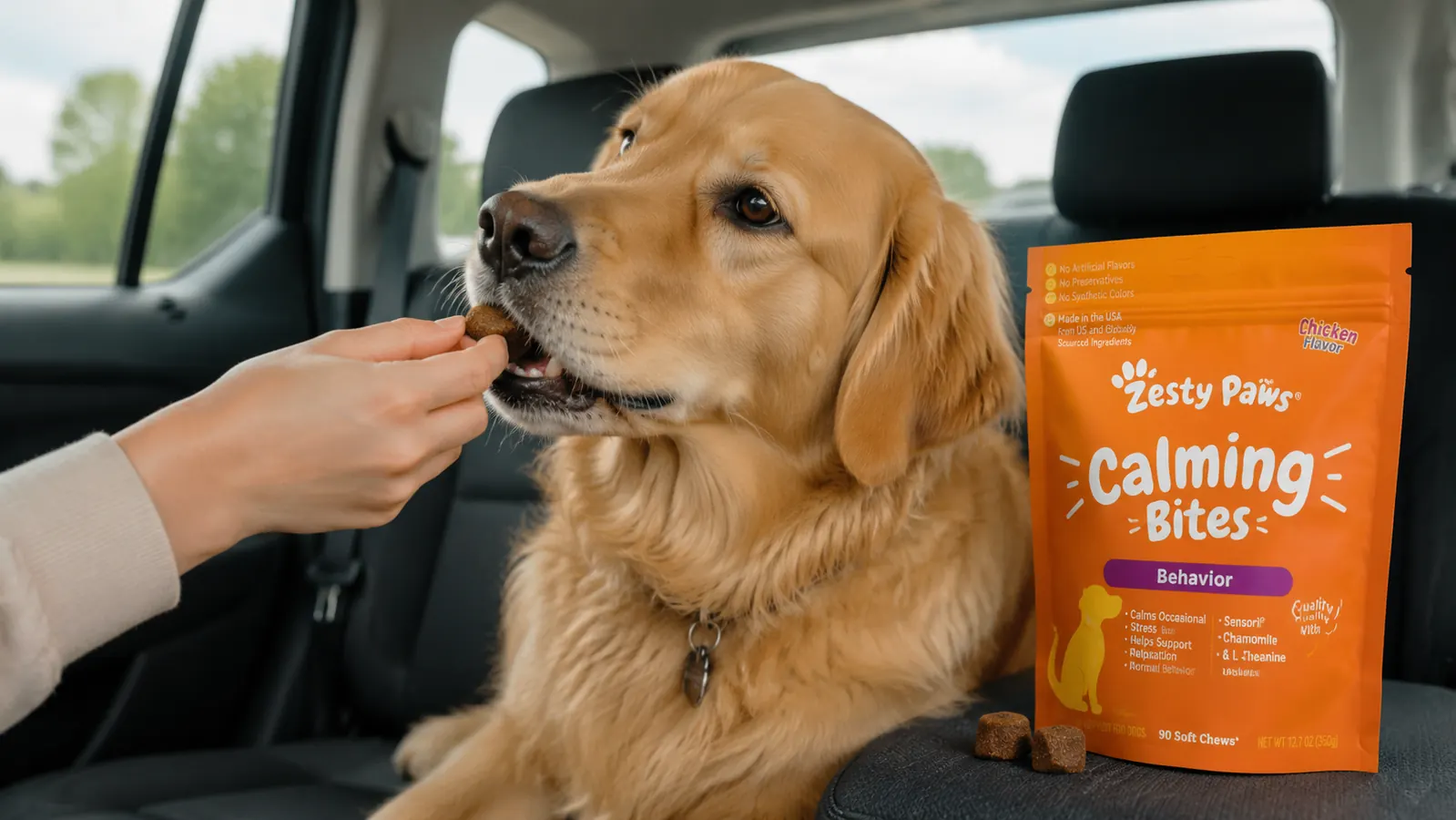
Zesty Paws Calming Chews use L-theanine and thiamine to take the edge off before the anxiety spirals. They are not a magic switch, but paired with the steps below, they made a measurable difference starting around trip three.
Amazon Check Today's Price on Amazon →Step 1: Run Practice Rides Before the Real Trip
The biggest mistake I made for the first two years was only putting Roux in the car when we were actually going somewhere, usually a long drive. That meant every car ride carried the full weight of whatever anxiety she had built up from the last time. The car itself became the trigger.
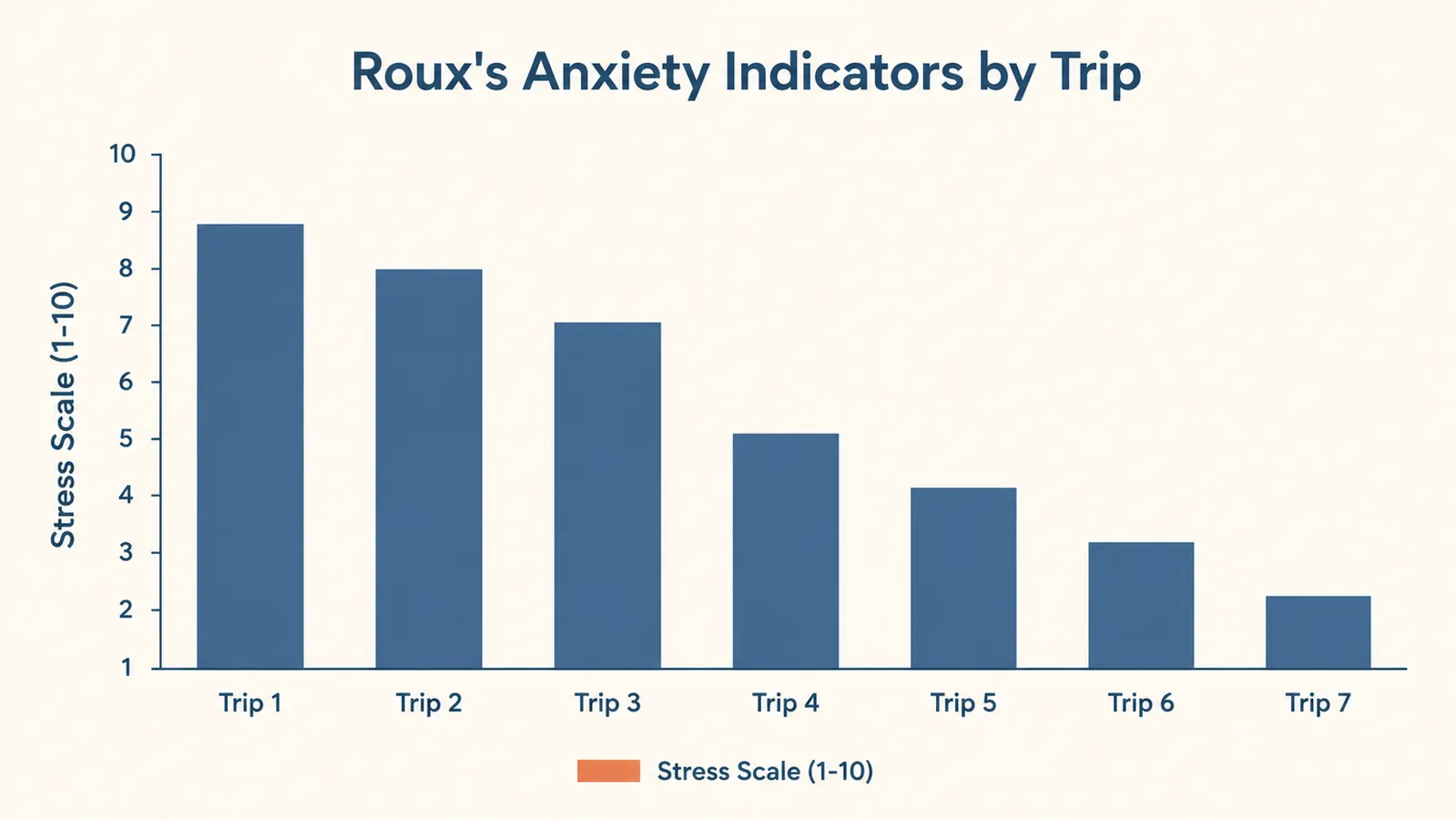
Three weeks before any trip of more than two hours, I started doing daily five-minute practice rides. Just pull out of the driveway, drive to the end of the block, and come back. No destination, no pressure. I did this every single day for a week. Then I stretched it to ten minutes, then twenty. By the time the real trip came, she had gotten into the car and come home safe more than a dozen times. Her nervous system had evidence that the car does not always mean chaos. This alone cut her shaking by half before I added anything else.
The goal is not to train her out of anxiety completely. It is just to lower her baseline before you layer on the other tools. If you skip this step and go straight to supplements, you are fighting a much steeper slope.
Step 2: Choose the Right Restraint Setup for Your Dog
Where a dog sits in the car and how she is secured has a bigger impact on anxiety than most people realize. I tried three setups with Roux: loose in the back seat, secured by a seat-belt tether to her harness, and inside a soft-sided crate. Each one produced different behavior.
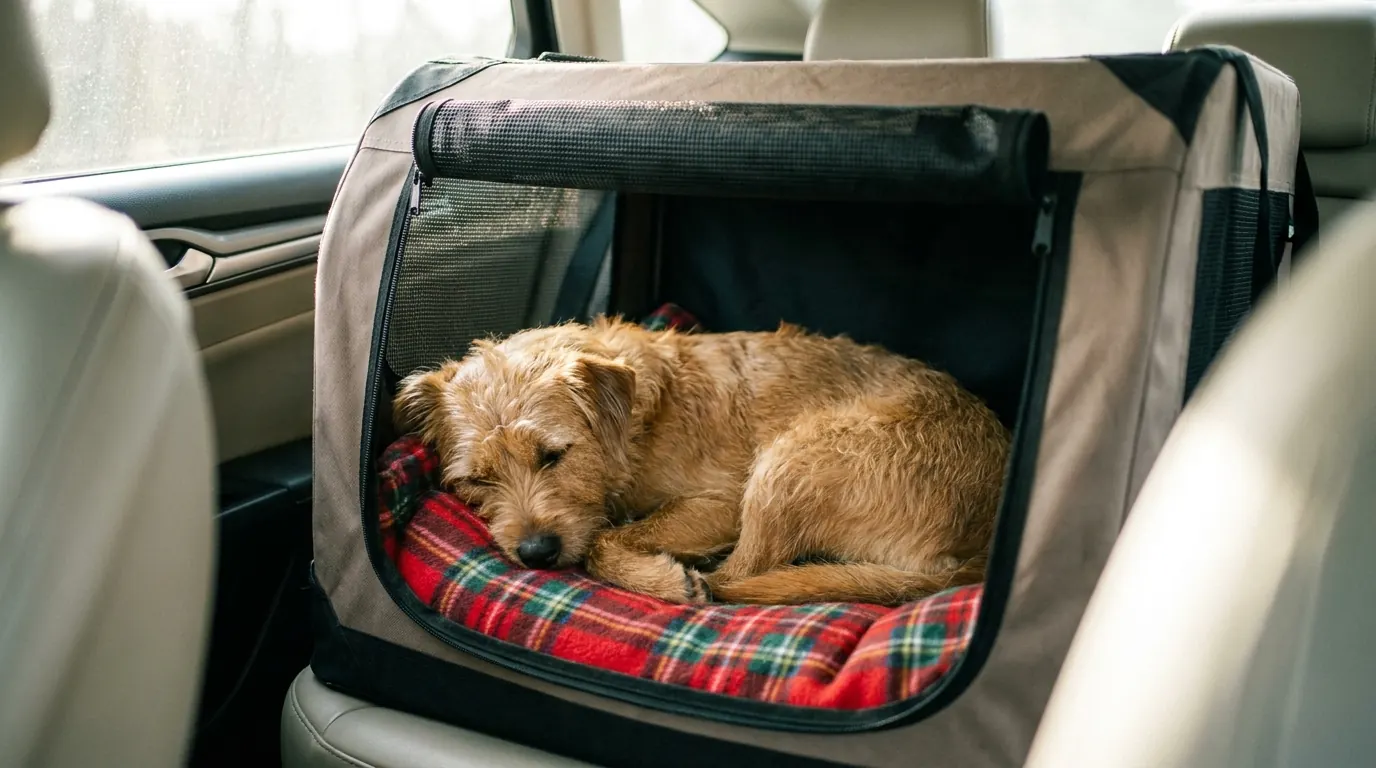
Loose was the worst option for her specifically. With nothing anchoring her, she paced, climbed, and kept trying to reach me. The movement made her more anxious. The tether helped with safety but she still lunged and then hit the end of it, which seemed to startle her repeatedly. The soft crate was the answer for Roux. Putting her familiar fleece blanket and a worn t-shirt of mine inside gave her a small, defined space that felt like her own. She stopped pacing within two trips. Not every dog is a crate dog, but if yours tends toward pacing and climbing, it is worth trying before you assume supplements are the main lever.
Bear, my golden retriever, is the opposite. He lies down in the back seat with a harness and seat-belt clip and stays there the whole trip. Watch your own dog and let their behavior tell you what they need. There is no universal right answer.
Step 3: Exercise Hard the Morning of the Trip
I used to skip the morning walk on travel days because I was in a rush to pack and load. That was a mistake. A dog who has been lying around all morning with nothing to do but sense that something unusual is happening will get into the car at a much higher stress level than a dog who just ran for forty-five minutes.
Now it is a non-negotiable part of our departure routine. I wake up ninety minutes earlier on travel days. Roux gets a full trail run or a long game of fetch. Bear gets his walk. They eat a light breakfast afterward and then rest for about thirty minutes before loading up. They get in the car physically tired. A tired dog is a genuinely calmer dog, and the exercise also gives her something to do with the cortisol that would otherwise be expressing itself as panting and pacing. This is free, takes no gear, and has a noticeable effect every single time.
Step 4: Time Your Calming Chew Correctly
After the practice rides and the morning exercise, the calming supplement is the next layer. I use Zesty Paws Calming Chews for Roux, and the timing matters as much as the product itself. The first three times I tried them, I gave one to her as I was loading the car, which meant they had barely started working by the time we hit the highway. I was essentially giving her a supplement that was ramping up while she was already in full panic mode.
The actual window is about thirty to forty-five minutes before loading. So now she gets her chew while I am doing the final car-packing inside the house, while everything still feels calm and routine. By the time we are on the road, the L-theanine and thiamine have had time to do something. The Zesty Paws chews are the ones that worked best in my testing. They are a soft duck-flavored bite that both dogs eat without hesitation, and they have a 4.1-star rating from nearly ten thousand buyers on Amazon, which tells me I am not the only one who found them useful. I have also tried a competitor that was heavier on melatonin and found it made Roux groggy and weird rather than calm and functional. Your mileage may vary, but the thiamine-forward formula has been better for a dog who needs to be calm but not sedated.
One thing I want to be clear about: this is not a prescription medication. I am not a vet. If your dog has severe anxiety that is causing injury, weight loss, or complete inability to travel, talk to your vet before relying on an OTC supplement. These chews are for the genuinely anxious-but-functional dog, not a dog in crisis.
The timing matters as much as the product. Give it thirty to forty-five minutes before loading, not as you are walking to the car.
Step 5: Run a Consistent Gas Station Protocol
This step took me the longest to systematize. Gas stops used to be chaos: cars pulling in and out, engines revving, strangers walking over to say hi to the dogs, trucks idling loudly. For an already-anxious dog, a truck stop is a lot. Roux had her worst moment ever outside Amarillo at a Flying J that had approximately forty-seven stimuli firing at once.
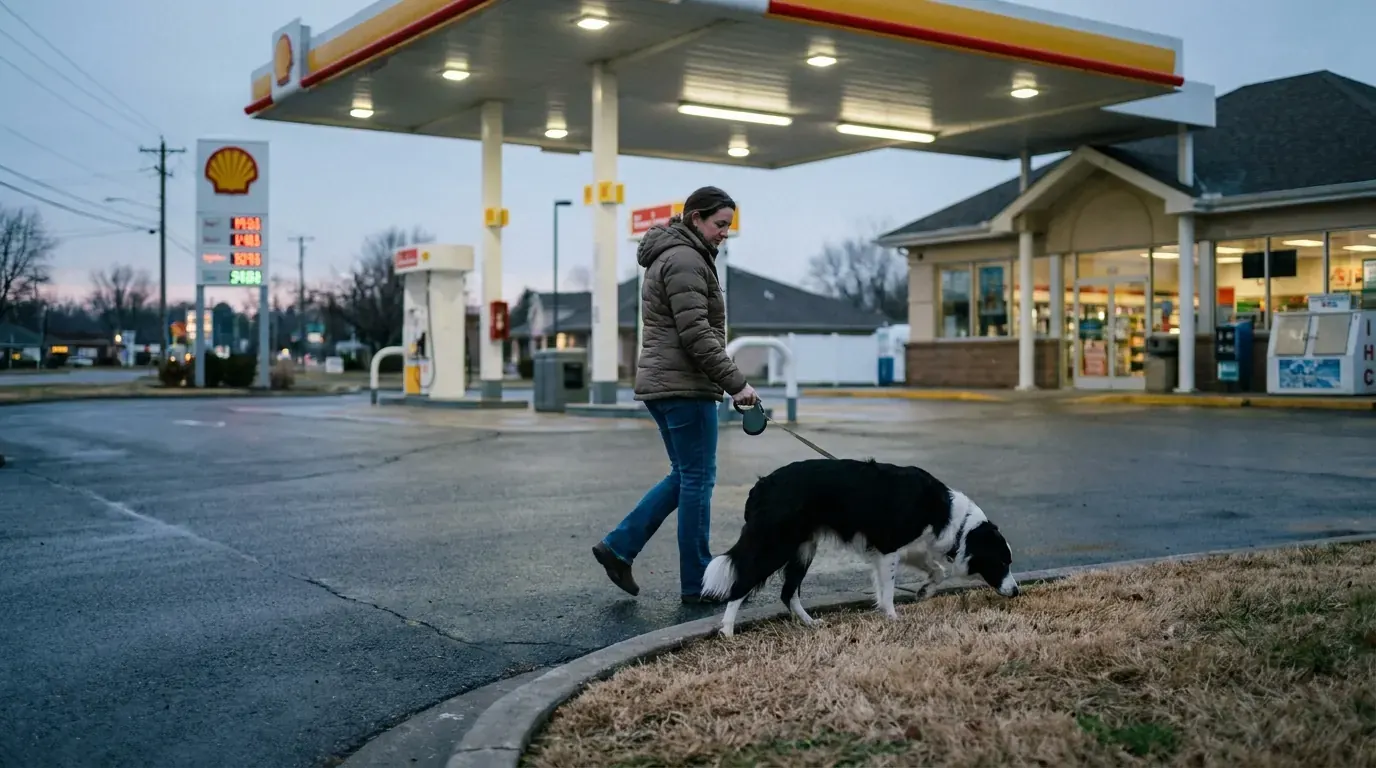
Now I have a protocol I do not deviate from. I scout the lot before I stop and choose a quieter end away from the truck idling lanes. I clip on the no-pull harness before I open the door, every single time, so she cannot dart into traffic. I walk her to a grassy strip on the far edge of the lot and just let her sniff for three to four minutes without asking her to do anything. No commands, no coaxing. Just sniffing, which is decompression for dogs. Then we walk back to the car and load up before the stimulation climbs again. The entire stop is under ten minutes. Consistency matters here. Roux has learned what gas stops mean now: short walk, quiet sniff, back to the safe crate. The predictability is itself calming.
Step 6: Set Up the Hotel Room Before She Enters
The first night in a new hotel used to undo everything the calming protocol built during the drive. New smells, hard floors, weird sounds, the air conditioner rattling. Roux would pace the room for an hour before settling.
Now I go into the room before I bring her in. I put her travel crate in the corner with the door open, lay her blanket inside, and put a worn shirt of mine on top. I turn off the overhead lights and use a lamp instead, since bright overhead light seems to heighten her alertness. Then I bring her in on leash, let her do a full room sniff on her own terms, and only direct her toward the crate after she has had a few minutes to establish that the space is not a threat. This process takes about eight minutes but it is the difference between a dog who paces for an hour and a dog who settles in twenty minutes.
I also give her a second calming chew after dinner on the first hotel night, since that transition tends to be the most stressful moment of the whole trip. The bottle says you can give the recommended dose twice daily, and for travel days, I use that flexibility.
Step 7: Add White Noise for the Whole Drive and Every Night
This is the cheapest thing on the list and the one I get the most skeptical reactions to when I mention it. A simple white noise app on my phone, played through the car's speakers at low volume, masked a surprising amount of the ambient noise that kept Roux on high alert during highway driving. Specifically the irregular sounds: a passing motorcycle, a truck horn in the distance, a rumble strip. Those sudden sounds would spike her anxiety even on good trips.
The white noise does not eliminate the sounds. It just keeps the baseline noise floor high enough that the spikes are less dramatic. I use the brown noise setting, which is a lower, more rumbling tone than classic white noise, and I have found Roux settles faster with it than without it. At night in the hotel I run the same app on my phone on the nightstand. I would not list this as a primary solution on its own, but as the final layer on top of everything else, it is genuinely useful.
What Else Helps
A few other things I have added over time that did not fit neatly into a numbered step. A light meal before departure rather than a full one, since a full stomach seems to make nausea-related anxiety worse. Stopping every two hours on longer drives even when Roux seems okay, because letting the tension build for too long makes the eventual stop feel overwhelming. And keeping my own voice calm and matter-of-fact in the car. Dogs pick up on owner stress faster than we think. If you are tense and narrating every scary near-miss on the highway, she knows. I try to keep the car radio low, my voice level, and my driving smooth. That sounds obvious but it took me a while to stop talking to Roux about how worried I was about her.
If you want more detail on what dog travel stress actually looks like before it escalates to the shaking and pacing phase, the article on 10 signs your dog is stressed during travel is worth a read. And if you want my full honest take on the Zesty Paws chews specifically, including the timing and consistency questions that the product page glosses over, I wrote a detailed review at Zesty Paws calming chews: three months of road trips.
Ready to try the calming chews that made step four possible? Here is the current Amazon price.
Zesty Paws Calming Chews for Dogs. Soft duck-flavor bites with L-theanine, thiamine, and melatonin. Close to ten thousand reviews. I give Roux one chew thirty to forty-five minutes before we load. On long travel days and the first hotel night, I use the second dose option after dinner.
Amazon Check Today's Price on Amazon →