
When Bear started slowing down on our morning walks last fall, I knew I needed to do something before our winter road trips turned into a misery for him. He is a nine-year-old golden retriever, about 72 pounds, and the vet flagged some early joint stiffness at his annual checkup. She mentioned glucosamine and suggested I look at either Cosequin or Dasuquin. Both are made by the same company, Nutramax. One costs roughly $16 a month. The other can run $50 or more depending on where you buy it. I spent a few evenings reading labels, vet journals, and forum threads before I made a call. Here is what I found.
The short answer: Cosequin is the right starting point for most senior dogs, including Bear. Dasuquin makes sense in specific situations, and I will lay those out below. But if your dog has early-to-moderate stiffness and you travel with them regularly, overpaying for Dasuquin is probably not necessary.
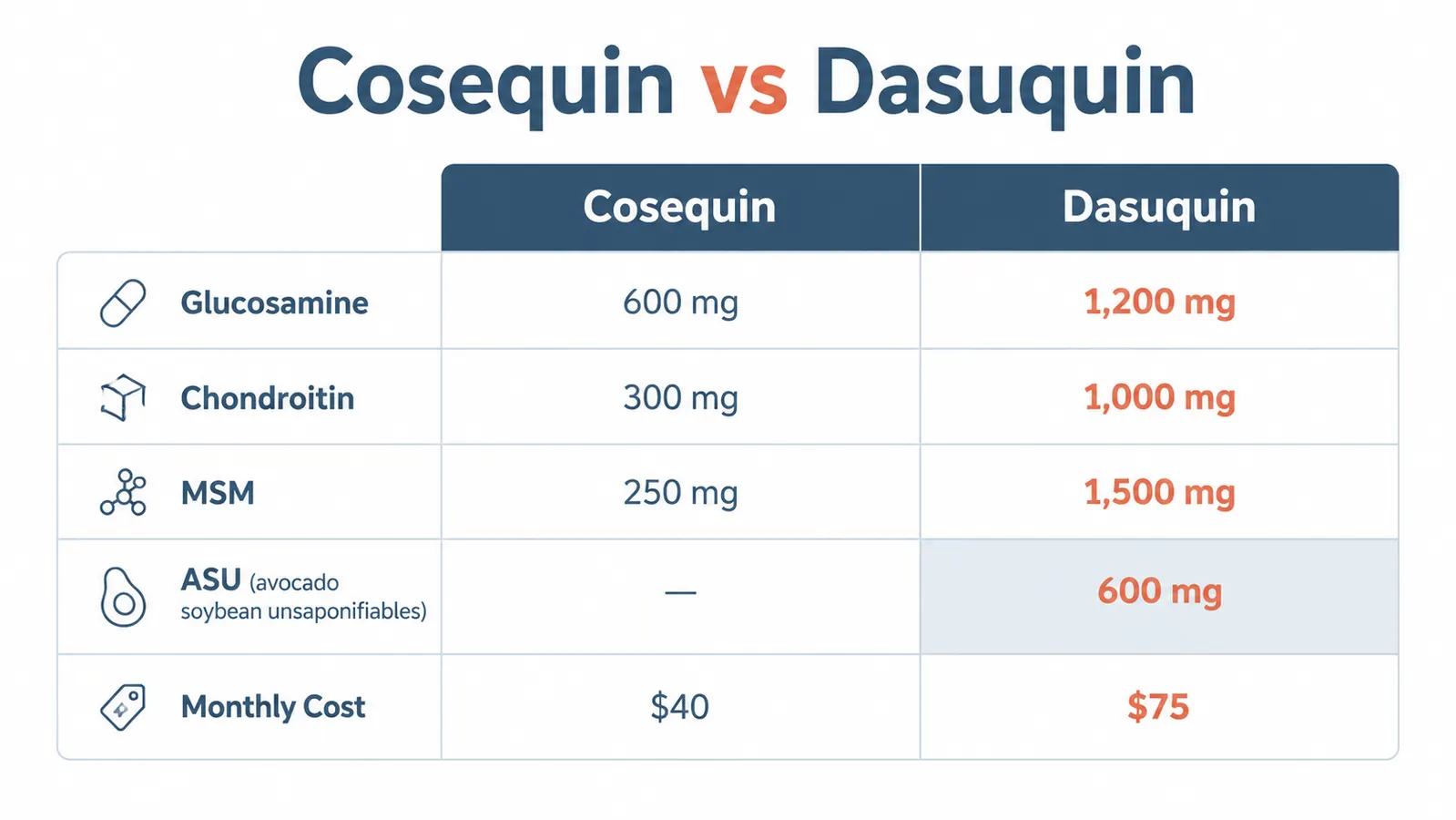
| Cosequin (left) | Dasuquin (right) | |
|---|---|---|
| Manufacturer | Nutramax | Nutramax |
| Glucosamine HCl | 500 mg per chew | 600 mg per chew |
| Chondroitin Sulfate | 400 mg per chew | 500 mg per chew |
| MSM (methylsulfonylmethane) | Available in DS Plus formula | Standard in most formulas |
| ASU (avocado/soybean unsaponifiables) | No | Yes, 150 mg per chew |
| NASC Quality Seal | Yes | Yes |
| Approximate monthly cost (large dog) | $15-18 | $45-55 |
| Vet recommendation frequency | Very common | Common, usually for advanced cases |
| Palatability for picky dogs | Good, most dogs accept | Good, similar chew format |
Where Cosequin Wins
The foundation of both supplements is the same: glucosamine hydrochloride and chondroitin sulfate. These two compounds are what most of the research on joint support in dogs actually supports. Glucosamine provides building blocks for cartilage repair. Chondroitin helps slow cartilage breakdown. Together they form the backbone of every major vet-recommended joint supplement on the market. Cosequin delivers 500 mg of glucosamine and 400 mg of chondroitin per chew, which meets the standard loading dose for a 70-75 pound dog. It is the formula that most vets reach for first, precisely because the evidence base is solid and the price makes long-term compliance realistic.
That last point matters more than it sounds. Joint supplements only work if you give them every day, consistently, for months. A product that costs $50 a month is the product you quietly stop refilling when other bills pile up. Cosequin at $16 a month is easy to keep in the budget. With Bear, I wanted something I could commit to for the long haul, not something I would start and stop every time travel season got expensive. The NASC (National Animal Supplement Council) quality seal means Cosequin has passed third-party manufacturing audits, so I am not trading quality for price either.
Where Dasuquin Wins
Dasuquin adds one ingredient that Cosequin does not have: ASU, which stands for avocado and soybean unsaponifiables. ASU is a plant-derived extract that appears to reduce inflammation and may help slow cartilage degradation through a different mechanism than glucosamine and chondroitin. It is not a well-known ingredient outside of specialty pet circles, but there is reasonable research behind it, including some human osteoarthritis studies that have been extrapolated to veterinary use. The glucosamine and chondroitin doses are also slightly higher in Dasuquin.
Where Dasuquin genuinely makes sense is in dogs with more advanced joint disease, typically diagnosed osteoarthritis rather than early stiffness. If your vet has X-ray evidence of joint damage, or if your dog has already been on Cosequin for six months with limited improvement, then the ASU addition gives you a legitimate third mechanism to work with. Dasuquin is also used as the go-to recommendation in clinical settings because it tends to get selected when owners report that a simpler formula stopped being enough. If you are starting fresh with a dog who has early-stage stiffness, you are probably paying for more than your dog currently needs.
Bear takes Cosequin every morning on his kibble and it has not missed a beat.
For a 72-pound dog with early joint stiffness, Cosequin is the formula most vets start with and the one I have stuck with. It is a 4.7-star supplement with over 78,000 Amazon reviews for a reason.
Amazon Check Today's Price on Amazon →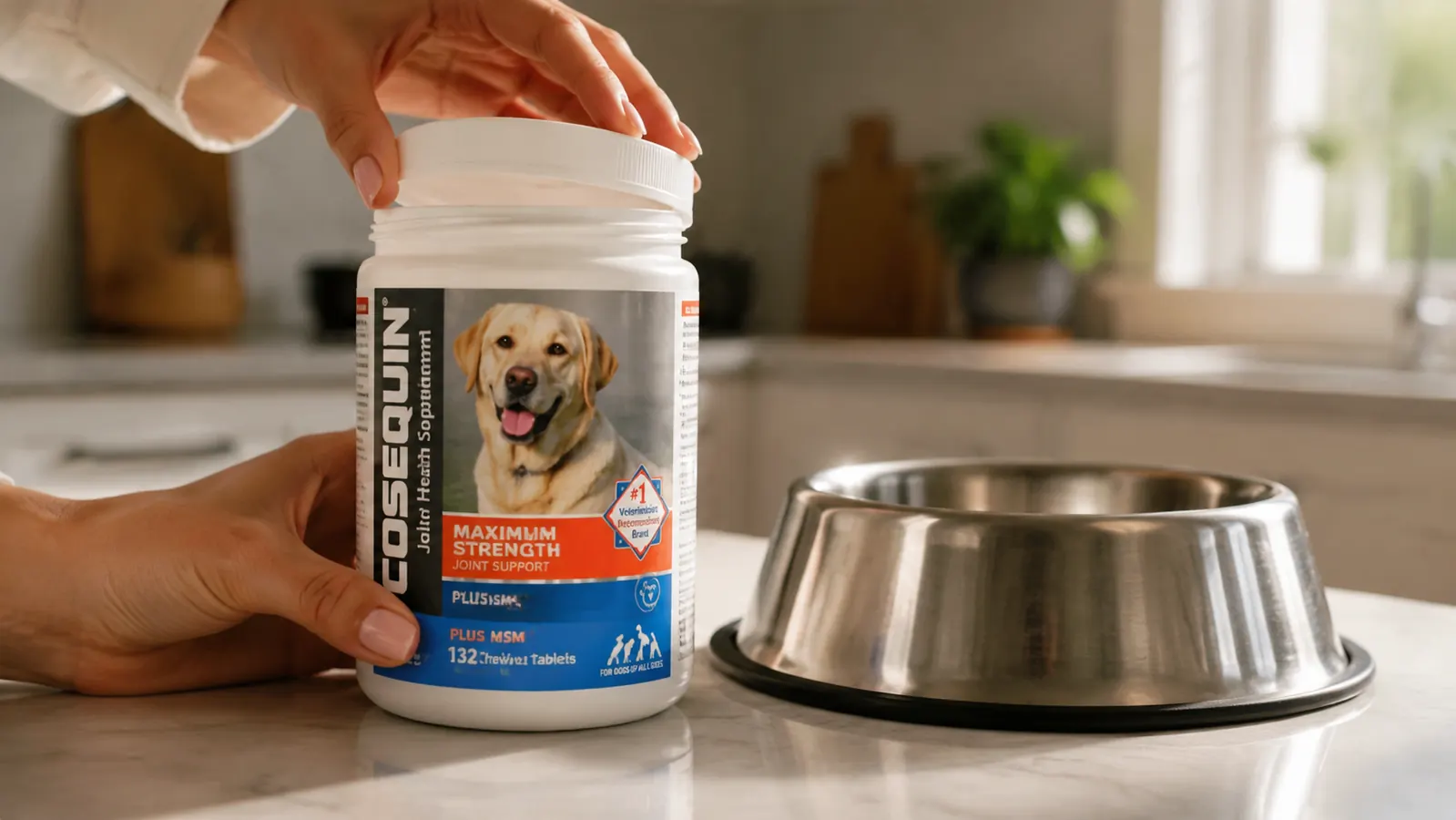
The ASU Question: Is the Upgrade Worth It for a Traveling Dog?
Bear rides in the truck almost every weekend. Long car rides are hard on older joints, full stop. Sitting in one position for four or five hours, then jumping out at a trailhead or campsite, puts real stress on hips and elbows that are already not what they were at age three. When I was deciding between these two formulas, the travel component was part of my calculation. My thinking: I wanted a supplement that would genuinely reduce day-after stiffness, not just check a box.
After eight months on Cosequin, Bear gets in and out of the truck better than he did before. He still moves a bit deliberately on cold mornings, but the slow, stiff shuffle he had last October is gone. For a dog at his stage of joint health, glucosamine and chondroitin alone have been enough. If I ever notice a plateau or the vet finds something more significant at his next exam, the conversation about moving up to Dasuquin is straightforward. But the step-up approach makes more financial and clinical sense than jumping straight to the premium formula before you know whether the baseline will do the job.
Joint supplements only work if you give them every single day. A formula you can afford to keep buying consistently will outperform a premium formula you quietly stop refilling after three months.
Palatability: Will Your Picky Dog Actually Eat It?
This is a real question for a lot of dog parents, and it is worth addressing directly. Both Cosequin and Dasuquin come in soft chew formats designed to be eaten directly or crumbled onto food. Bear, who will eat literally anything, has no opinion. But I have heard from other dog parents that a picky dog will sometimes reject one over the other, and flavor lots vary. Both are beef-liver flavored, and the texture is similar. In practice, most dogs accept both formats. If you have an extremely picky dog, start with a single chew before buying a bulk container. Neither supplement has a great return window once opened, so a quick palatability test on one chew is worth doing.
One practical note: Cosequin chews crumble more easily, which I actually prefer because I mix them into Bear's kibble. They break apart with just finger pressure and distribute evenly through the food. This matters on travel days when I am feeding him in a hotel parking lot from a Ziploc of kibble and do not want a supplement he is going to lick around. Dasuquin chews are slightly firmer. Not a dealbreaker either way, but worth knowing.
Who Should Buy Cosequin
Cosequin is the right call for dogs with early to moderate joint stiffness, dogs who are starting a joint supplement for the first time, and dogs whose owners want the formula that most general practice vets reach for first. It is also the obvious choice if you are on a budget or if you plan to supplement long-term and need a monthly cost that stays sustainable. For traveling dogs specifically, the combination of proven ingredients, wide availability (sold at most Chewy, Amazon, and PetSmart locations), and low price-per-month makes it the practical workhorse. You can read more about what Bear's eight months on it actually looked like in the full Cosequin review.
Who Should Consider Dasuquin Instead
Dasuquin makes sense for dogs who have been on a glucosamine-chondroitin supplement for at least four to six months and are not seeing enough improvement, dogs with veterinarian-confirmed osteoarthritis (diagnosed via X-ray, not just observed stiffness), large breed dogs whose vet specifically recommends the higher per-dose amounts, and any situation where the vet has already made the recommendation directly. It is not the wrong product. It is just a step-up product, and most dogs with early-stage stiffness do not need it yet. If you are trying to figure out whether your senior dog needs it, ask your vet at the next checkup. That conversation costs nothing and gives you a clear answer.
If you are already using glucosamine supplements and want to understand the full picture of how they help on long trips, check out the breakdown on how glucosamine helps senior dogs travel more comfortably. It covers what changes you are actually likely to notice and how long to give the supplement before you draw conclusions.
Start where Bear started: glucosamine and chondroitin, proven formula, one-third the price.
Cosequin is the most-reviewed joint supplement for dogs on Amazon. Over 78,000 ratings averaging 4.7 stars. If your senior dog is stiffening up after long rides, this is where most vets point you first.
Amazon Check Today's Price on Amazon →