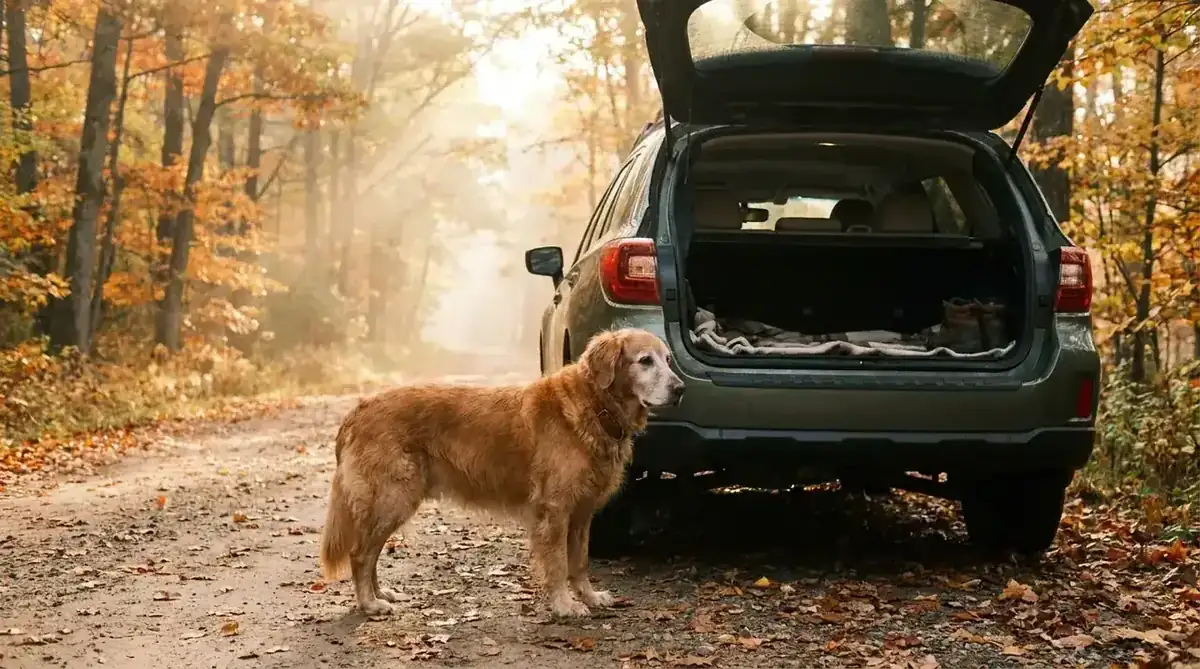
If you travel with a senior dog, joint stiffness after long drives is one of those things you do not see coming until it shows up, and it is the main reason a glucosamine supplement like Nutramax Cosequin is in our travel routine. Bear is nine. He is a 72-pound golden retriever who has logged more highway miles than most humans I know. He loves road trips. He will climb into the truck before I finish tying my shoes. But somewhere around the six-hour mark on a long drive, something shifts. By the time we pull into wherever we are staying, he moves like a dog who is twenty.
The stiffness is not dramatic. He does not cry or refuse to walk. He just moves slowly, holds his weight a little differently, and takes about fifteen minutes of careful movement before he looks like himself again. I am not a vet. I do not have a clinical explanation for every piece of what happens in a car for an older dog. What I do have is three years of paying close attention, talking to my vet at every annual, and building a before-during-after routine that has made a visible difference. This is that routine.
If your senior dog stiffens up after long drives, a daily joint supplement is the foundation everything else builds on.
Nutramax Cosequin has 78,000-plus reviews and a 4.7 rating on Amazon. It is the supplement my vet mentioned before I even asked, and the one I have used with Bear for the past two years.
Amazon Check Today's Price on Amazon →A few things to say up front. First, if your dog is limping, vocalizing pain, or suddenly moving much worse than usual after a drive, that is a vet conversation, not a blog post. This guide is for the manageable, chronic kind of post-drive stiffness that a lot of senior dogs deal with. Second, everything here is observational. I watch my dog. I adjust. I talk to my vet. That is not a substitute for your vet knowing your specific dog.
Step 1: Do a 10-Minute Warm-Up Walk Before You Load the Car
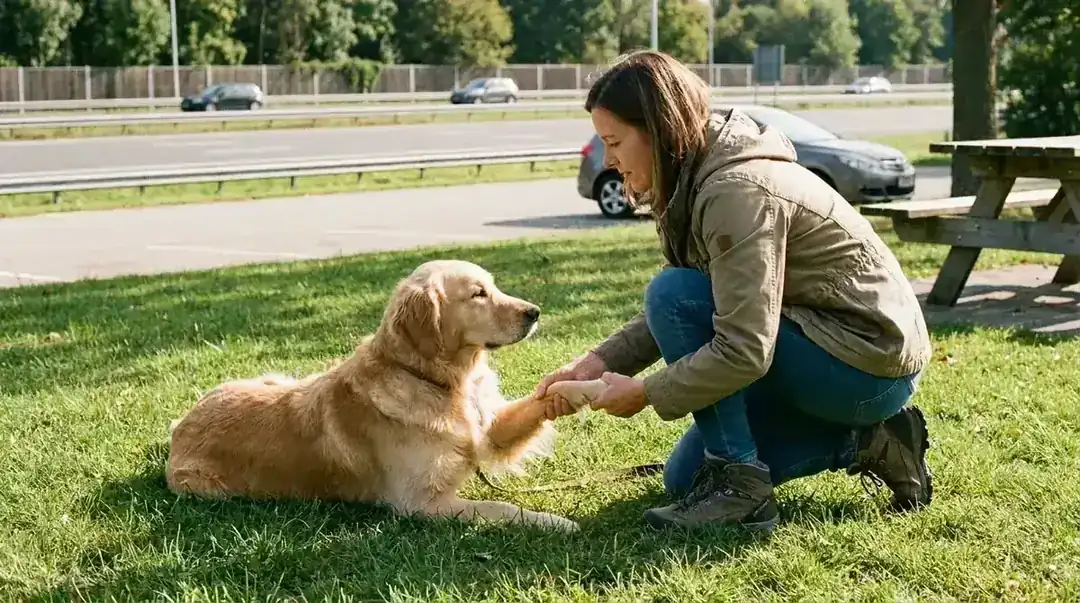
This one took me embarrassingly long to figure out. For years I would load Bear first, load everything else, and drive off while he settled in the back. Now I walk him for ten minutes before any drive over two hours. Not a run, not a play session. A slow, on-leash walk. The goal is just to get his joints moving through their full range before he sits still in a confined space for three or four or six hours.
Think about it the way you would think about your own body before a long flight. You would not sprint to the gate, sit down immediately in a cramped seat, and then wonder why your back is tight when you land. Joints, both human and canine, move better when they are warm and have been through some light movement first. Ten minutes is enough. The difference in how Bear walks off the ramp at the other end has been noticeable.
One adjustment: if it is cold outside, give it a few extra minutes. Cold air stiffens joints faster, and your dog's warm-up period should be a little longer in winter. For Bear in December versus Bear in July, I add about five minutes to account for the temperature.
Step 2: Stay Consistent With a Daily Joint Supplement, Not Just Trip Days
I cannot overstate how important the word 'daily' is here. A joint supplement is not a day-of fix. Glucosamine and chondroitin, the two main actives in most joint supplements, work by building up in joint tissue over time. You take them every day because the benefit accumulates. If you only give them on travel days, you are essentially skipping the whole point.
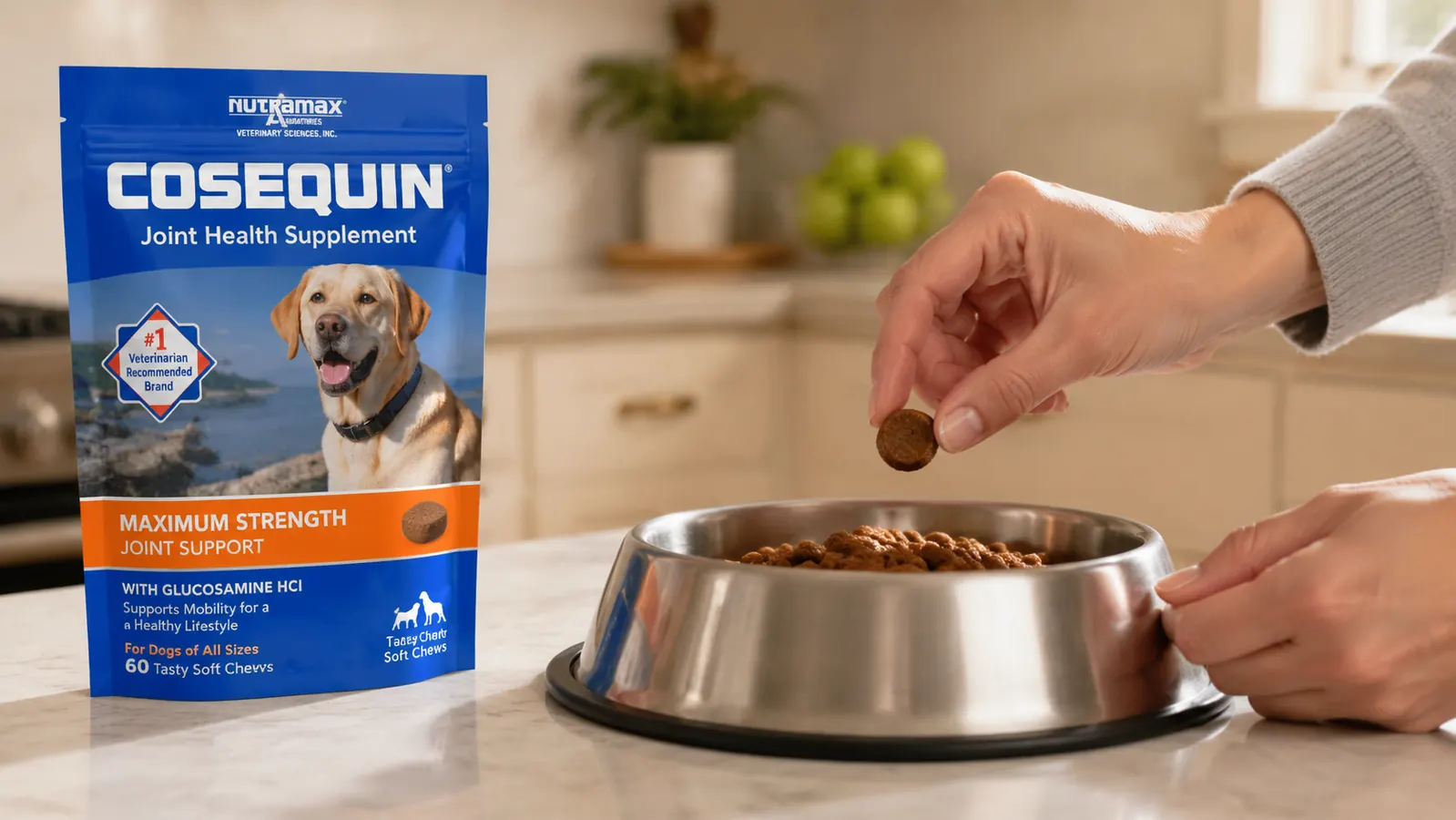
The supplement I have used with Bear for the past two years is Nutramax Cosequin. My vet mentioned it at Bear's seven-year checkup without me asking, which was the signal I needed. It is a soft chew format so Bear eats it like a treat, which means I have never had a morning where I was arguing with a 72-pound dog about swallowing a pill. The reviews on Amazon are genuinely remarkable for a supplement product. Over 78,000 of them, sitting at a 4.7 average. That kind of consistency across that many buyers tells you the experience is real.
What I noticed after about six to eight weeks of consistent daily use: Bear getting up from a nap with less hesitation, and the post-drive stiffness being shorter in duration. Not gone, not a miracle. But meaningfully shorter. He goes from stiff-at-the-hatch to walking normally in about five minutes now instead of fifteen. I will take that every single trip.
A joint supplement is not a day-of fix. Glucosamine works by building up in joint tissue over time. If you only give it on travel days, you are skipping the whole point.
Step 3: Elevate the Cargo Platform or Add a Ramp for Loading and Unloading
Jumping in and out of a vehicle is one of the highest-impact activities a dog with joint issues does. The landing from an SUV tailgate is a long way down for a dog who is already dealing with hip or elbow inflammation. For a long time I did not think about this at all. Bear jumped in and jumped out and I did not connect the dots between that and how he felt at the end of the day.
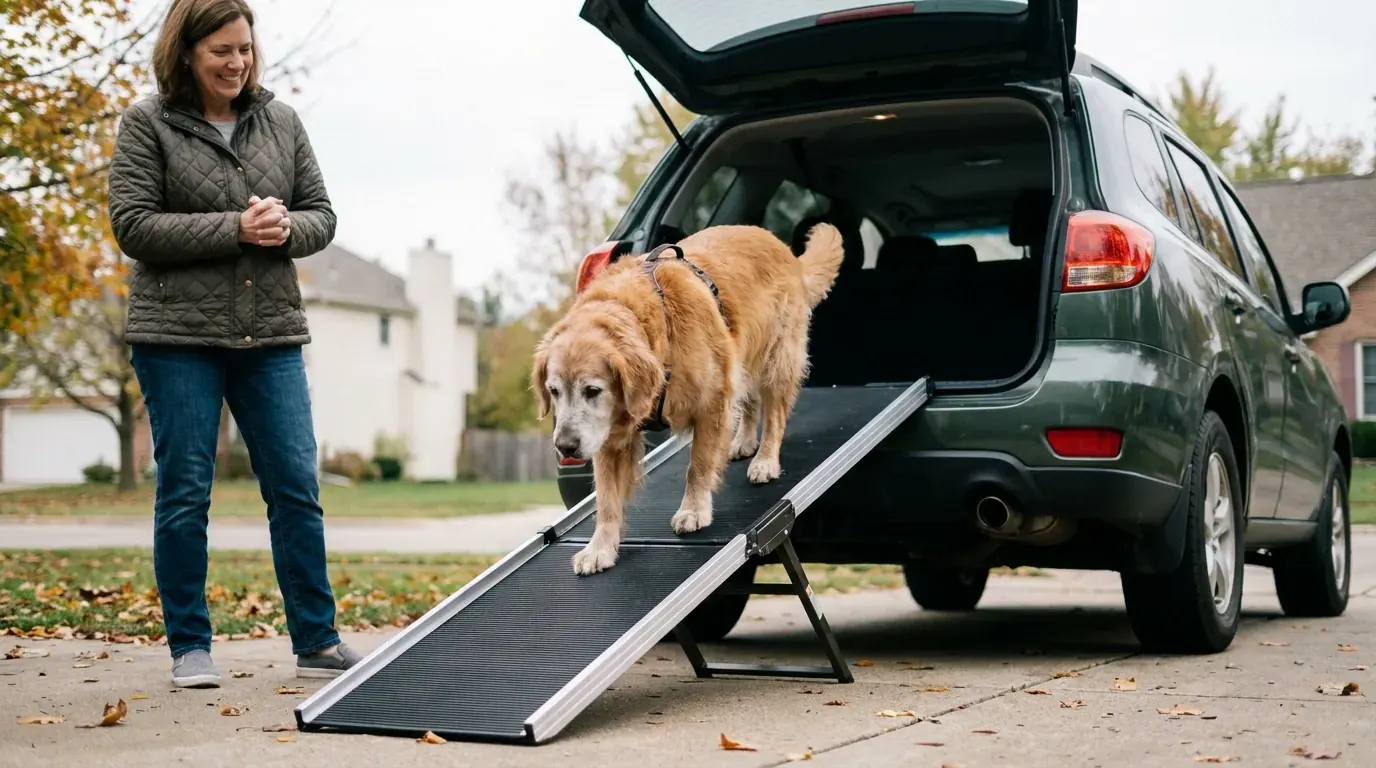
Now we use a folding dog ramp. It takes about thirty seconds to deploy. Bear walks up and down instead of jumping. For loading, I use the ramp every single time. For unloading at our destination after a long drive, it is non-negotiable. The ramp means his joints are not absorbing that landing impact when they are already fatigued from hours of bracing against road vibration.
If a ramp is not an option for your setup, the next best thing is lowering the load height. For SUVs with adjustable air suspension, drop it before loading. For trucks, use a tailgate step. The goal is reducing the distance your dog's joints absorb on impact. A few inches makes a real difference.
Step 4: Stop Every 90 Minutes and Do a 5-Minute Stretch Walk
The standard advice is to stop every two hours for your dog to use the bathroom. That is fine for bladder health. But for joint stiffness, stopping every 90 minutes and actually moving the dog for five minutes is better. The difference is the movement. A bathroom stop where the dog walks 20 feet, does his business, and loads back up is not really a stretch break. A stretch break means walking slowly on a leash for a few minutes, letting the dog work through their own range of motion at their own pace.
I know 90 minutes sounds aggressive if you are trying to make time on a long drive. When I drive solo with just Bear and Roux, I usually stop around the 2-hour mark. But if Bear has been showing signs of discomfort on a particular day, I pull over earlier. The signs I watch for: panting without heat cause, repositioning frequently in the cargo area, standing up and circling instead of lying down. Any of those means he is uncomfortable and we stop.
On the stretch break itself, I keep it low-key. I do not play fetch or let him tear around the rest area. Slow walking on leash, maybe a gentle forward-and-back movement of the front legs if he will tolerate it. The point is circulation and gentle range-of-motion, not exercise.
Step 5: Lay a Yoga Mat on Slippery Hotel or Rental Floors
This one sounds small but it is not. Think about what your dog does on a hardwood or tile hotel floor after a long drive. They try to stand up. Their paws slip. They scramble to get their footing. Every scramble is a sudden, uncontrolled load on already-fatigued joints. I watched Bear do this exact thing at a rental in Asheville two years ago and I genuinely winced. He was fine, but the physics were bad.
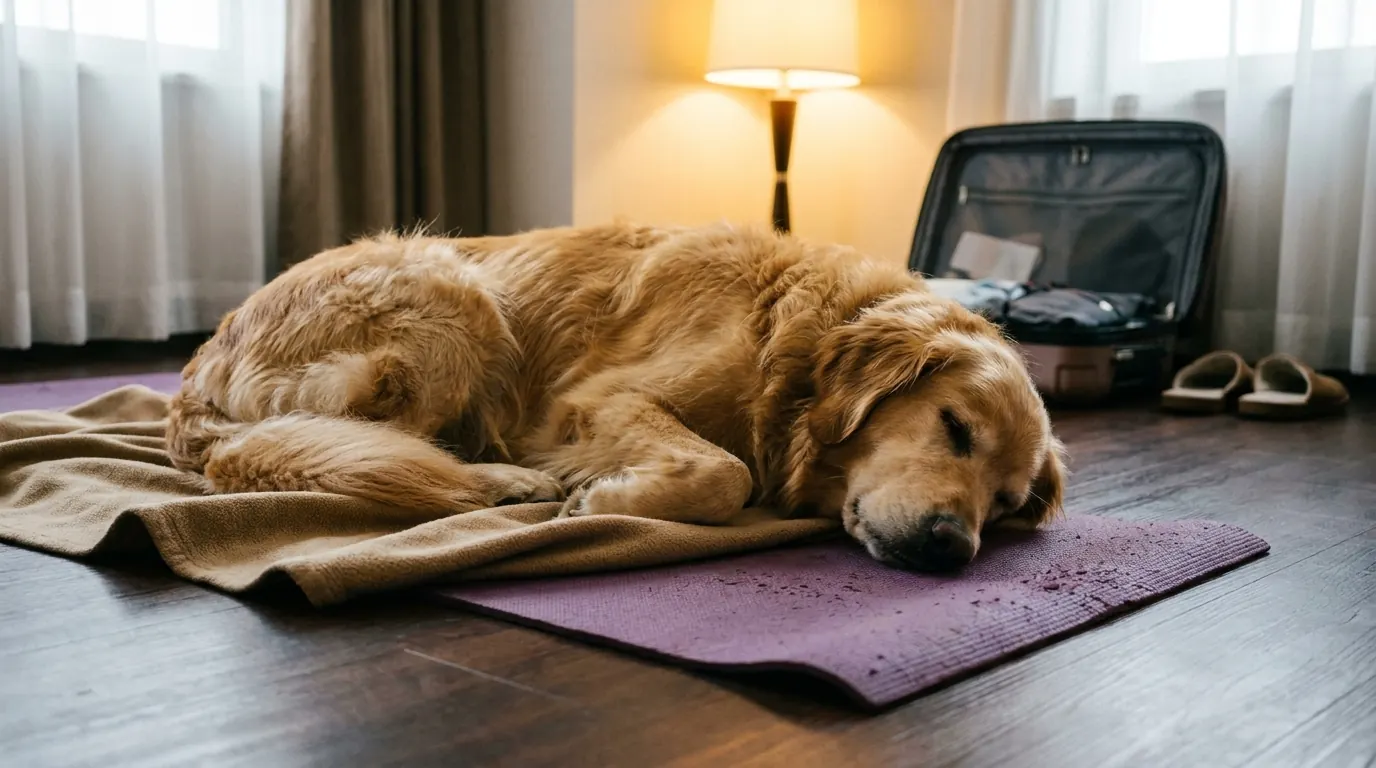
I now pack a basic yoga mat in my gear bag on every trip. It costs almost nothing and weighs almost nothing. I lay it down at arrival wherever Bear is going to sleep or rest. It gives him traction for standing, lying down, and getting up in those critical first hours after a long drive. I also put his water bowl on one corner of it so he is not sliding around while he drinks after unloading.
Secondary benefit: it marks his space in an unfamiliar room, which seems to reduce the anxious pacing that some dogs do in new environments. Bear settles faster when he has a spot that smells like home and has something familiar under his feet.
Step 6: Use Warm Bedding for the First Night at Your Destination
Cold surfaces are bad for joint stiffness. After a long drive, a dog's muscles and connective tissue are fatigued. Lying on a cold floor or a thin blanket on a hard surface makes it harder for those tissues to recover overnight. The first night at a new destination is when I am most deliberate about Bear's bedding setup.
I bring his regular orthopedic dog bed on trips where we have cargo space. When we are traveling lighter, I use a folded fleece blanket that I pack specifically for him. The goal is elevation off the floor and insulation. A folded fleece is not as good as the orthopedic bed, but it is meaningfully better than a bare hotel floor or a thin throw blanket.
If we are at a pet-friendly rental where the host allows dogs on furniture, I let Bear sleep on the couch for the first night. It is warmer, more cushioned, and usually lower to the ground than the bed, so he can manage getting up without the same impact he would have from a tall surface. This is a judgment call based on the specific rental and what the host allows, but it is in the toolkit.
Step 7: Build in a Recovery Day After Any Drive Over Four Hours
This is the hardest one for me personally because I am always trying to maximize trip time. But I have learned, mostly by not doing it and watching Bear pay the price, that a slow morning after a long drive is worth more than an early start on day two.
A recovery day does not mean Bear stays in the room all day. It means the first full day after a long drive is gentle. A shorter walk in the morning, no hiking, no beach sprints with Roux, no activities where he is going to be running or climbing for extended periods. He gets to explore at his own pace. He gets extra time on his mat. He gets his Cosequin with breakfast like usual.
By the second full day, Bear is usually back to himself. He wants to move, he is interested in exploring, and the post-drive stiffness is long gone. That pattern holds pretty reliably now that the rest of the routine is in place. Skip the recovery day and he is noticeably more tentative on day two as well. Senior dogs just need a little more time.
One practical note: this works best if you build it into your trip planning before you leave. If you arrive on a Thursday night after a six-hour drive, plan Friday as the slow day. That gives you Saturday and Sunday at full capacity, which is usually a net gain even if it means adjusting your Friday itinerary.
What Else Helps
Beyond the seven steps above, a few things have shown up consistently in my travel routine as helpful adjacent habits. Keeping Bear's weight in a healthy range matters a lot for joint load, and that one is a year-round project, not just a travel thing. Keeping him hydrated on long drives is also something I am more deliberate about now. I stop at 90-minute marks partly for movement, but I also offer water at every stop. A dehydrated dog will feel worse at the end of a drive.
I also mention all of this to my vet at annual checkups. She knows Bear is a traveling dog. She checks his hips and elbows at every visit and has given me a baseline sense of what is normal wear-and-tear versus something to watch more carefully. If your senior dog is stiffening up noticeably after drives and you have not talked to your vet about it, that is the first call to make. Not because something is necessarily wrong, but because having a vet's input on your specific dog is going to make every other decision better. For more detail on the supplement side, my full write-up on Cosequin is worth a read: eight months of daily use with Bear. And if you want a broader look at what glucosamine does for senior dogs in a travel context, I wrote a piece on ten specific ways it makes long drives easier.
Bear takes Cosequin every morning without drama. 78,000 reviews at 4.7 stars means a lot of other senior dogs are on it too.
Nutramax Cosequin is the joint supplement I recommend to every dog parent who asks me what I use. It is the one my vet mentioned first, it comes in a soft chew format dogs actually eat, and the price makes it easy to stay consistent.
Amazon Check Today's Price on Amazon →