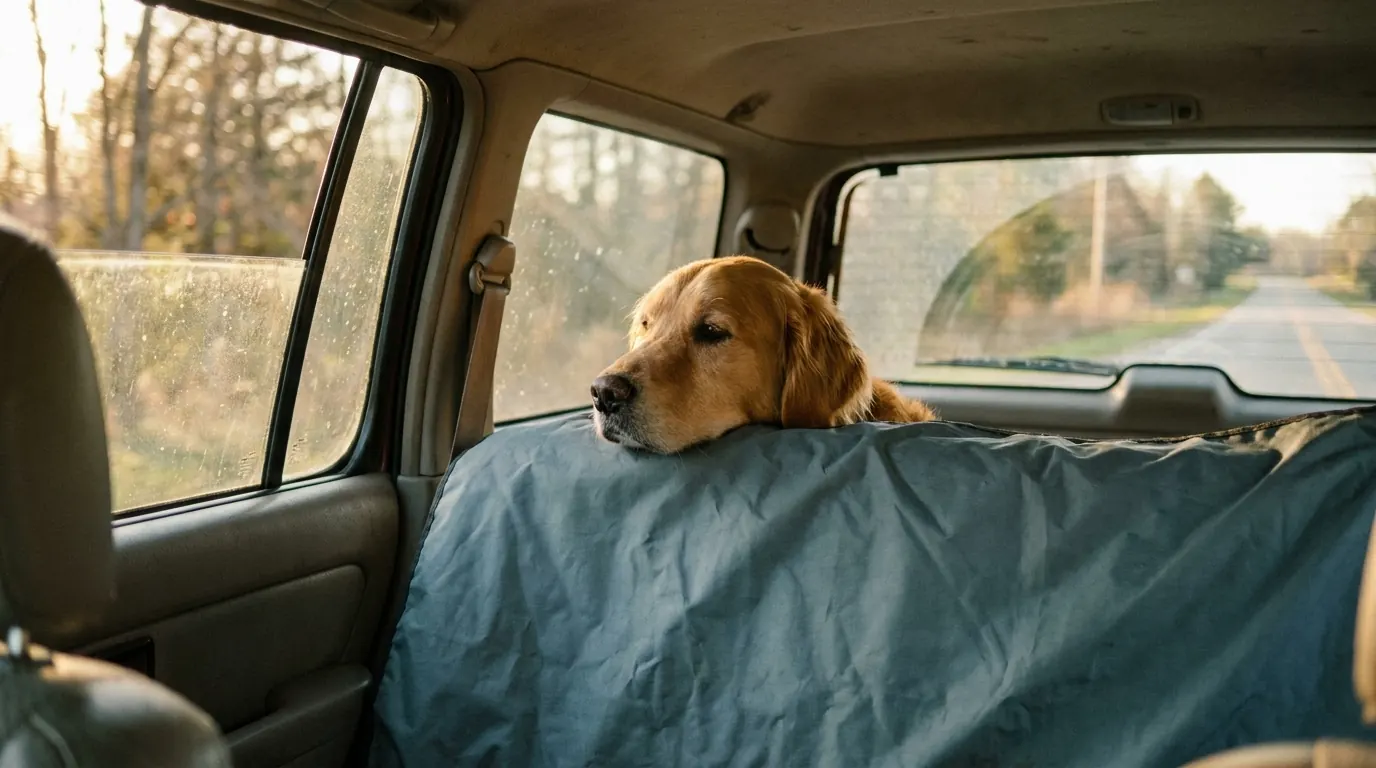
The single biggest move I made for keeping my car clean on dog road trips was switching from stacked towels to a real waterproof hammock seat cover, specifically the Active Pets hammock. After our first real road trip with Bear and Roux, I parked in my driveway, slid the door open, and stood there for a solid minute just staring. Bear is a nine-year-old golden retriever who sheds like it is a competitive sport. Roux is a 42-pound border collie mix who treats every puddle like a personal invitation. The backseat looked like the inside of a vacuum filter. There was fur on the ceiling. I do not know how fur gets on the ceiling. That trip was the last time I drove anywhere with those two without a real system in place.
This is not about keeping a show-room clean car. That ship sailed the day I got dogs. This is about keeping the mess contained enough that you are not spending 45 minutes vacuuming before you return a rental, or apologizing to your passenger, or finding dried river mud wedged into your seat seam six weeks later. A few pieces of cheap gear and a consistent routine will get you most of the way there.
If your backseat is fighting you on every trip, a real seat hammock is the single biggest fix
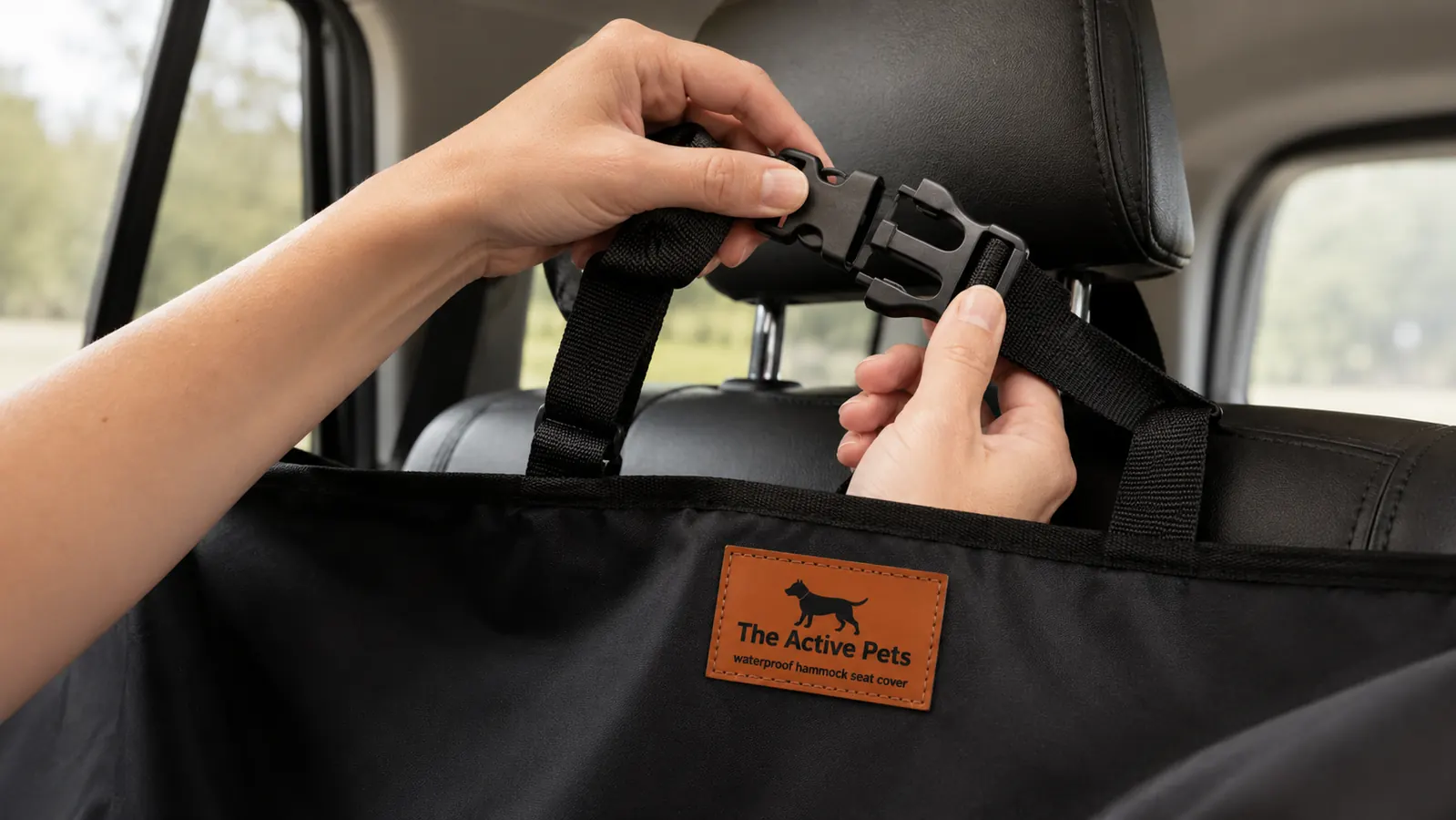
The Active Pets waterproof hammock cover (4.5 stars, 20,854+ reviews) protects your entire backseat from hair, mud, and wet dogs, and it takes under three minutes to install. Towels slide around. This does not.
Amazon Check Today's Price on Amazon →Step 1: Install a Real Seat Hammock (Not Old Towels)
I spent two years folding and refolding old beach towels across my backseat. They bunched up every time the dogs moved, slid off the seat entirely on long descents, and absorbed every bit of moisture so thoroughly that the smell of wet dog was permanent. A proper hammock cover solves all of this in one shot.
The Active Pets hammock attaches at the headrests front and rear, creating a sling that covers the seat, the seat back, and the gap between the front seats. The waterproof Oxford fabric means mud and drool sit on the surface instead of soaking through. Installation takes about two minutes once you have done it once: loop the rear straps over the back headrests, pull the front straps over the front seat headrests, clip, and you are done. No tools, no wrestling with the seat. It fits sedans, hatchbacks, and SUVs. I use mine in the truck and it has never shifted even after Bear decided to do three full circles before lying down.
The key thing the hammock does that towels never could: it creates a contained zone. Hair and debris collect in the hammock, not in the seat fabric. When the trip is done, you unclip it, take it outside, shake it off, and hose it down. The seat underneath stays clean. That is the whole game.
Step 2: Do a Pre-Trip Brush-Out
This one took me embarrassingly long to figure out. If you brush your dogs thoroughly before they get in the car, the amount of loose fur that ends up on your upholstery drops dramatically. Bear in particular is carrying around a small snowdrift of undercoat at any given moment. A ten-minute brush session in the driveway before we load up means most of that fur ends up in the brush and in the trash, not ground into the hammock surface for the next four hours.
Do this outside. Do not do it in the garage and then walk the dog to the car through the garage, because you will simply re-coat them in the air they just shed. Brush, bag the fur, load the dog. It is not glamorous but it cuts mid-trip shedding noticeably.
Step 3: Paw Wipes at Every Rest Stop
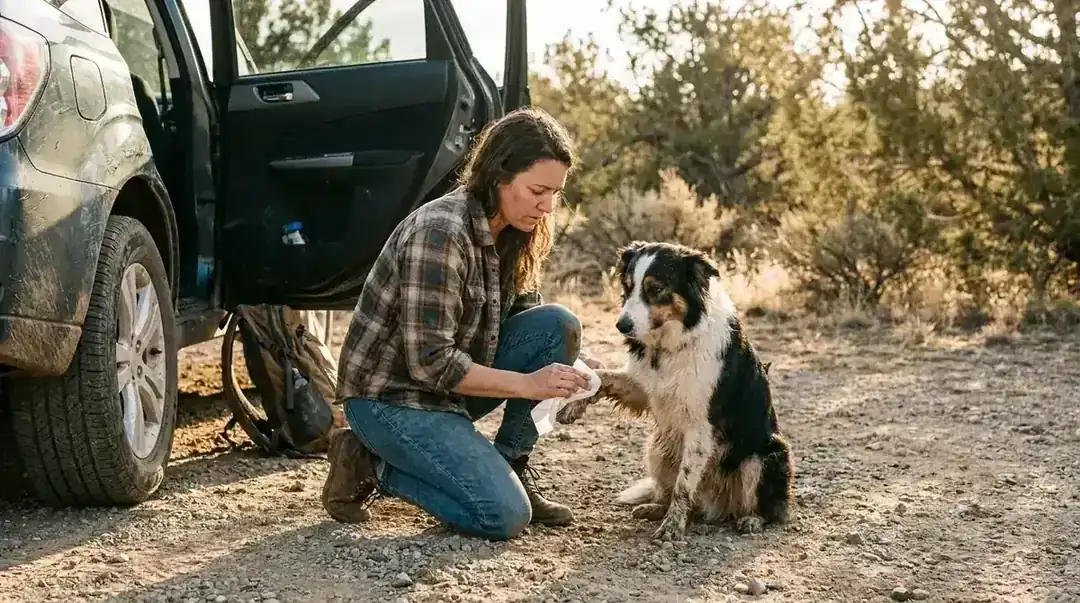
Every time Roux gets out of the car at a rest stop, she comes back with whatever was on that patch of ground: grass seed, sand, parking lot grime, mystery mud. All of it transfers directly to the hammock surface and, eventually, finds its way to the car floor if you are not careful. The fix is embarrassingly simple: a pack of dog paw wipes in the door pocket.
Before either dog hops back in, I do a quick wipe on each paw. It takes 30 seconds. Unscented, no-rinse wipes work fine for this, the same ones sold for general dog grooming cleanup. You are not trying to sanitize anything, just knock off the loose debris before it becomes your car's problem. On wet-weather trips I will do a quick dry with an old hand towel after the wipe. The difference in how the hammock looks at the end of a three-day trip is significant.
Step 4: Waterproof Mat in the Cargo Area for Dirty Paws
If you have an SUV or hatchback, the cargo area is often where the dogs ride after a hike, which is exactly when they are at peak filth. A fitted waterproof cargo mat or a rubber tray liner back there does the same thing the hammock does for the backseat: it contains the mess to a surface you can pull out and clean, rather than letting it seep into the carpet.
I used a cheap rubber utility mat from a hardware store for years before I found one sized for my specific truck cargo area. Either works. The point is not aesthetics, it is containment. Mud dries on rubber and sweeps off. Mud in carpet fibers is a project. When we get back from a trail and the dogs are dripping, they go into the cargo area on the mat, and I deal with the mat later. The rest of the car interior stays reasonable.
Step 5: A Dedicated Dog Towel and Zip Bag for Wet Days
This is the step most people skip and then regret on the one rainy trip where everything went sideways. I keep two old bath towels rolled up in a gallon zip bag in the back of the truck. They are designated dog towels, meaning I do not care what happens to them. When Bear wades into a river up to his chest at a rest stop, which he has done, I dry him off before he gets back in the car.
The zip bag matters because a soaking wet dog towel will mildew if you leave it loose in the car. After use, it goes back in the bag, sealed, and gets washed when we get home. Some people use a dedicated microfiber dog drying towel, which works faster. I have tried both and honestly the old bath towel gets the job done fine. The system is the thing, not the specific towel.
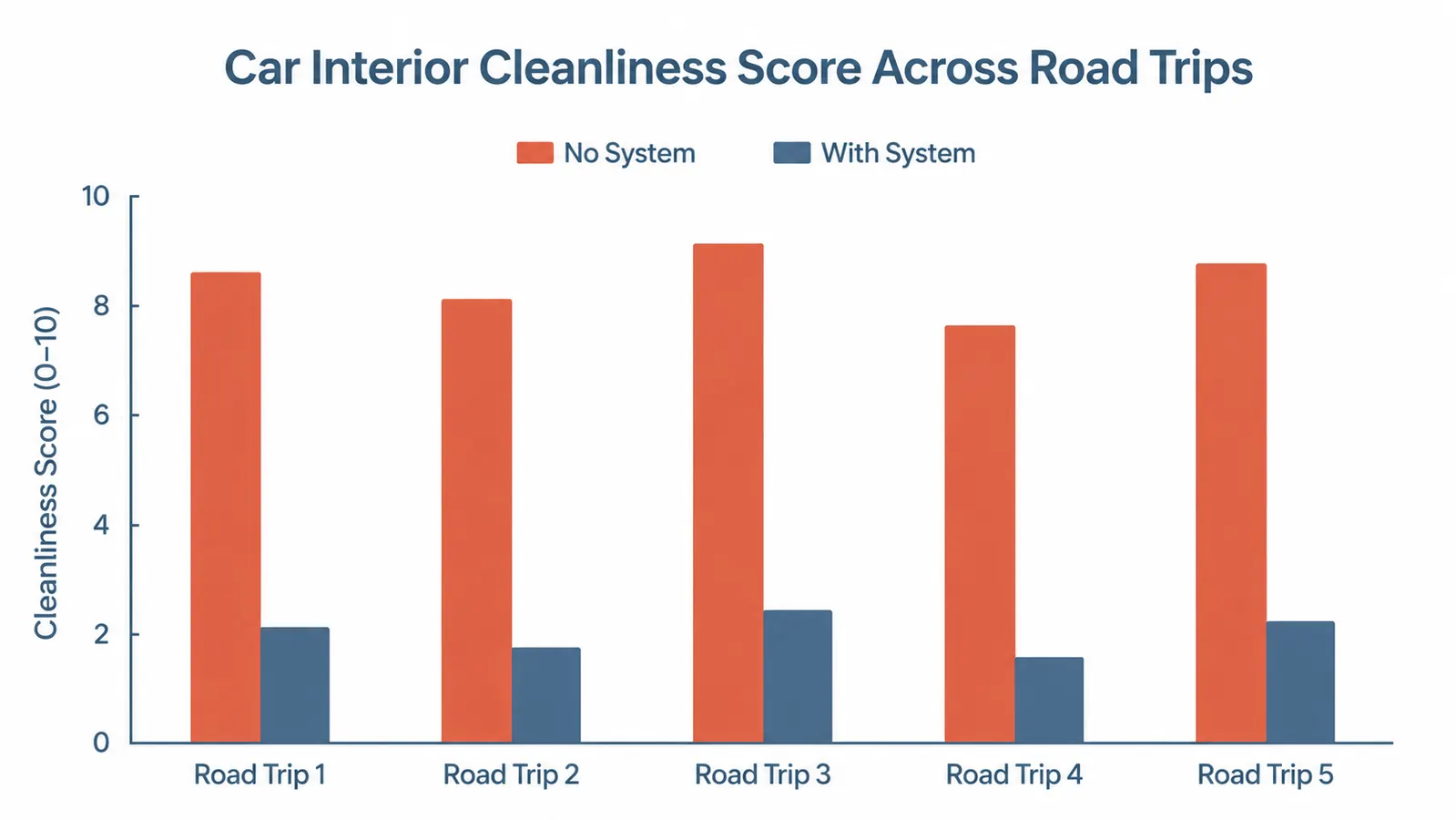
The hammock, the paw wipes, the dedicated towel. Those three things alone cut my post-trip cleanup time by more than half. Everything else is just refinement.
Step 6: Regular Vacuum Schedule After Every Multi-Day Trip
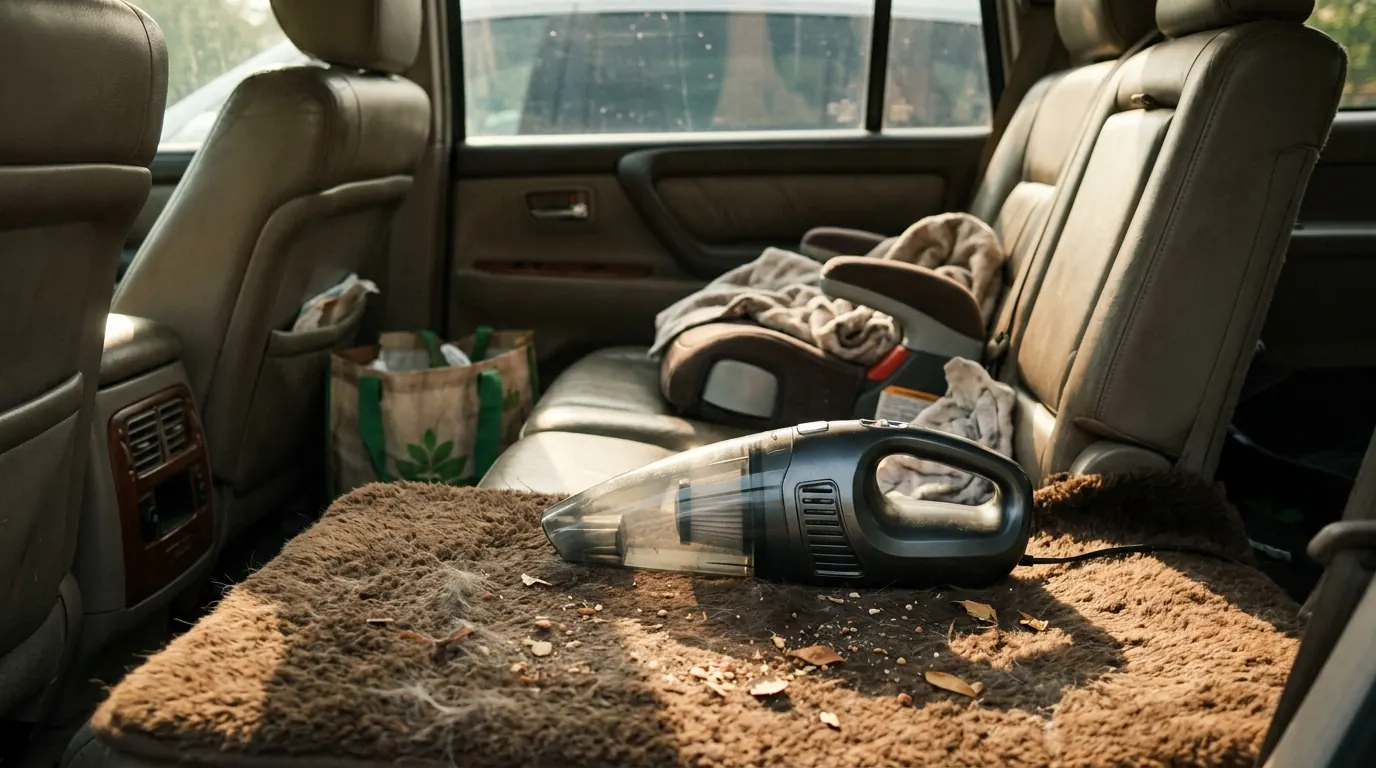
Even with all the other steps in place, fur finds a way. It floats. It migrates. After every multi-day trip I pull the hammock cover out of the car first, shake it outside, and then vacuum the car floor and front seats before anything else can settle. A small handheld car vacuum kept in the garage makes this a five-minute task rather than a 30-minute excavation.
The key is doing it right after the trip, not three weeks later when the fur has compacted and bonded with the carpet. I set a personal rule: car gets vacuumed the same day we get home, before I even unpack the rest of the gear. It sounds fussy but it takes less time than a deep clean later, and it means the car is ready to go again without any prep next time.
Step 7: Enzyme Spray for Accidents
I am not going to pretend accidents do not happen. Roux has motion sickness that we mostly have under control with some pre-trip management, but on one memorable drive through mountain switchbacks she did not make it. Even with the hammock in place, there was cleanup involved.
A small bottle of enzyme-based cleaner in the car is the right tool for this. Regular soap or all-purpose cleaner will remove the visible mess but will not break down the proteins that cause lingering odor. Enzyme sprays do. I keep a travel-size bottle in the glove box alongside the wipes. Spray, let it sit for five minutes, blot, done. The car does not smell like anything by the next day. This is not a step you want to improvise when you need it.
Step 8: Lint Roller in the Glove Box
This is the smallest and cheapest step and it solves a specific problem: the moment you get out of the car and realize you are covered in dog hair before walking into a restaurant, a hotel lobby, or someone's house. A travel lint roller in the glove box takes up almost no space and costs almost nothing. I use mine on my own clothes before I get out at every stop that involves entering a building. It does not help the car, but it helps me feel like a person who has their life together, which matters after eight hours on the road with two shedding dogs.
The bigger lint rollers with the replaceable rolls are also useful for a quick pass over the front seats and any upholstered surfaces that the hammock does not fully cover. Thirty seconds before a passenger gets in goes a long way.
What Else Helps
A few things that did not make the step list but are worth mentioning. Cracking the windows a small amount on drives (safely, when conditions allow) helps keep the air moving and reduces the ambient dog smell that builds up over a long trip. Keeping the dogs on a consistent feeding schedule so they are not traveling on a full stomach helps with car sickness in dogs prone to it. And if you have a dog who drools heavily in the car, a bandana or a travel bib does more than you would expect to keep the seat cover drier between stops.
None of this is complicated. The whole system takes maybe ten extra minutes at the start of a trip and five at the end. In exchange, the car stays in reasonable shape, cleanup is not a second job, and I do not spend the last hour of every drive dreading what I am going to find when I open the back door. That trade is very much worth it.
Start with the hammock cover and build from there
The Active Pets waterproof hammock is where the whole system starts. It covers your entire backseat, attaches without tools in under three minutes, and the waterproof surface means mud and wet fur stay on top where you can deal with them. Over 20,000 dog parents have bought this one for a reason.
Amazon Check Today's Price on Amazon →