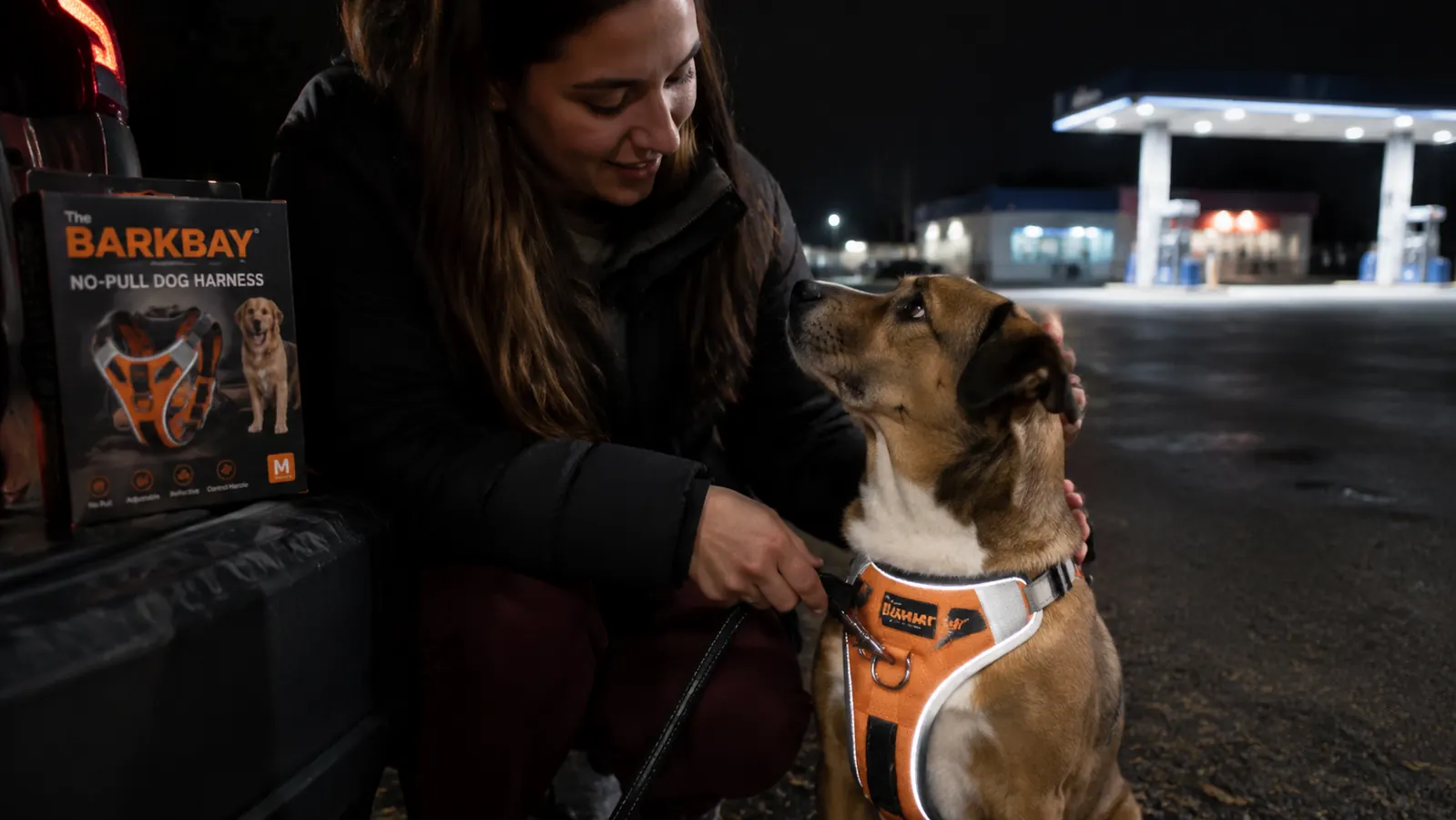
I used to think a collar and a standard leash clip was good enough for rest stops. Then I spent a February night at a pitch-black exit ramp in rural Kansas where the overhead lights were out, Roux had already spotted a raccoon across the lot, and my only plan was to hold on and hope. That was the last time I showed up underprepared. The BARKBAY no-pull harness has been on Roux at every stop since, and the list of specific moments where it made a real difference kept growing until it hit ten.
None of these are hypothetical scenarios. Every one of them has happened to me, or to someone I know who travels with dogs. If you do any serious road-tripping with a dog who pulls, reacts, or is simply large enough to create a situation, these are the ten reasons this particular harness matters at rest stops specifically.
If your dog has ever startled you at a rest stop, this is the harness that changes the equation.
The BARKBAY has reflective bands, a front clip for no-pull control, a top handle for close-contact grabs, and over 13,000 reviews from dog parents who travel. Check current pricing on Amazon before your next trip.
Amazon Check Today's Price on Amazon →The 5am Gas Station in the Dark
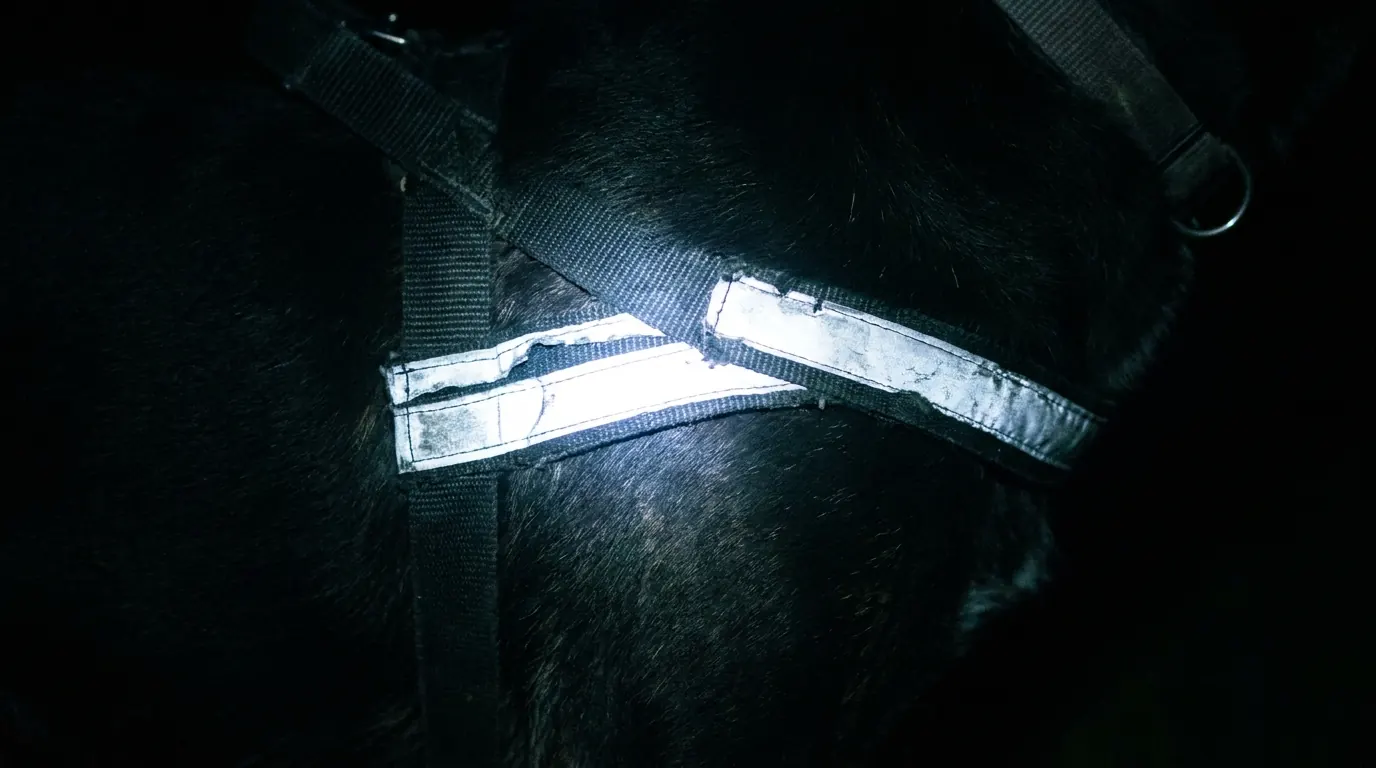
You stop for fuel before sunrise. The lot is half-lit, there is truck exhaust in the air, and your dog has been cooped up for three hours. The BARKBAY has reflective stitching across the chest and back straps that lights up under headlights and fluorescent overhangs. A collar disappears into the dark. This harness does not. Drivers pulling in can see your dog before they are six feet away.
Amazon Check Today's Price on Amazon →The Sudden Lunge Toward Moving Traffic
Roux lunges at other dogs, certain trucks, and apparently one specific brand of orange traffic cone. A clip on a collar transfers all that force directly to her neck. The front-clip D-ring on the BARKBAY redirects the lunge back toward me instead of letting it carry forward. It does not stop the lunge entirely, but it converts a straight-ahead bolt into a spin that I can recover from without yanking her spine.
Amazon Check Today's Price on Amazon →Walking the Shoulder When the Rest Stop Is Closed
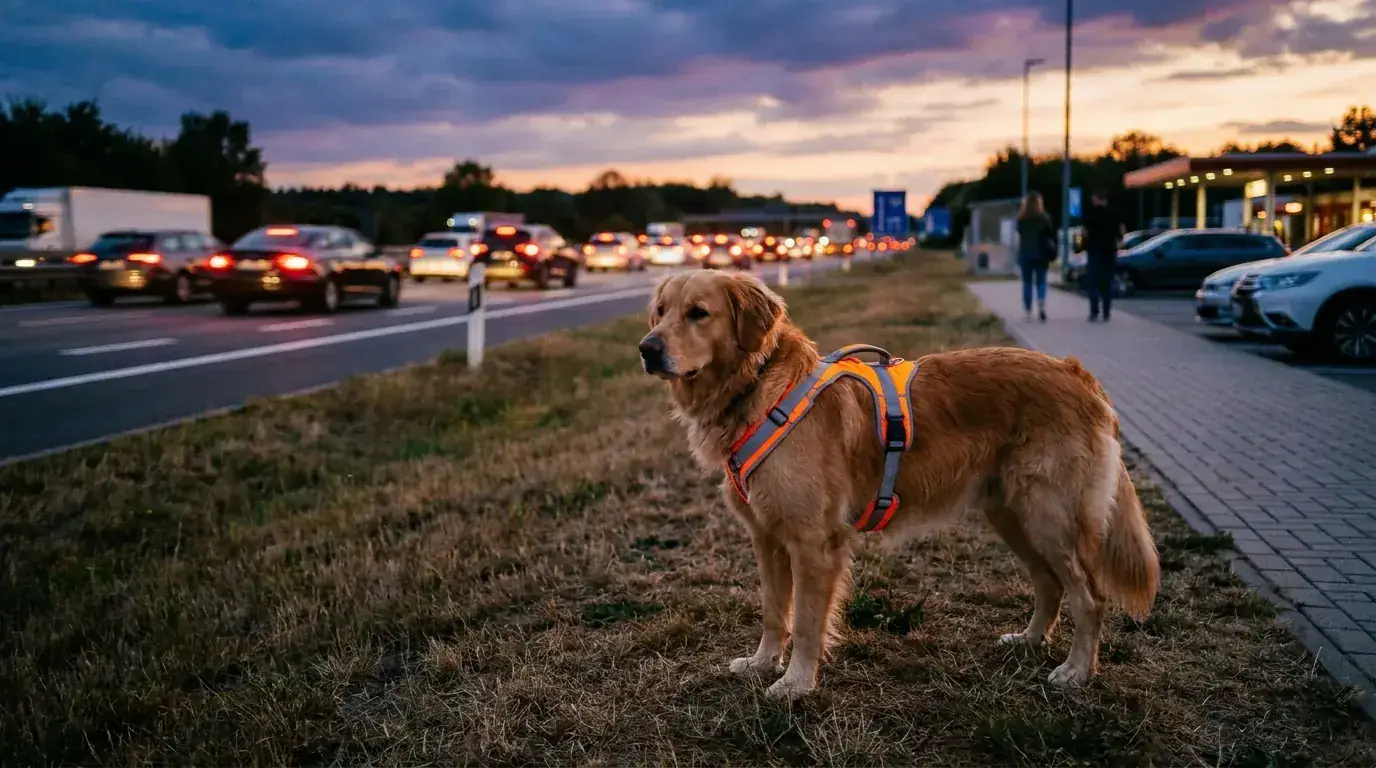
This happens more than it should. You pull in at midnight, the lot is closed or gated, and your only option is a narrow gravel shoulder beside a two-lane highway. The reflective strips on this harness are not decorative. At 50 miles per hour, a driver gets roughly four seconds of warning. Being visible on a dark shoulder for those four seconds is the entire ballgame.
Amazon Check Today's Price on Amazon →Lifting Your Dog Out of a Tight Spot
Bear once wedged himself between the center console and the back of my driver's seat trying to rearrange himself during a stop. He is 75 pounds. The top handle on the BARKBAY is not just a leash anchor: it is a genuine lifting point. I grabbed that loop and extracted him without twisting his back or losing my grip. If you have ever tried to haul a nervous, slippery large dog out of a confined space by their collar, you know exactly why this handle matters.
Amazon Check Today's Price on Amazon →The Rural Rest Stop With Zero Overhead Light
Not all rest stops are clean, lit, and staffed. Some are a picnic table, a porta-john, and a gravel lot off a state highway with nothing overhead but stars. I have been to three of these in the last year alone. The reflective strips catch the ambient light from your phone, from passing cars, from anything. When there is no overhead light, visibility drops to almost zero for everything around you, and a reflective harness is one of the few things that stays findable.
Amazon Check Today's Price on Amazon →The front clip does not just reduce pulling. It changes who is steering the walk. That difference matters most in the thirty seconds after you open the car door at a busy stop.
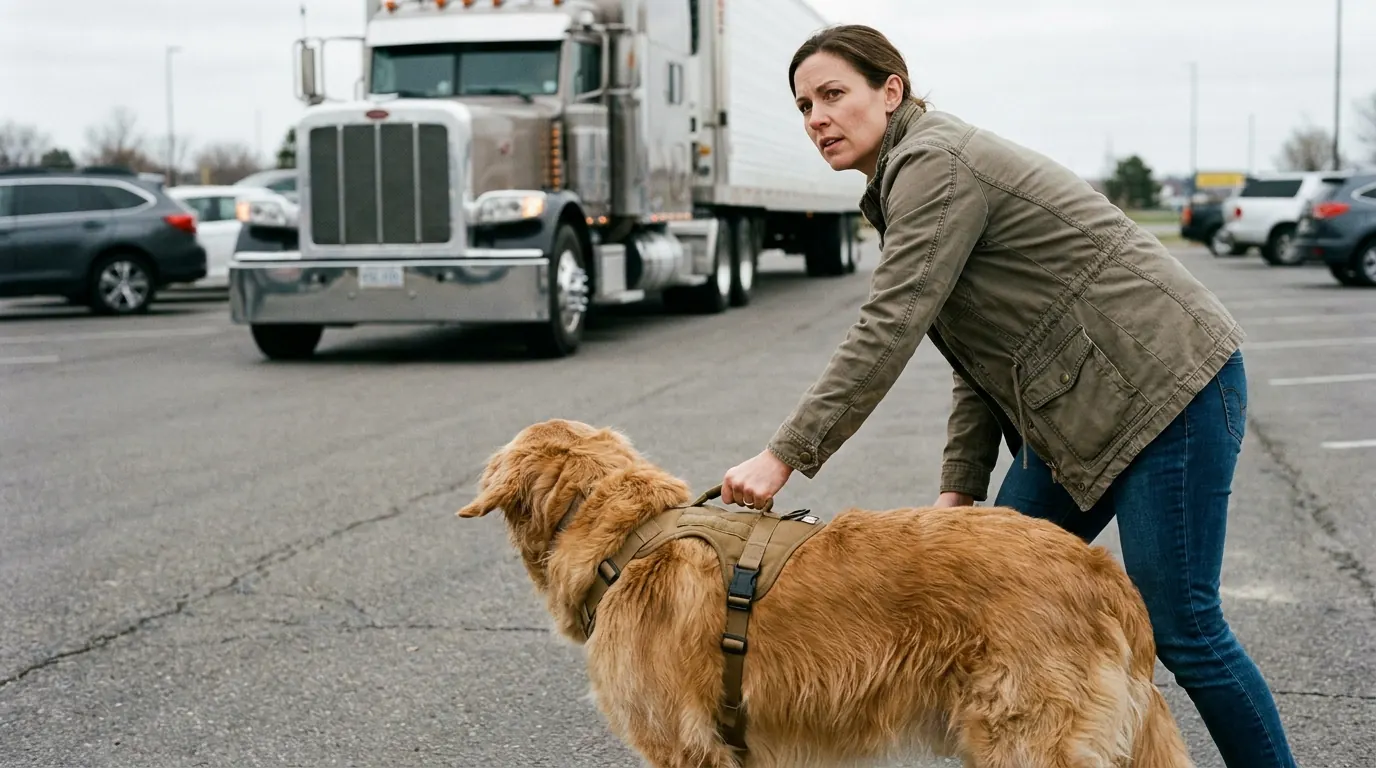
Semi Trucks Rolling In Without Warning
Truck stops and highway rest areas see semis pulling in and out constantly, and the engine noise makes it hard to hear them coming until they are close. A large dog who has been still for four hours will want to move fast and go wherever their nose points. Having Roux on the front clip means I can redirect before she reaches the end of her lead instead of bracing against a full bolt at the back clip.
Amazon Check Today's Price on Amazon →Rain, Darkness, and a Slippery Pavement Scenario
The combination of rain at night in a rest stop parking lot is one of the worst footing situations you can be in with a pulling dog. The reflective strips on the BARKBAY become even more critical in wet conditions because the water on the harness surface refracts headlight beams at a wider angle. I noticed this by accident the first time we stopped in a downpour on I-65. Roux practically glowed. My jacket did not.
Amazon Check Today's Price on Amazon →When Another Dog Appears Out of Nowhere
Rest stops mean other travelers, and other travelers mean other dogs, often off-leash or on retractable leads with an owner who is looking at their phone. Roux is not aggressive but she is reactive, and the two seconds between spotting a dog and reaching full bark-and-lunge is not enough time to react if all I have is a back-clip collar. The front clip gives me those two seconds back.
Amazon Check Today's Price on Amazon →Picking Up Waste in the Dark With One Hand
This is a genuinely underdiscussed problem. You are trying to bag a pickup in a dim rest stop while holding a leash and a flashlight on your phone. If your dog is on a collar, any movement they make is a torque on your wrist. On the BARKBAY's front clip, a redirect is a two-inch turn instead of a full-arm jerk. The handle also lets you pin your dog gently to your leg while you sort out the bag situation without needing a third hand.
Amazon Check Today's Price on Amazon →The Exit Back to the Car Through a Busy Lot
The hardest part of any rest stop is the walk back. Your dog has burned off some energy, loosened up, and now wants to keep going, usually right toward the parking lanes. The top handle lets me shorten my grip to a few inches and walk Bear or Roux back to the car in full contact without fighting the leash. I use the handle more going back than going out, and I never thought about it as a feature until I had it.
Amazon Check Today's Price on Amazon →What I Would Skip
A retractable leash with a collar clip. I know that is not a harness, but it is what I see at rest stops constantly, and it is the worst possible combination for a high-stimulation environment. The collar provides no pull control and transfers all force to the neck. The retractable leash adds distance before you can respond. At a busy truck stop with moving vehicles and loose dogs, that combination turns any lunge into a serious situation fast.
I would also skip harnesses with only a back clip if your dog is a confirmed puller. The back clip feels easier day to day, but it works against you the moment the dog decides to go somewhere. The BARKBAY has both clips, so you can switch to the back for calm trail walks and use the front at every rest stop without swapping gear.
Rest stops are not calm. They are high-traffic, low-light, high-stimulus environments that happen when your dog has been sitting still too long. Your gear should reflect that.
Roux has tested four harnesses on rest-stop runs. The BARKBAY is the one that stayed.
Reflective bands, front and back clips, a real top handle, and a fit that does not loosen mid-walk. If you are doing any kind of regular road-tripping, check the current price and grab the right size before your next long drive.
Amazon Check Today's Price on Amazon →