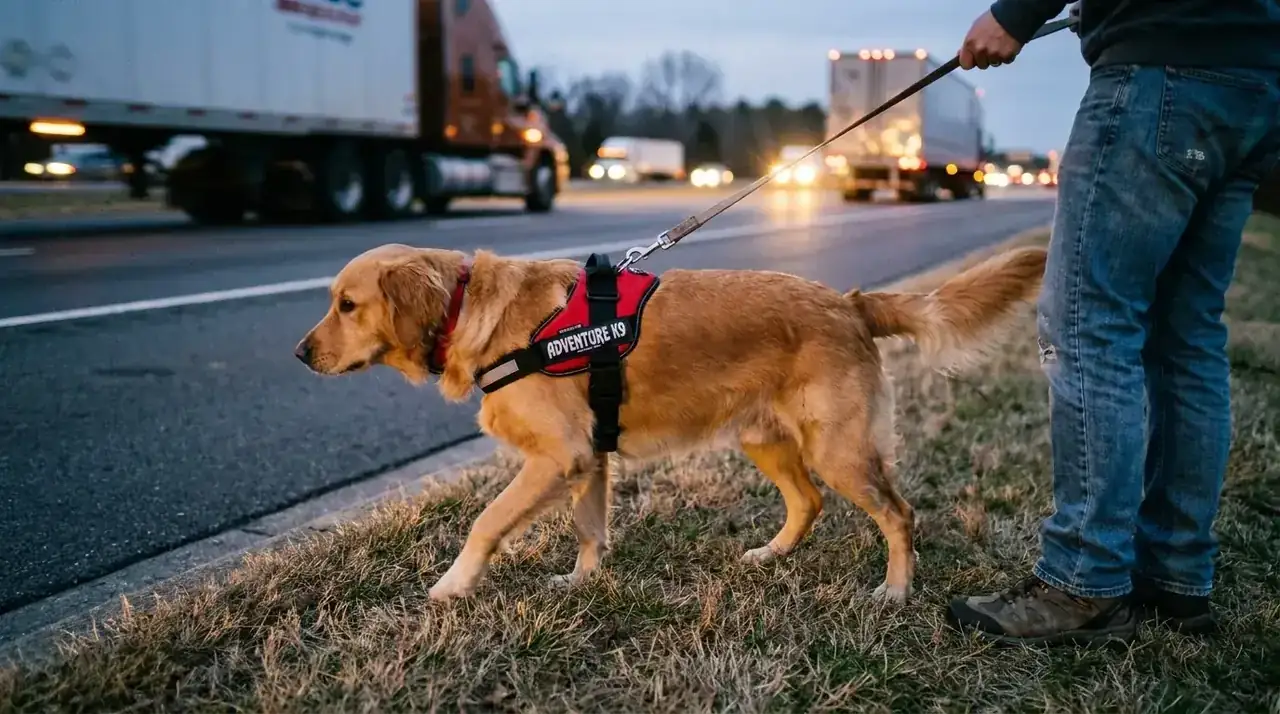
I want to tell you about the truck stop outside Flagstaff. We were three days into a drive from Denver to San Diego, Roux in the back seat and Bear panting shotgun, and I pulled in to let them stretch. A semi jackknifed into the lot about thirty feet away and Roux, my 42-pound border collie mix who has lunged at everything from shopping carts to tumbleweeds, hit the end of her leash so hard the old back-clip harness just rotated sideways. She was not loose, but she was inches from chaos, I had zero control, and my heart was in my throat. That was the last time I put that harness on her. Two days later I ordered the BARKBAY No-Pull Harness. I have been using it on Roux ever since, through a full year of road trips, rest stops, morning trail walks in the dark, and at least a dozen other moments where a dog with forward momentum is genuinely dangerous. Here is what I actually think about it after all of that.
Quick Verdict
For a traveling dog who pulls, lunges, or just needs consistent control in high-stimulus environments, the BARKBAY earns its place in the gear bag. The front clip and top handle are the two features that earn it. The fit takes some patience on deep-chested dogs.
Amazon Check Today's Price →Still white-knuckling every rest stop with a puller? There is a better way to hold the line.
The BARKBAY No-Pull Harness gives you a front clip that redirects instead of just restrains, plus a top handle for the moments you need to keep your dog glued to your side. Over 13,000 dog parents have made it their road-trip standard.
Amazon Check Today's Price on Amazon →How I Have Used It
Roux is a border collie mix, 42 pounds, three years old. She is not aggressive. She is reactive: trucks, other dogs appearing fast around corners, skateboards, basically anything that moves quickly in her direction triggers a fast lunge forward. She also heels beautifully when she is mentally engaged and we are on a quiet trail. The problem is that rest stops, trailhead parking lots, and campground dog walks are not quiet. They are the opposite of quiet. Those are exactly the places I need gear to do work.
I have been fitting the BARKBAY on Roux consistently since last June. In that time she has worn it on rest stops along I-70, I-40, and US-89, on morning walks at campgrounds in Moab and Sedona, on leashed trail approaches at Rocky Mountain National Park, and at the parking lot of a Cracker Barrel where someone's toddler sprinted at her screaming 'DOGGY.' We have also used it at dawn and dusk rest stops where low light is genuinely a safety issue. The harness has gone through mud, rain, a river crossing in southern Utah, and about a hundred leash clips and unclips in the course of a normal travel day.
Bear, my nine-year-old golden retriever, mostly rides in a crash-tested car harness on long drives and gets walked on a flat collar. But on the days I needed both dogs leashed simultaneously at a busy rest stop, I have put the BARKBAY on Bear too. It fits him well at an XL, though he does not need the no-pull function the way Roux does.
The Front Clip: What It Actually Does for a Puller
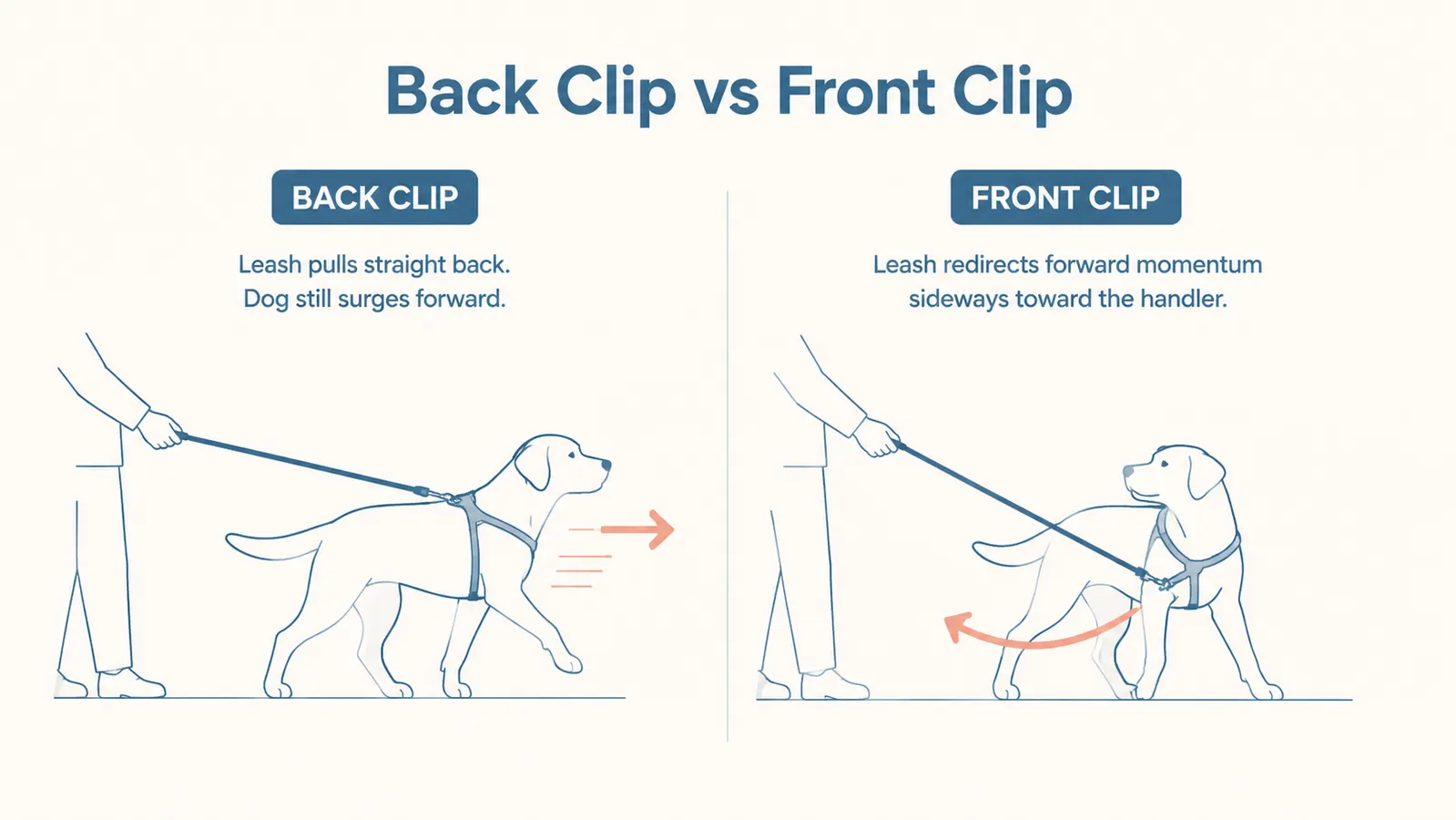
I will say this clearly because I spent years misunderstanding how front-clip harnesses work: they do not stop your dog from pulling. What they do is change the direction of the pull. When Roux lunges forward on a back-clip harness, she is using her entire chest and shoulder mass against the leash. She gets a full-body run at whatever she is interested in. When she lunges forward on the BARKBAY front clip, the leash attachment point is at her sternum. Instead of going straight ahead, she pivots toward me. The lunge turns into a spin. It interrupts the motion pattern, which buys me about a second and a half to reset her attention.
That second and a half is everything. At a rest stop, where she might be reacting to a semi, another dog on a retractable leash, or a child on a bicycle, that interruption is the difference between a controlled situation and a complete loss of management. It does not train her out of lunging, and I want to be clear about that. If you are buying a no-pull harness hoping it will fix a reactivity problem, it will not. What it will do is give you a mechanical advantage you do not have with a back clip.
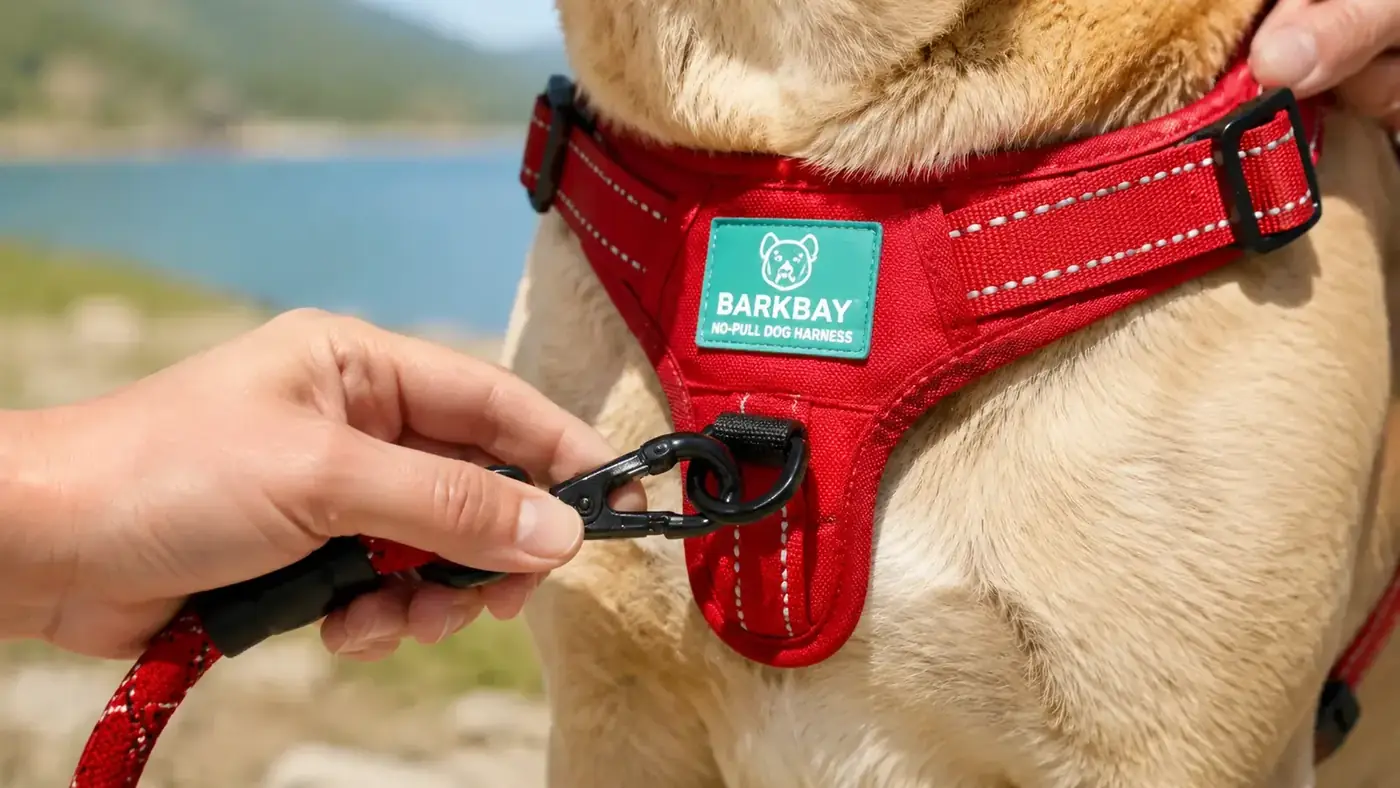
The BARKBAY has both a front clip and a back clip, which I appreciate. On calm trail sections where Roux is settled, I often switch to the back clip so she can have a slightly more natural gait. On rest stop approaches, gas station parking lots, and any situation where I can already see a trigger in the environment, I clip front. Having both options on the same harness without buying two separate pieces of gear is one of the practical reasons this one stayed in my kit for a full year.
The Top Handle: The Feature Nobody Talks About Enough
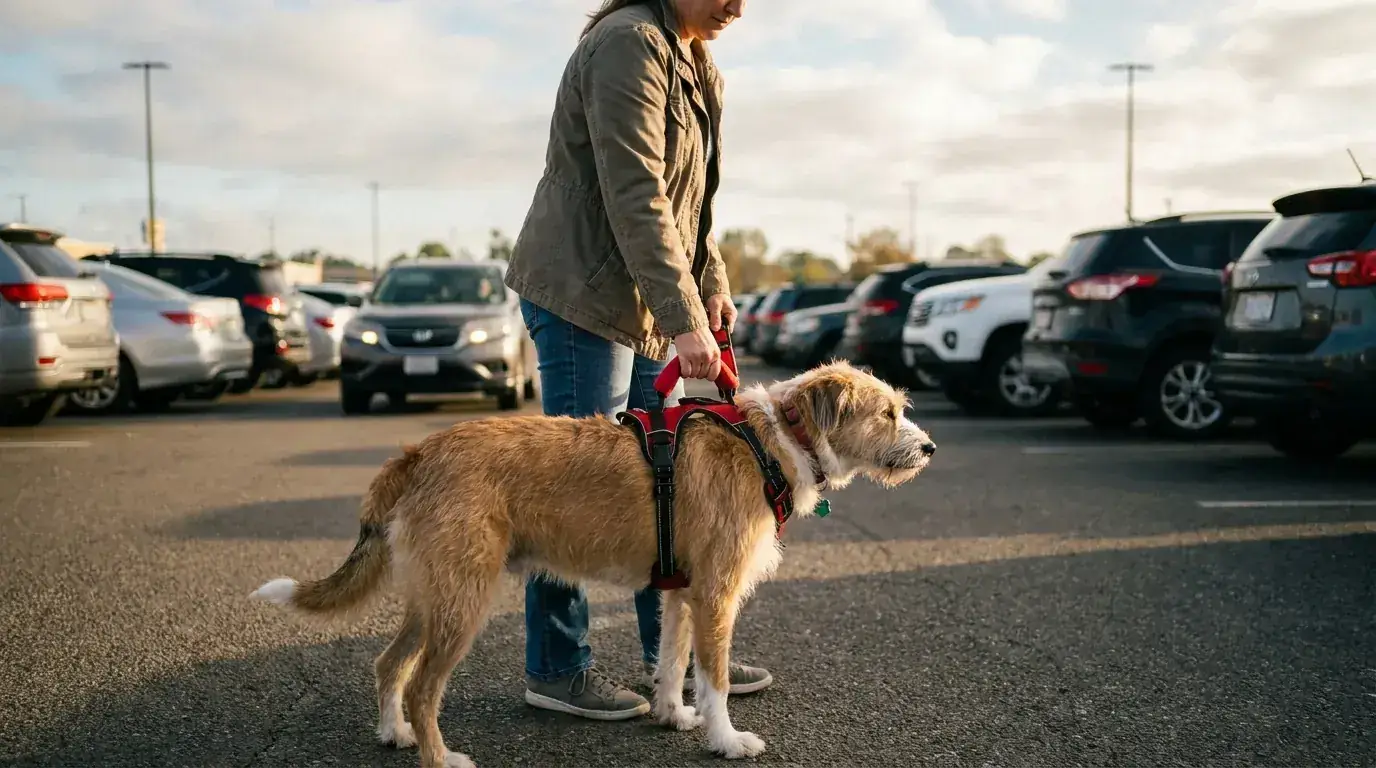
The BARKBAY has a padded top handle sewn onto the back panel of the harness, sitting right between the dog's shoulder blades. Most harnesses have this. What I want to tell you is that for travel specifically, this handle is the reason I would buy this harness even if it had zero no-pull features.
Here is a partial list of situations where I have grabbed that handle in the past year. A motorcycle revved from a standing start 10 feet from Roux at a truck stop. A golden retriever barreled around a concrete pillar at a rest stop in New Mexico before either dog could process what was happening. A cyclist came around a blind curve on a gravel path at the campground. I needed to step over a concrete barrier at a highway rest stop with both dogs and could not get the leash short enough. Loading and unloading from the back seat when there are other dogs or cars close by. Every single time, I grabbed the handle. It is padded well enough that it does not bite into my palm even under real load. And for a 42-pound dog, real load is real.
If you travel with a larger dog near traffic, near other dogs, near children, or near any stimulus that triggers a fast reaction, put a harness with a solid top handle on your must-have list. The BARKBAY's handle has held up under a year of hard use without any fraying at the stitching points.
The front clip buys me a second and a half. At a highway rest stop with a reactive dog, that second and a half is everything.
Reflective Bands: Not Just a Marketing Feature
The BARKBAY has reflective stitching sewn into the harness straps on multiple sides. When I first ordered it I thought of this as a nice-to-have, the kind of safety feature that sounds good in a product description but rarely matters in practice. I was wrong about that.
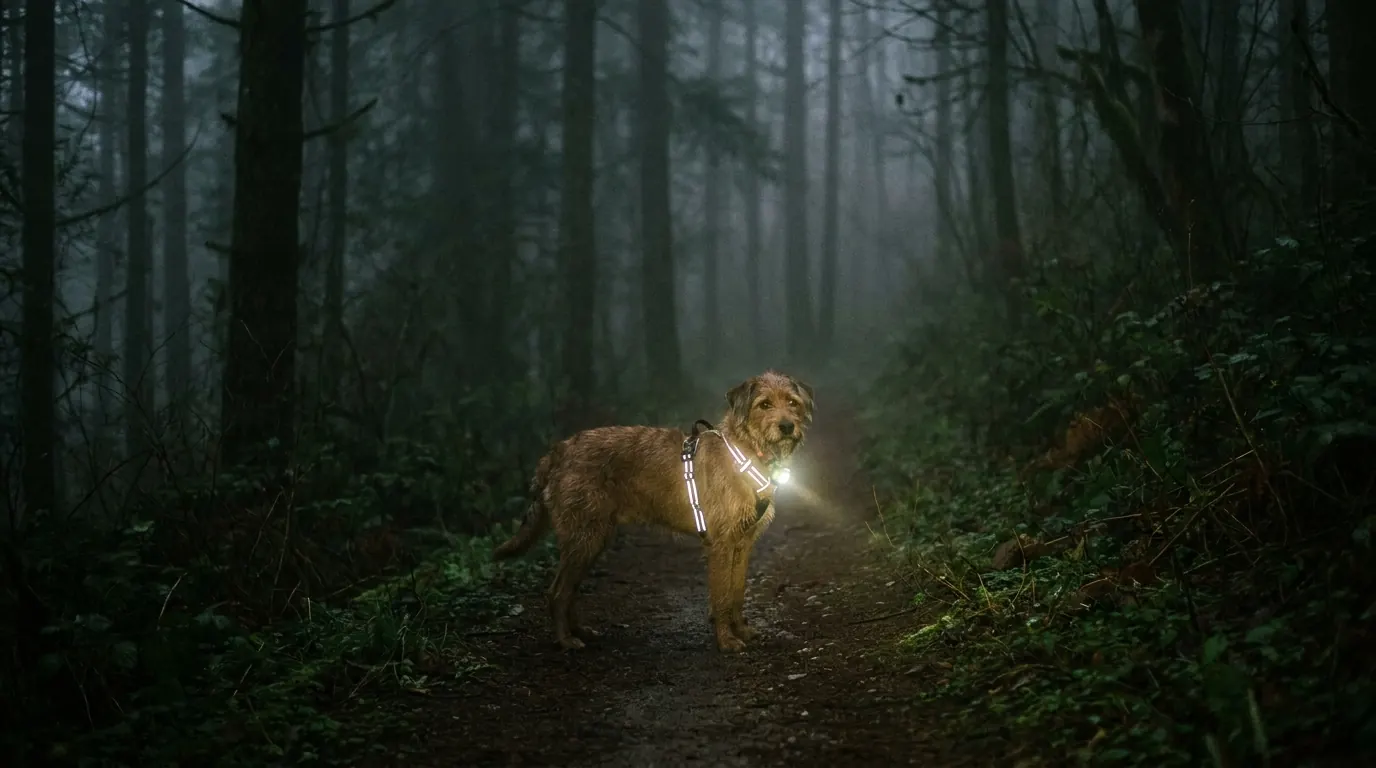
Roux and I do a lot of early morning and after-dinner rest stop walks because those are the coolest times during summer drives, and because I would rather stop every two hours during the day and let both dogs decompress. That means a lot of low-light walking in unfamiliar places next to parking areas with moving vehicles. The reflective strips on the BARKBAY are genuinely bright under headlights. I have had drivers at rest stops slow down when they saw her because the harness lit up. That is not something that happens with a plain nylon harness. When a 42-pound dog blends into the grass at the edge of a dark rest stop parking lot, visibility matters.
The strips also help me spot Roux faster in my peripheral vision when I am simultaneously managing Bear, watching for traffic, and trying to find the correct lane to walk her back to the truck. Small thing but worth naming.
Fit and Sizing: Where to Spend Your Attention
This is the one section where I want you to slow down. Roux is a 42-pound border collie mix with a fairly deep chest for her weight, somewhere around 24 inches in girth at the widest point. The BARKBAY large fits her with adjustment room to spare, and I have never had it shift into an uncomfortable position over a long walk. That said, I spent about fifteen minutes on the first fitting getting all four adjustment points set correctly.
The harness has two girth straps and two chest straps. All four are independently adjustable via side-release buckles, and all four have to be set before the fit makes sense. I see a lot of reviews from people saying the harness twists or the front clip ring falls to one side, and when I tried fitting it loosely I could reproduce that problem. When it is fitted snugly, with the chest plate sitting flat against the sternum and the back panel sitting behind the shoulder blades rather than on top of them, none of that happens. There is a two-finger rule I use: I can slide two fingers under any strap, but I cannot slide a fist. If I can slide a fist, it is too loose and it will twist.
For deep-chested breeds like boxers or vizslas, I would size up and use the adjustment to bring it in rather than trying to max out the smaller size. For barrel-chested dogs like English bulldogs, the geometry of the chest plate may not sit right. For most medium to large mixed breeds in the 30-65 pound range, the sizing is fairly forgiving once you understand that all four points need to be adjusted.
Durability After a Year
I will keep this section short because there is not much bad news to report. The nylon shell has not frayed at any stress point. The side-release buckles click the same way they did in June. The front D-ring has not bent or loosened. I rinsed it twice, threw it in the washing machine on cold once, and air dried it. It looks roughly the same as it did when I opened the box, with expected scuffing on the belly strap from trail walking.
The one thing I noticed at around six months was a slight softening of the chest pad padding. It is not structural but the pad compresses a bit more now than it did initially. Roux has not shown any sign of discomfort so I do not think it affects function. Worth noting if you have a dog prone to pressure sores. I have not seen any rubbing under the armpits, which is the most common complaint I hear about harnesses in general.
Pros
- Front clip delivers real mechanical advantage over a puller, not just a psychological trick
- Top handle is padded, holds under load, and has not frayed in a year
- Reflective stitching is bright enough to actually stop drivers at low-light rest stops
- Both front and back clips on the same harness mean you can choose based on the situation
- Machine washable, holds shape well after repeated washes
- Price is genuinely reasonable for what you get
Cons
- Fit takes real time to dial in on the first use, four adjustment points all matter
- Can twist or shift if any strap is left too loose, leading to the complaints you see in some reviews
- Chest pad has softened slightly after six months of hard use
- Not ideal for barrel-chested or unusually broad-shouldered breeds where the chest plate geometry may not sit flat
Who This Is For
This harness was built for the road-trip dog parent who needs functional management gear, not a fashion accessory. If your dog pulls toward trucks, other dogs, or children at rest stops, the front clip gives you a tool that works better than a collar and better than a standard back-clip harness. If you travel at dawn or dusk near parking areas, the reflective strips matter more than you think they will. If you ever need to physically hold or lift your dog out of a dangerous situation quickly, the top handle earns its stitching. I would especially recommend this for dogs in the 30-70 pound range who travel in the car regularly with owners who stop frequently on road trips.
Who Should Skip It
If your dog is a confirmed escape artist who backs out of harnesses, I would look at something with a martingale-loop design rather than standard adjustable buckles. If you have a barrel-chested breed, fit this carefully before your first road trip because the chest plate may not land flat. If you are looking for a crash-tested vehicle restraint harness, this is not that. The BARKBAY is a walking harness for active use outside the vehicle, not a seatbelt replacement in the car. And if your dog is truly aggressive and needs containment-level gear, please talk to a trainer before any harness is your front-line solution.
A year of rest stops, trails, and parking lots, and it is still my first reach every time.
The BARKBAY No-Pull Harness has earned a permanent spot in my road-trip gear bag. Front clip, top handle, and reflective stitching at a price that does not require justification. Check today's price on Amazon and see why over 13,000 dog parents keep coming back to it.
Amazon Check Today's Price on Amazon →