Nobody writes a five-star review at month three. They write it in week two, when the harness is new and everything clips smoothly and their dog looks adorable in the product photos. I get it. I have done the same thing. But some of the details that actually matter for a traveling dog parent only show up after a few road trips, a handful of machine washes, and a couple of times leaving the harness stuffed under a seat in a hot truck. I have been using the BARKBAY No-Pull Harness on Roux, my 42-pound border collie mix and dedicated road-trip chaos agent, for long enough now to have those month-three observations. This is the version of the review I would have wanted before I bought it.
Short version: I still use it, I still recommend it, and I would buy it again over most things in its price range. But there are a few things worth knowing before your first long-haul trip.
Quick Verdict
A solid, well-priced travel harness that earns its reputation. The honest caveats are real but manageable once you know to look for them.
Amazon Check Today's Price →If you travel with a puller, you already know what it costs to use the wrong harness at the wrong moment.
The BARKBAY No-Pull Harness gives you a front clip for mechanical control, a top handle for close quarters, and reflective stitching for low-light rest stops. Read through the caveats below, then check today's price. For most travel dogs, it still wins.
Amazon Check Today's Price on Amazon →The Buckle Wear You Will Not Notice Until Month Three
The BARKBAY has four side-release buckles: two on the girth straps and two on the chest plate straps. All four are standard injection-molded nylon, the same material used on everything from backpacks to dog collars at every price point. They work fine. But here is what happens when a harness spends a lot of time in a hot truck.
I started keeping the BARKBAY in the back of my truck between rest stops, coiled up and stuffed under the rear seat. By about month three, I noticed two of the four buckles had developed a slightly sticky resistance at the press-point, the part you push to release. Nothing that would cause a real problem in the field, but the clean positive click I had at the start got a little gummy. I cleaned them with a damp cloth, let them dry, and they improved. But on a harness marketed specifically toward travelers and outdoor use, I would expect the hardware to be more weather-indifferent than it is. If you store your harness in a hot car regularly, give the buckles a quick check and clean every month or so. It takes two minutes and keeps them clicking cleanly.
This is not a fatal flaw. The buckles have not cracked, bent, or failed under load. But it is the kind of thing that does not show up in a two-week review and is exactly the sort of thing a traveling dog parent needs to know before a 14-hour drive from Phoenix to Denver.
The Reflective Strips: What Happens After Washing
The reflective stitching on the BARKBAY was one of the main reasons I bought it over a few competitors at the same price. Roux and I do a lot of early morning and late evening rest stop walks because those are the safe-temperature windows in summer, and low-light visibility at the edge of a parking lot is a real safety matter, not a marketing feature.
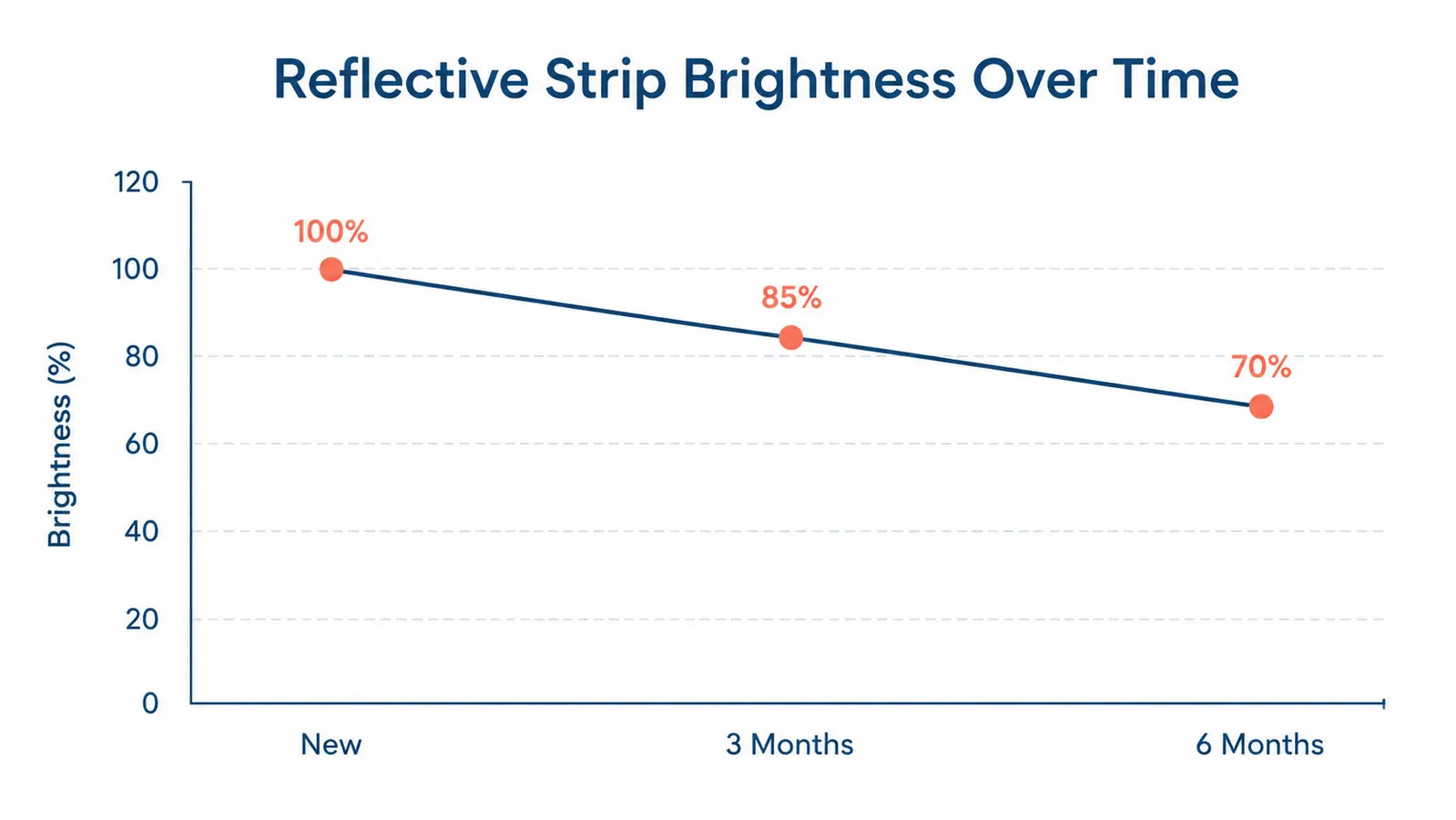
Here is the honest trajectory. New out of the box, the reflective strips are genuinely bright under a headlight beam. I noticed drivers slowing for Roux in ways they had not with her old harness. Through the first few months of use and a couple of cold-water machine washes, the strips stayed pretty effective. By month four, after a hot wash I did not mean to run, they were noticeably less brilliant. They still reflect. They are still visible in a headlight. But that first-week brilliance is gone, and I do not think it comes back.
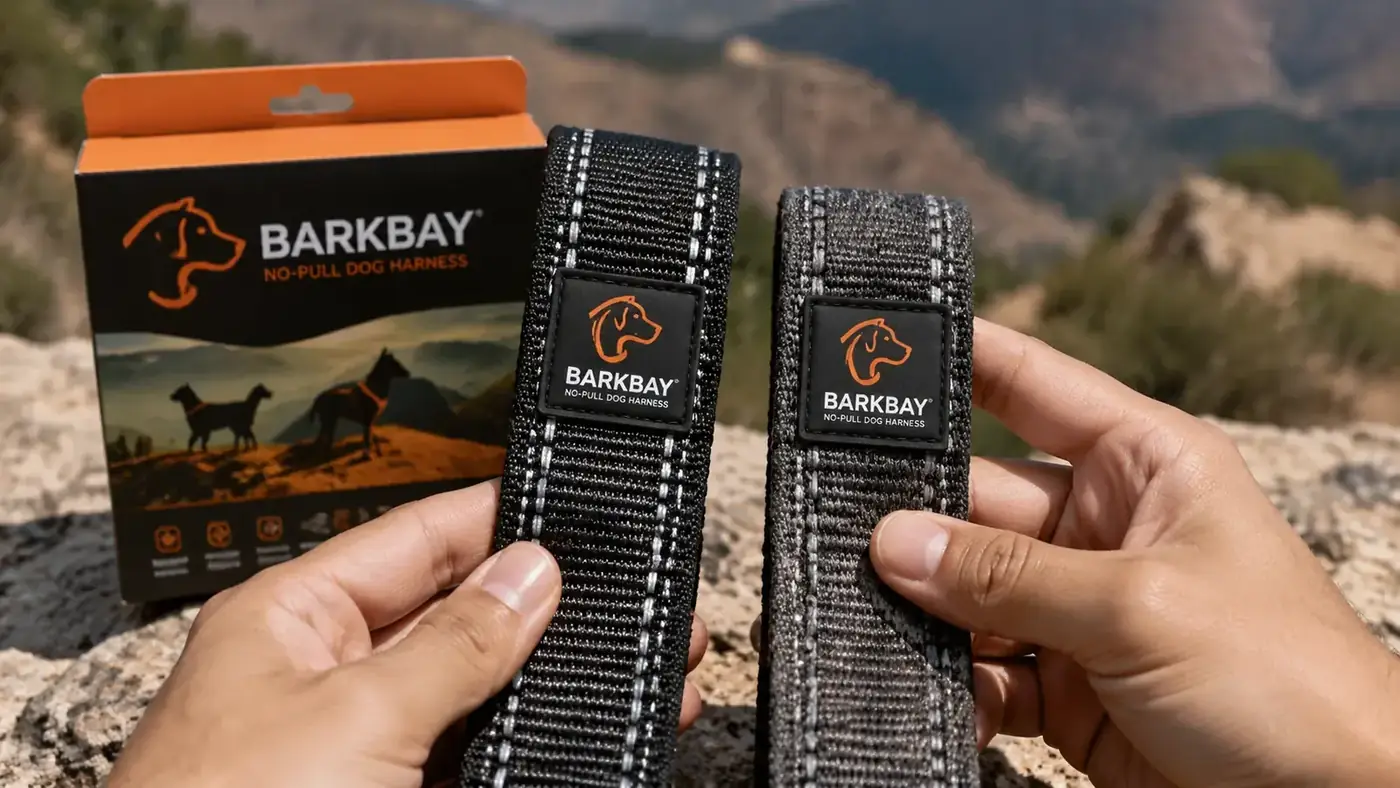
The care instructions say cold water, gentle cycle, air dry. Follow them. The reflective coating on these strips is heat-sensitive and machine-dryer heat will accelerate the fade significantly. If you have been throwing the harness in the dryer with your dog towels, that is likely the reason your strips look dull. I would also avoid any detergent with optical brighteners, which counterintuitively can coat the reflective surface and reduce its output. A capful of plain liquid detergent, cold wash, air dry. That is the protocol that kept mine performing well past month two.
Worth knowing: no harness in this price range maintains peak reflectivity indefinitely. The BARKBAY is not unusual here. What would be unusual is if someone told you this upfront. Now someone has.
The Handle-Loop Stitching: Check It at Month Three
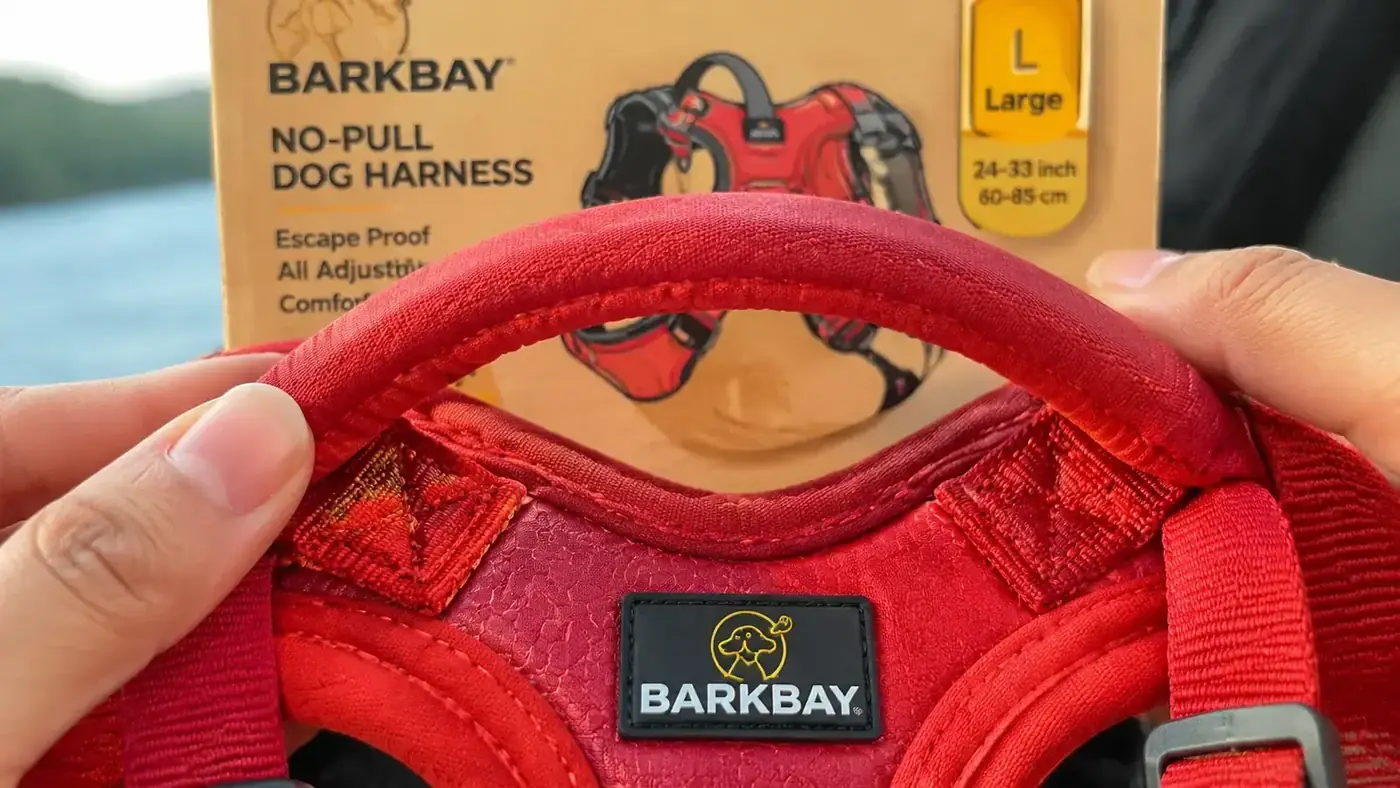
The padded top handle is one of the features that earned the BARKBAY a permanent spot in my kit. I have grabbed it hard more times than I can count at rest stops and parking lots, including one moment in New Mexico where a dog off a retractable leash came around a concrete barrier at speed and I needed Roux's full body weight against my grip. The handle held, no drama.
But at around the three-month mark, I was inspecting the harness after a river crossing in southern Utah, and I noticed the outer stitching at one of the two anchor points where the handle loop connects to the back panel had some separation in the decorative top thread. Not the structural bonding thread underneath, just the surface finish stitching on one side. I reinforced it with a small amount of fabric adhesive as a precaution, and it has not progressed. But I would not have caught it if I was not in the habit of doing a quick seam inspection after any heavy-use trip.
If you use the top handle regularly, which you should because it is the most underrated part of this harness, make it a habit to flip the harness over after every trip and run your thumb along the stitching at both handle anchor points. This takes maybe ten seconds. Catch any separation early and a drop of Gorilla Fabric Glue fixes it in five minutes. Miss it and you find out the hard way that the handle loop is attached to the back panel by two stitched seams.
The front clip does not stop pulling. Nothing does, except training. What the front clip does is change the geometry of the lunge so you have a fighting chance to interrupt it.
Fit Creep on Barrel-Chested and Muscular Dogs
I mentioned in my other BARKBAY piece that fit takes patience on the first use. What I did not get into there is what happens to that fit over the course of a longer trip on dogs with certain body types. Specifically, dogs with wide or deep barrel chests, think English bulldogs, American bulldogs, some boxers, some pit mixes, and thick-chested labs.
The BARKBAY's chest plate is designed to sit flat against the sternum between the front legs. On a leaner dog with a narrower chest, it stays put well. On a barrel-chested dog with a wider-than-average chest circumference, the chest plate wants to ride up toward the throat over the course of a long walk. I saw this when I put the harness on a friend's stocky English lab mix at a campground in Moab. She is about 65 pounds with a chest girth around 28 inches, and by the end of a half-mile loop the chest plate had migrated up about two inches. Not dangerous but visibly uncomfortable and functionally not ideal for a front clip to be working from that position.
If your dog has a barrel chest and you want to try the BARKBAY, size up rather than sizing to the chest measurement table, and set the girth straps tighter than feels intuitive to keep the chest plate anchored. If you order it and the chest plate still creeps up after a full adjustment, that is real information about whether this harness is a good geometry match for your specific dog. Amazon's return window exists for exactly this situation.
The Price Concern Is Real, and Then It Isn't
I spent several weeks before buying the BARKBAY second-guessing the price point. Not because it is expensive, it is genuinely affordable, but because I had been burned by cheap harnesses before and had that familiar worry about whether I was just buying something that would fall apart at an inconvenient moment. I had been looking at the Ruffwear Front Range, which costs significantly more and has the outdoor brand credibility that makes you feel like you are buying quality. I kept talking myself out of the Ruffwear price and feeling guilty about it.
Here is what I found after extended use: the BARKBAY's base materials, the nylon webbing, the hardware, the structural stitching, are not meaningfully inferior to what I have handled on the Ruffwear at three times the price. Where the Ruffwear earns its premium is in the foam padding quality, the hardware finish (aluminum instead of nylon on the D-rings), and the brand's history of replacing gear that fails. You are paying for peace of mind and hardware durability in specific conditions. If you are a serious trail runner or bikejorer whose dog is in a harness for four hours a day, that premium may make sense. If you are a road-trip parent who uses the harness for rest stop walks and trail parking lot approaches, which is most of us, the BARKBAY's materials are completely adequate for the use case.
The honest comparison is in my other article, but the short version here: cheaper than Ruffwear does not mean you are buying something that will fail you. I did not expect to still be using this harness as my primary travel gear months later, but here we are.
The Puller Truth Nobody Wants to Say
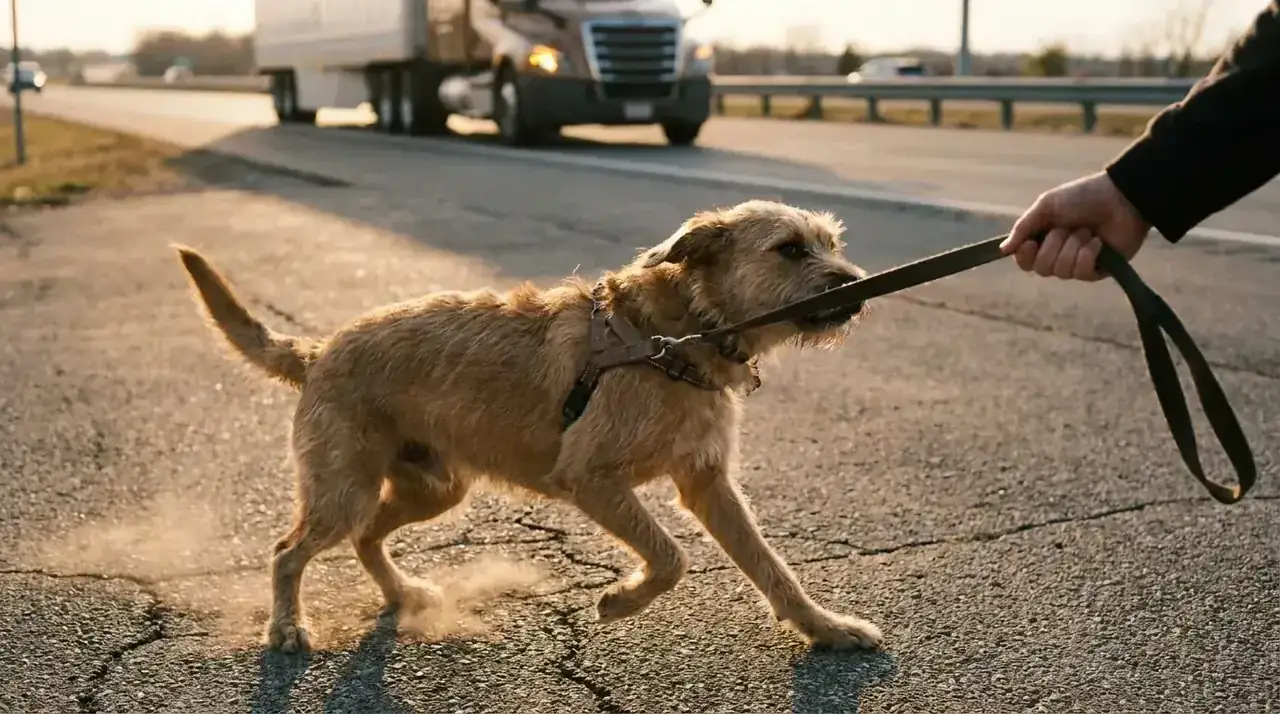
This section will be quick but I have to say it, because I bought my first no-pull harness with a fantasy in my head that it was going to transform Roux into a dog who walked calmly past trucks and semis and other dogs and toddlers on scooters. I want to tell you clearly: no harness stops pulling. Training stops pulling. A no-pull harness changes the mechanical geometry of a lunge so that you, the handler, have better odds of managing it in the moment. That is genuinely valuable. But it is not a substitute for working on leash manners.
The BARKBAY front clip redirects Roux's forward momentum sideways when she lunges. That interruption buys me a moment to reset her and redirect her attention. It does not remove the desire to lunge. She still wants to go after whatever triggered her. The harness just makes it harder for her body mechanics to fully commit to the lunge. Over time, combined with consistent loose-leash work on those same rest stop approaches, she has gotten meaningfully better. But the improvement came from the work, not from the harness alone.
If you are buying this hoping gear will replace training, you will be disappointed. If you are buying this to give yourself better mechanical control while you do the work, you will be satisfied. That distinction matters and I wish more product pages said it out loud.
Sizing and Returns: The Reality Before You Order
BARKBAY's sizing chart is reasonably accurate for most dogs, but I want to be honest about the range of variation you can encounter. Roux at 42 pounds and roughly 24 inches in chest girth fits a large with room to dial in. But body shape matters more than weight for this harness. I know of a 38-pound dog with a very deep chest who was correctly sized for a medium by weight but needed a large to get the chest plate to sit correctly. And I know a 55-pound lean sighthound mix for whom neither the medium nor the large sat right because of how low-slung the chest plate geometry is.
Amazon's return process on this product has been smooth in my experience and in the experience of a few people I know who had to exchange sizes. Order the size you think is right, do a proper fitting session at home before your first trip, and if something feels off, exchange it before you need it to work. The harness is inexpensive enough that if you are between sizes, ordering two to compare and returning one is not an unreasonable move. What you do not want is to discover a size problem at a truck stop in Oklahoma when you have 400 miles left to drive.
Pros
- Front clip gives real mechanical advantage on a puller in high-stimulus environments
- Top handle is the most underrated travel gear feature for any dog over 30 pounds
- Price is genuinely reasonable, cheaper than Ruffwear but not cutting corners on structural materials
- Both front and back clips on the same harness cover most situations without a second purchase
- Returns are easy if sizing is off, and they usually are on the first harness for a new dog
Cons
- Buckles develop slight stickiness after heat exposure in a car, needs periodic cleaning
- Reflective strips fade with heat and improper washing, follow cold-water care instructions strictly
- Handle-loop stitching deserves a monthly seam check if you use it under load regularly
- Fit creep on barrel-chested dogs means the chest plate migrates toward the throat on longer walks
- No harness stops pulling, this one redirects it, training is still required
Who This Is For
This harness is the right call for road-trip dog parents with medium to large dogs who need reliable control at rest stops, gas stations, and trailhead parking lots. If your dog is between 30 and 70 pounds, has a moderately lean to average chest shape, and pulls hard enough that a standard collar or back-clip harness has become a liability in traffic, the BARKBAY front clip solves a real problem at a price that does not require justification. It is also the right call if you do any low-light walking near roads, which most road-trippers do at least a few times per trip. The reflective strips, even with some fade, are still meaningfully brighter than a plain nylon harness.
Who Should Skip It Entirely
Tiny dogs, roughly under 15 pounds, are not the target animal here. The chest plate geometry is designed for medium-to-large dog body proportions and does not scale down cleanly to a Chihuahua or a very small terrier. The hardware also runs a little heavy for a five-pound dog. If your dog is an escape artist who backs out of harnesses, no amount of adjustment will help you with the BARKBAY, which uses the same standard side-release buckle design as most harnesses. You want a martingale-loop or a step-in design with anti-escape geometry. And if your dog has a serious barrel chest, get a tape measure and compare the chest plate dimensions listed on Amazon against your dog's anatomy before ordering.
One more thing worth saying: if your dog's pulling or reactivity is severe enough to be a safety issue in terms of them dragging you or redirecting onto you or other dogs, please talk to a professional trainer before gear is your primary plan. No harness is a substitute for behavior work when the stakes are that high.
Go in with clear expectations and the BARKBAY will not let you down at a rest stop.
The caveats above are real, and now you know them. Clean the buckles, wash cold, check the handle seams, and dial in the fit before your first trip. Do all of that and this harness earns its 13,000-plus reviews on the road. Check today's price on Amazon.
Amazon Check Today's Price on Amazon →