
I stopped Cosequin at week two the first time I tried it. Bear was nine years old, had started showing stiffness after our longer drives, and I figured a joint supplement was the obvious next move. I bought Cosequin, gave it to him faithfully for two weeks, saw nothing, and quietly concluded it was a placebo in a bottle. I switched back to the $8 Petco generic for another four months before my vet, at Bear's next checkup, asked if I had given the Cosequin a real chance. I admitted I had not. She said something I have thought about ever since: 'Most people quit a week before it would have started working.'
This review is for the people who are standing exactly where I was standing. You have probably already tried at least one budget glucosamine supplement. It did nothing obvious. Now you are looking at Cosequin, which has 78,000-plus reviews and a price point that is still reasonable, and you are wondering if it is actually different or just better marketing. I am not a vet. I am a dog mom who finally ran the full experiment, and what I learned about the timeline, the doubt period, and the real limits of this supplement is worth more to you than another round of five-star praise.
Quick Verdict
Works, but it takes six to eight weeks to show anything and you have to commit to that timeline or you will quit before the payoff. Still the best over-the-counter option for most dogs.
Amazon Check Today's Price →Already burned by one supplement that did nothing? This one needs eight weeks, not two.
Cosequin from Nutramax is the most studied over-the-counter glucosamine supplement for dogs. If your senior dog is stiff after long rides or slow to get moving in the morning, it is worth the full commitment.
Amazon Check Today's Price on Amazon →The Timeline Problem Nobody Warns You About
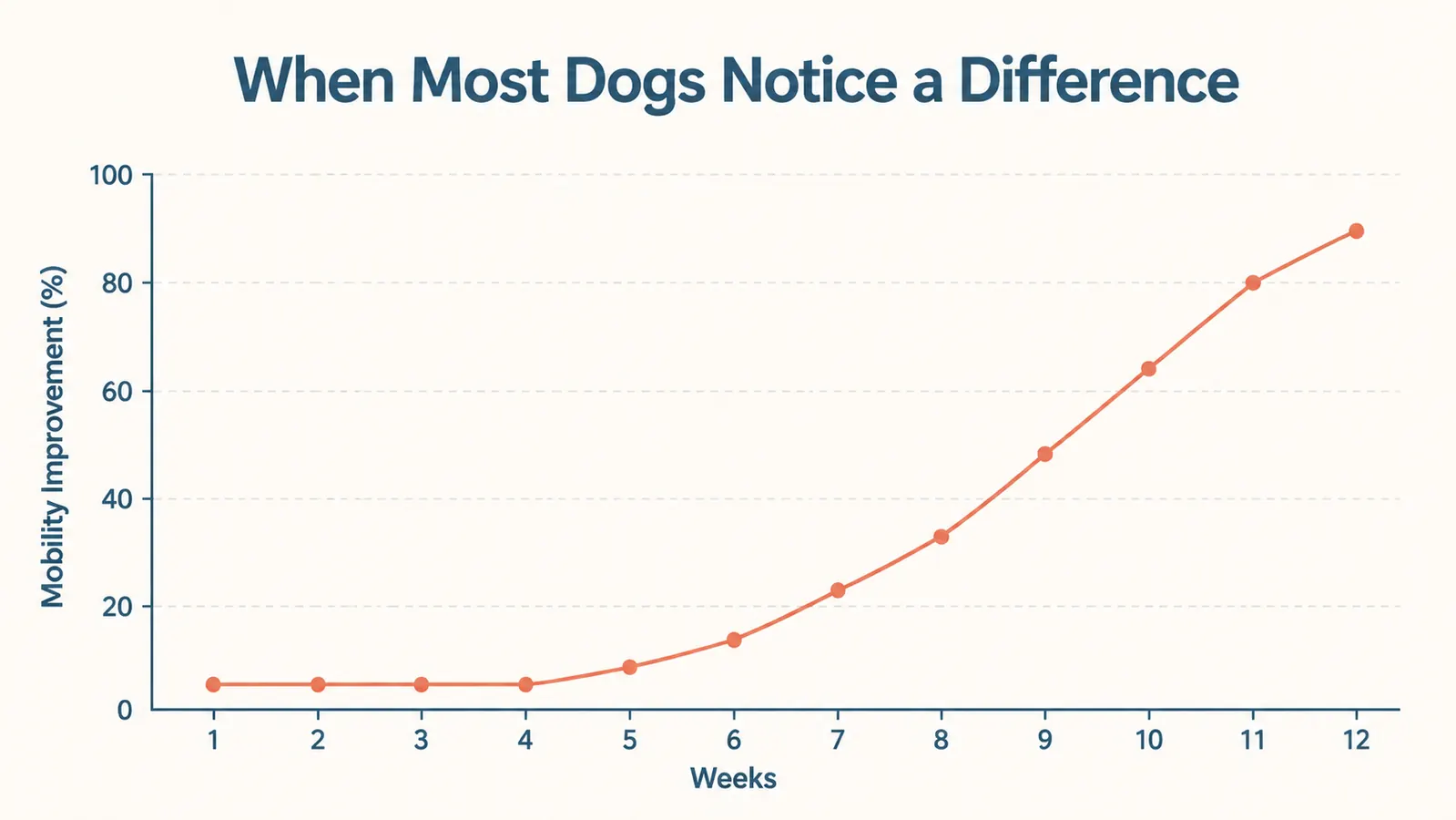
Glucosamine does not work the way ibuprofen works. It is not anti-inflammatory in the acute sense. What it does, at least in theory, is give joint cartilage the building blocks it needs to repair and maintain itself, and that process is slow. The Nutramax loading protocol calls for a higher dose for the first four to six weeks, then a maintenance dose after that. Most dogs, in my experience and from what my vet described, do not show noticeable improvement until weeks six through eight at the earliest.
The problem is that weeks two through five are brutal for a skeptic. Bear was still getting up slowly. Roux, my 42-pound border collie mix who had started showing some intermittent stiffness after long hikes, still looked the same. I have talked to at least a dozen other dog parents who quit during this window, convinced it was not working. If you are in that window right now, that is normal. The science on glucosamine supplementation in dogs is not ironclad, but the timeline for those who do respond tends to cluster around the six-to-eight-week mark, not the two-week mark.
Chewable vs. Sprinkle Capsule: This Is Not a Trivial Choice
Cosequin comes in chewable tablets and in capsules you can break open over food. The chewable version is more popular and easier to dose, but I ran into a problem with Bear that I have seen mentioned in the one-star reviews and almost nowhere else: some dogs get bored of them. Bear ate the first 30 like they were treats. Around the 45-day mark he started leaving them in his bowl, or moving them to a corner and looking at me like I had personally insulted him. The sprinkle capsule route solved this because I could mix it into his food without a second thought.
The capsule version is also slightly cheaper per dose if you buy the larger count. The trade-off is that you need to actually open the capsule, which is easy but adds one step. For dogs who eat around pills or have strong flavor preferences, the capsule-over-food approach is worth considering from day one rather than discovering it two months in when the novelty wears off.

The 'Is This Even Working' Doubt Period Is Real and It Is Uncomfortable
Here is the honest truth about taking your senior dog's joint health seriously with an over-the-counter supplement: you will spend a significant stretch of time genuinely unsure whether you are helping your dog or wasting money on something that makes you feel better without doing anything for them. That doubt is legitimate. The veterinary research on glucosamine and chondroitin in dogs is genuinely mixed. Some studies show meaningful improvement in gait and comfort scores. Others show no significant difference versus placebo. The supplement industry is not subject to the same clinical-trial standards as pharmaceuticals, and Cosequin, despite being the best-studied OTC option in this category, is not exempt from that uncertainty.
My vet explained it to me this way: glucosamine supplementation probably works best as a preventive and early-intervention tool rather than a late-stage arthritis treatment. If you are starting it at nine years old on a dog who is noticeably stiff, you are already past the ideal window, and your results will likely be modest. If you start it at six or seven on a dog who is still moving well but is a large breed with joint-wear risk, you may delay visible stiffness significantly. That framing changed how I think about this supplement entirely.
My vet put it plainly: glucosamine works best as prevention and early intervention, not late-stage rescue. Starting at nine is better than not starting at all, but it is not a cure.
What About the Dogs That Do Not Tolerate It Well
Most dogs take Cosequin without any issue. I want to be clear that this is the common experience, and the 78,000-plus reviews reflect a very high tolerance rate. But there is a small percentage of dogs, maybe five to ten percent based on the negative reviews I read and conversations with my vet, that show mild GI upset: loose stool, gas, or occasional vomiting. This tends to happen most with the chewable version, likely due to the flavoring agents and binders used to make the tablets palatable.
If your dog starts showing soft stool or seems gassy after starting Cosequin, the first thing to try is switching to the capsule version sprinkled over food, which has fewer additives. The second thing to try is giving the dose with a meal rather than as a between-meal treat. Most dogs who initially react to the chewables do fine with the capsule-over-kibble approach. A small number genuinely cannot tolerate glucosamine supplements at all, and if the GI symptoms persist after switching formats and dosing with food, that is your signal to talk to your vet about alternatives.
The Cost Adds Up and You Should Know That Going In
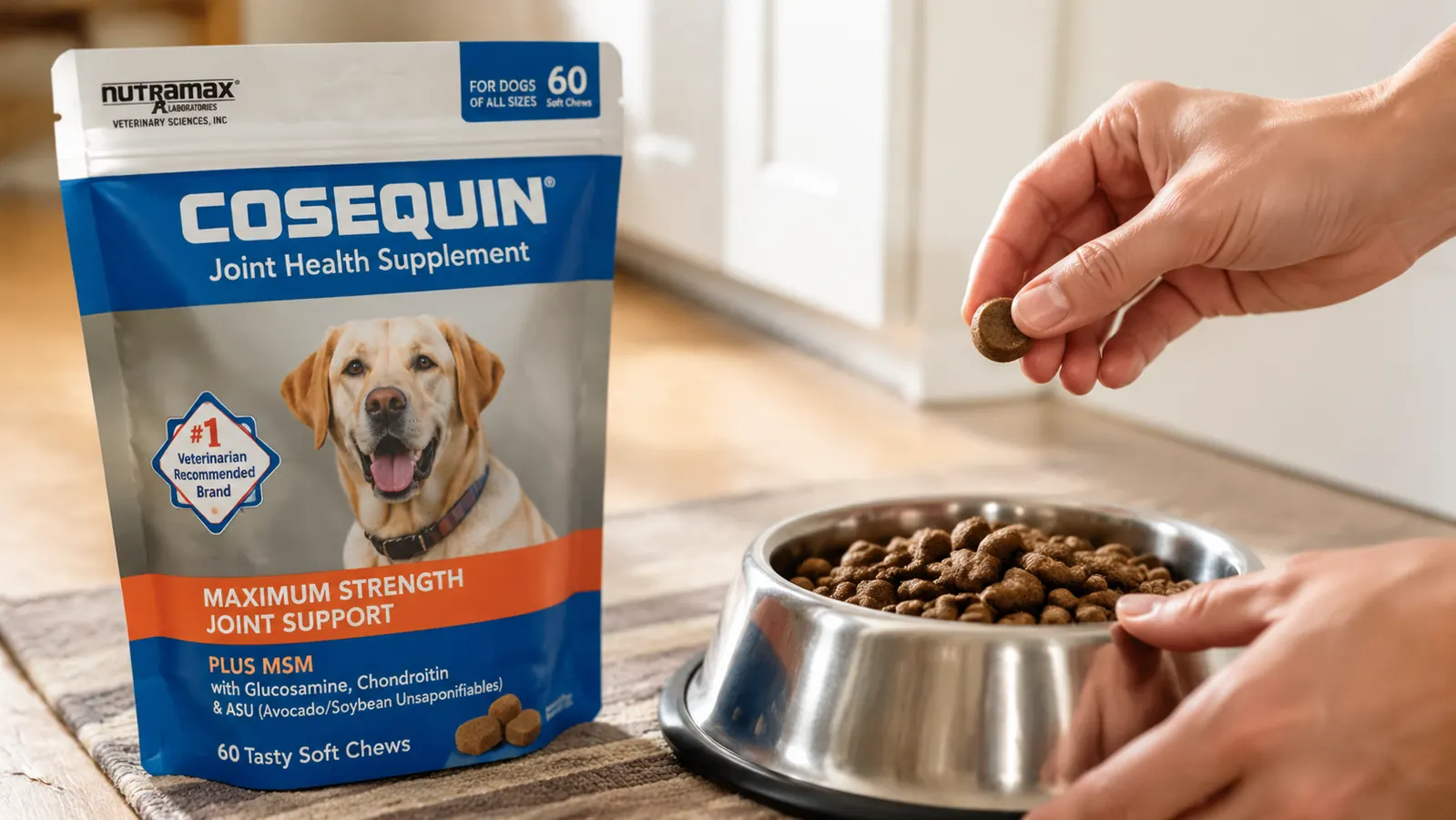
Cosequin is reasonably priced for a joint supplement, but this is a commitment that does not end. Once you start, you are committing to a monthly cost indefinitely, because the benefits are maintenance-based. You do not take a course of Cosequin and then stop. If it is helping, you continue. For Bear, who is a 78-pound golden retriever, the maintenance dose runs around 45 to 60 days per bottle at today's price. That is manageable. But over two years, that adds up to real money, and you should budget for it the same way you budget for any ongoing health cost.
The Subscribe and Save option on Amazon brings the per-bottle cost down meaningfully, which is worth setting up once you have confirmed your dog tolerates it and is showing some response. What I do not recommend is buying three bottles upfront before you know whether your individual dog responds. Start with one, commit to the full six-to-eight-week loading period, then reassess before you stock up.
When Cosequin Is Not Enough: Signs You Need to Escalate
Cosequin is not a prescription medication. It is a support supplement. There is a category of joint disease in dogs, particularly moderate to severe osteoarthritis, where an over-the-counter supplement is not going to be adequate, no matter how faithfully you dose it or how long you wait. The signs that you have crossed into that territory include: pain that is visible rather than subtle, limping that does not resolve with rest, a dog that cries or flinches when you touch a joint, or significant muscle loss around one or both hips.
If you are seeing any of those things, you are past the supplement conversation. Your vet has several prescription options that work through different mechanisms than glucosamine: NSAIDs like carprofen or meloxicam for inflammation and pain, Galliprant for older dogs with stomach sensitivities, and a newer injectable called Librela that works monthly. These are not supplements. They are medications with real efficacy data and real side effect profiles. Cosequin can run alongside some of these, but it cannot replace them when the disease is advanced. Knowing that boundary is part of being a responsible dog parent.
When Cosequin Alone Is Genuinely Enough
There is a real category of dogs where Cosequin, given consistently at the right dose, is the only joint support they need. This tends to be dogs in the early-to-moderate stiffness range, typically showing up as slower morning starts, reluctance to jump after a long car ride, or a general decrease in bounce without visible pain. Bear fits this profile. After the full eight weeks, his morning starts improved noticeably. He got into the truck with more willingness. He was not a different dog, but the stiffness that had been accumulating was visibly better.
For dogs in this range, adding a prescription NSAID on top of Cosequin often does more harm than good because you introduce real GI and kidney risks that are not warranted by the level of discomfort. Cosequin at maintenance dose, combined with reasonable weight management, appropriate exercise, and some trip-specific adjustments like shorter drive segments and a proper rest-stop routine, covers most dogs in this category without needing to go further.
Pros
- Best-studied OTC glucosamine supplement for dogs, with decades of use behind it
- High tolerance rate in most dogs, GI issues are uncommon
- Both chewable and capsule options give you flexibility for picky or sensitive dogs
- Meaningful improvement is common when you actually complete the loading phase
- Reasonable ongoing cost, especially with Subscribe and Save
Cons
- Six to eight weeks before you see anything, which is genuinely hard to stick with
- Some dogs lose interest in the chewable version after the first month or two
- Small but real percentage of dogs get loose stool or gas, especially with chewables
- Veterinary evidence is still mixed, it is not a slam-dunk in clinical trials
- Not appropriate as the only intervention once joint disease is moderate to severe
Who This Is For
Cosequin is the right first move for dog parents with a large or senior dog who is showing early joint stiffness, has not yet been diagnosed with significant arthritis, and wants to do something proactive that is backed by real brand history and more safety data than the average Amazon-private-label supplement. It is also the right call for a dog between five and eight years old where you want to get ahead of the wear before it becomes visible. If you buy it, set a reminder for week eight and do not make any judgment calls before that date.
Who Should Skip It
Skip Cosequin as your primary tool if your dog is visibly limping, has been diagnosed with moderate to severe arthritis, or is showing pain signs rather than just stiffness. That dog needs a veterinary conversation, not a supplement. Also skip it if your dog has a known sensitivity to the type of additives used in chewable treats and you are not willing to do the capsule-over-food approach. And skip it if you know you are going to quit at week two, because a half-completed loading phase is the same as not starting at all.
If your dog is early-stage stiff, Cosequin is where to start. Budget eight weeks and commit.
Nutramax Cosequin has been the veterinary-recommended OTC standard for over two decades. Check the current price and format options on Amazon and set up Subscribe and Save once you confirm it agrees with your dog.
Amazon Check Today's Price on Amazon →