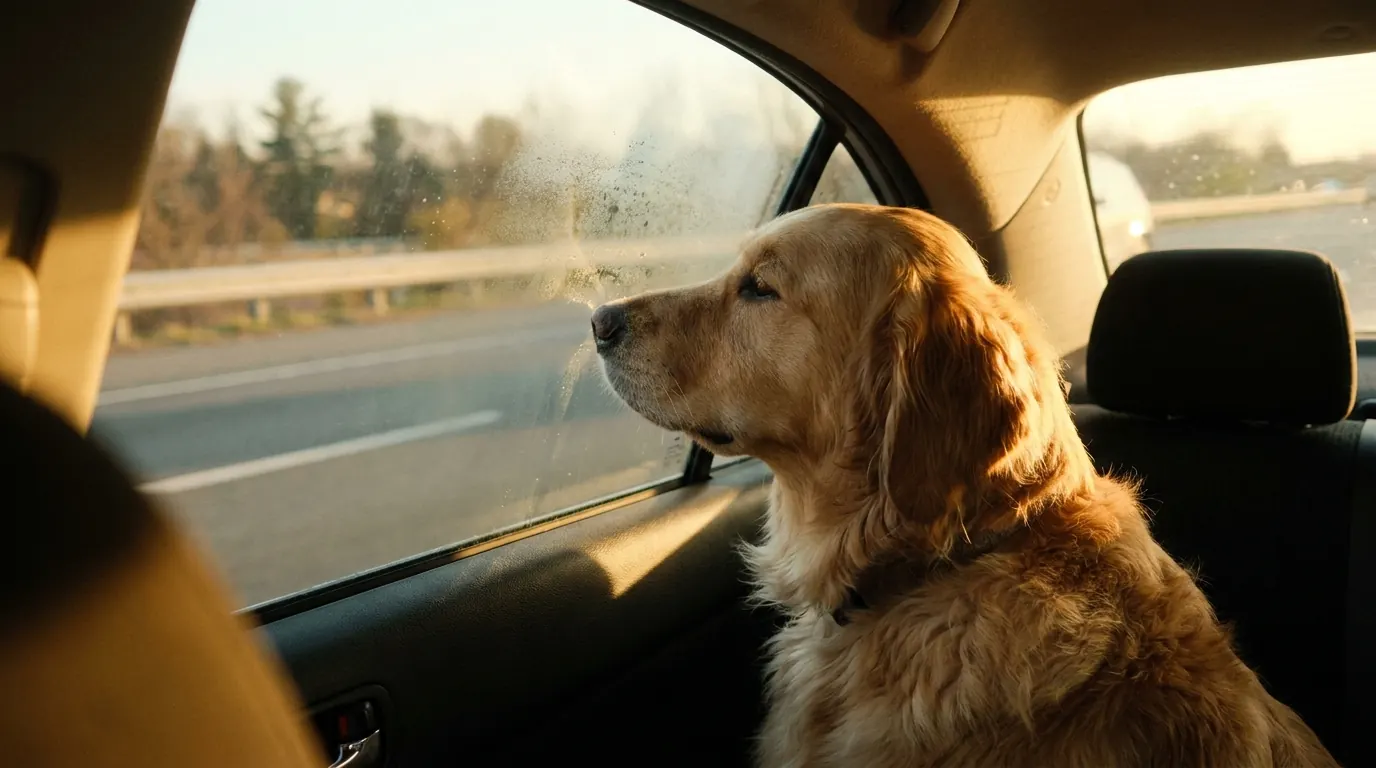
This is the story of how a Kurgo Tru-Fit harness changed every road trip we take with Bear. My dog Bear is 62 pounds of enthusiastic golden retriever mix, and for the first two years I drove with him, he rode loose in the back seat. No harness, no crate, no barrier. Just Bear, bouncing from window to window every time a semi passed us, or hurling himself forward onto the center console whenever I braked too hard. I told myself it was fine. Plenty of people drove like that. He was happy. He was contained enough.
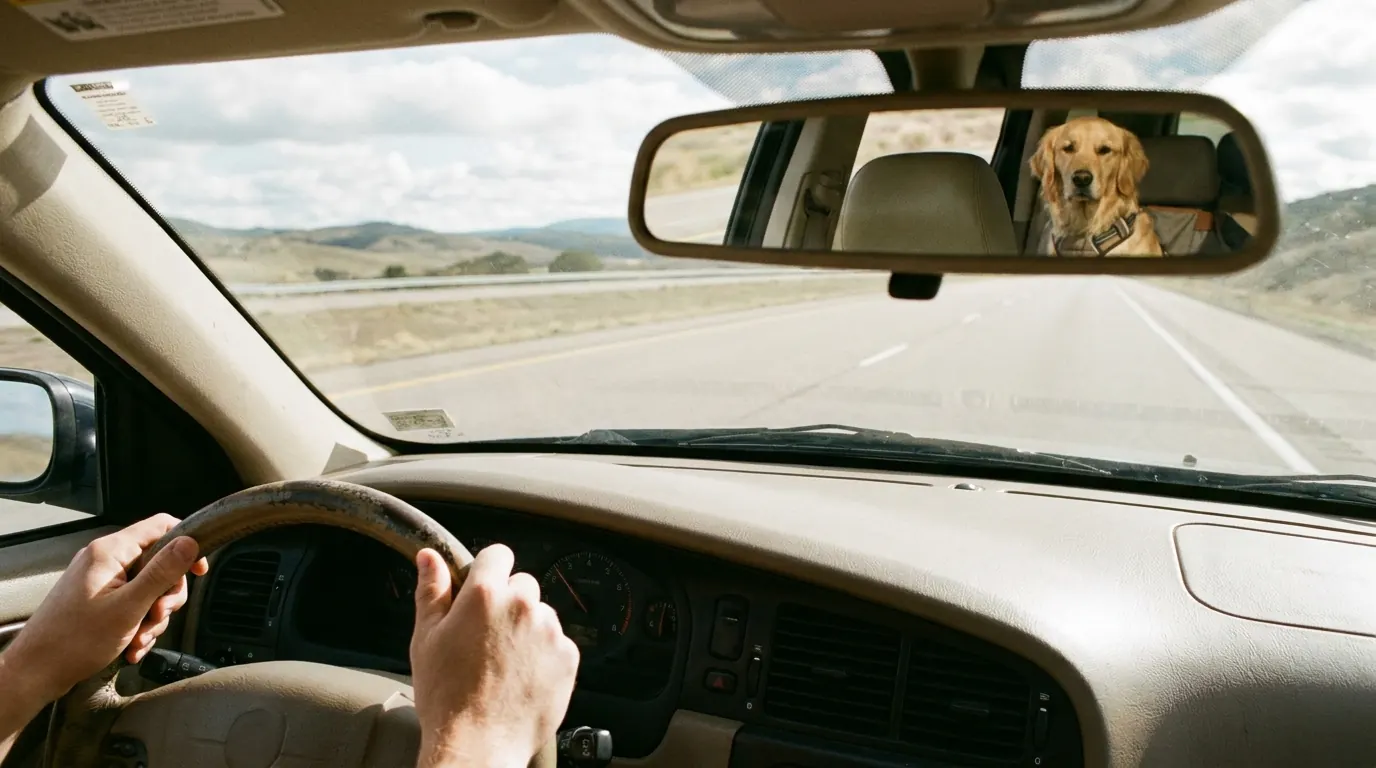
What I did not tell myself, because I did not want to think about it, was that I drove with one hand on the wheel and one eye in the rearview mirror on every highway on-ramp. I had learned to brace before hard braking because Bear would otherwise end up halfway in the front seat. I had learned which rest stops had the least traffic so I could open the door without him launching out. I called it caution. It was distraction. For two years, every highway mile was a little bit of low-grade dread.
The thing that finally shifted it was not a close call. It was a conversation with a friend who fostered dogs and drove long distances regularly. She mentioned, offhand, that she never drove more than ten minutes without her dogs harnessed and clipped in. She said it the way you say you wear a seatbelt, like the alternative was not really a serious option. I went home that night and ordered the Kurgo Tru-Fit crash-tested harness.
I had learned to brace before hard braking because Bear would otherwise end up halfway in the front seat. I called it caution. It was distraction.
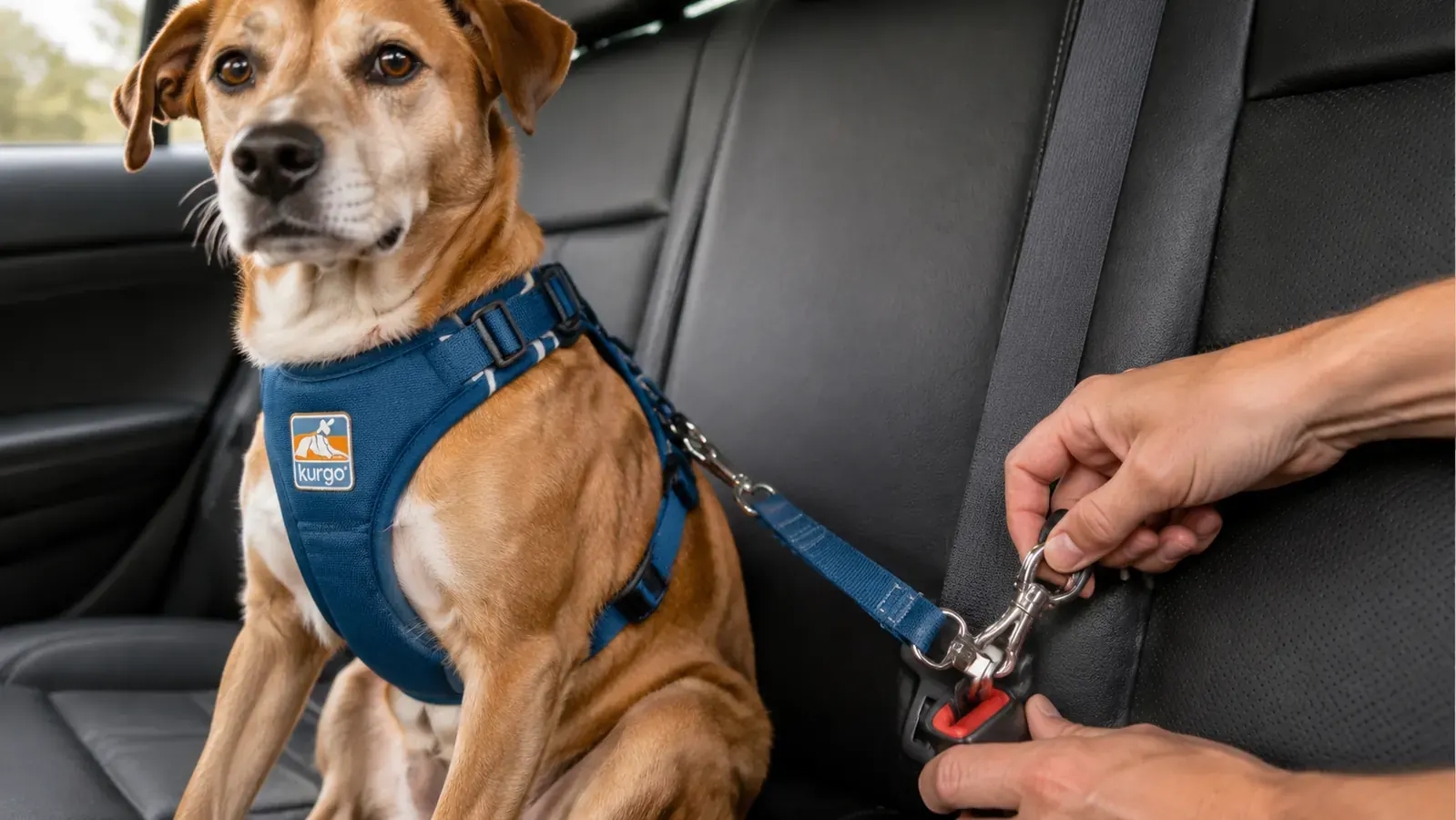
I will be honest: I expected to hate it. I had tried a cheap clip-in seat belt adapter the year before, the kind that loops through a collar, and Bear hated it. He spent the whole drive with his neck craned at an awkward angle, and I felt worse than before. So I had basically written off the whole category. The Kurgo was different in a way I did not expect. It is a proper five-point harness, padded across the chest and sternum, and it distributes pressure across his body instead of his neck. He wore it into the car for the first time, turned around twice, and lay down. That was it.
The clip end attaches directly to the car's existing seatbelt buckle. No adapter. No second clip. Just the vehicle's own hardware, which is the part I should have thought about from the beginning. In a real impact, the seatbelt system is what the car was engineered to handle force through. The Kurgo is actually crash-tested, which sounds like marketing language until you realize how few dog restraints bother to verify this at all.
Bear rides clipped in on every drive now. Here is the harness that made it easy enough that we actually stuck with it.
The Kurgo Tru-Fit has a 4.4-star rating across more than 7,700 reviews. Crash-tested. Fits most sizes. Clips directly into your car's existing seatbelt socket.
Amazon Check Today's Price on Amazon →The adjustment period was about three drives. The first time Bear wore it he was fine, but I fumbled with the chest clip for four minutes in a parking lot. The second drive I got it in under a minute. By the third drive it was genuinely faster than buckling a child into a car seat. The harness stays on Bear during walks too, which means I am not re-fitting it every single time we leave the house. That probably sounds like a small thing. It is not a small thing. The friction of putting gear on a wiggly dog in a parking lot is exactly why people stop using gear.
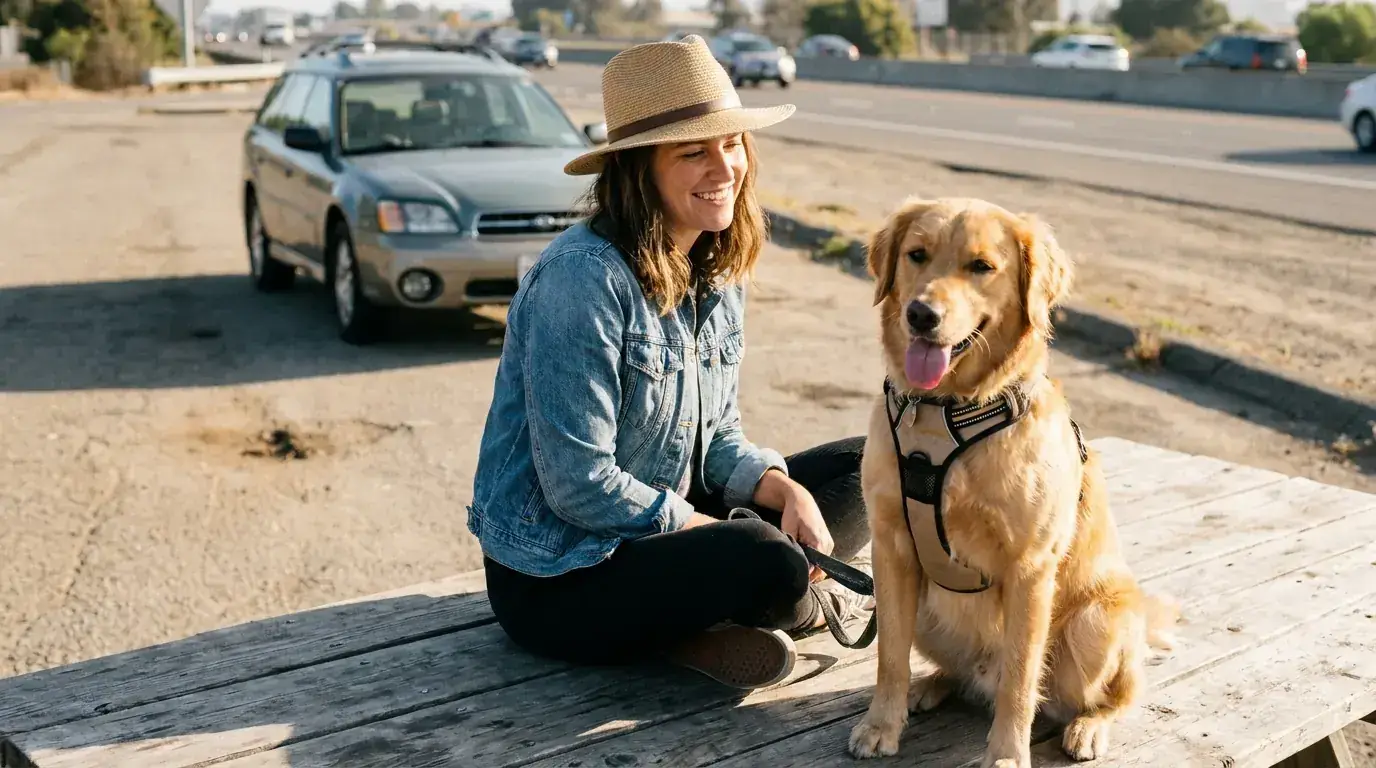
What changed on the road was more than I expected. I stopped watching the rearview mirror. Bear cannot shift to the floor or surge forward anymore, so there is nothing to monitor. My hands stayed on the wheel through an entire construction zone on I-70 last October, which sounds embarrassingly basic to say, but it had genuinely not happened before. At rest stops, I clip a leash to the harness's back ring before I open the door, so Bear cannot bolt. He used to know the sound of the door handle and would be up and launching before I had even turned around.
I want to be fair about what this did not fix. Bear still gets excited when we arrive somewhere. He still whines for the last twenty minutes of any drive longer than two hours. And fitting the harness took some trial and error on the chest strap. If you have a deep-chested dog or a dog who sits weirdly upright, you will probably spend some time with the adjustment sliders. That is worth knowing going in.
What I'd Tell You If We Were Sitting at My Kitchen Table
If your dog rides loose in your car right now, I am not going to lecture you. I did it for two years and I know exactly what the rationalizations feel like. But I would ask you this: are you driving differently because of your dog? Are you watching the back seat instead of the road? Is there a part of your brain that is managing your dog while you are supposed to be managing two tons of metal on a highway? Because that part is not quiet for free. It costs something, every trip.
The Kurgo Tru-Fit is the harness I landed on after some false starts, and it is the one I would actually recommend to a friend. Not because it is perfect, but because it works consistently, Bear does not fight it, and it uses the car's own seatbelt hardware the way it was meant to be used. If you want to read a longer breakdown of how it fits different sizes and what to watch for on the chest strap, I wrote a full six-month review here. And if you want the less polished version of that review, including the sizing issue I hit the first time, that is in my honest take here.
But if you just want to know whether it is worth trying: yes. It is a straightforward thing to get right, and the payoff is driving with both hands on the wheel and both eyes on the road. That is worth more than it sounds like.
Ready to stop white-knuckling every merge? The Tru-Fit is what ended two years of distracted driving for me.
Crash-tested. Connects to your existing seatbelt. Works as a walking harness too so you are not re-fitting it every trip. Check current availability and sizing on Amazon.
Amazon Check Today's Price on Amazon →